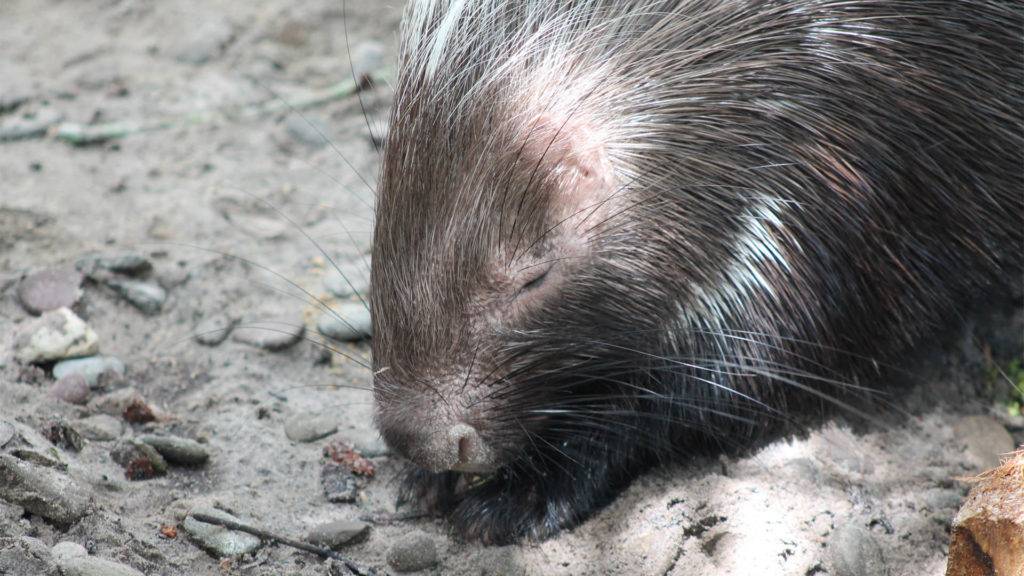
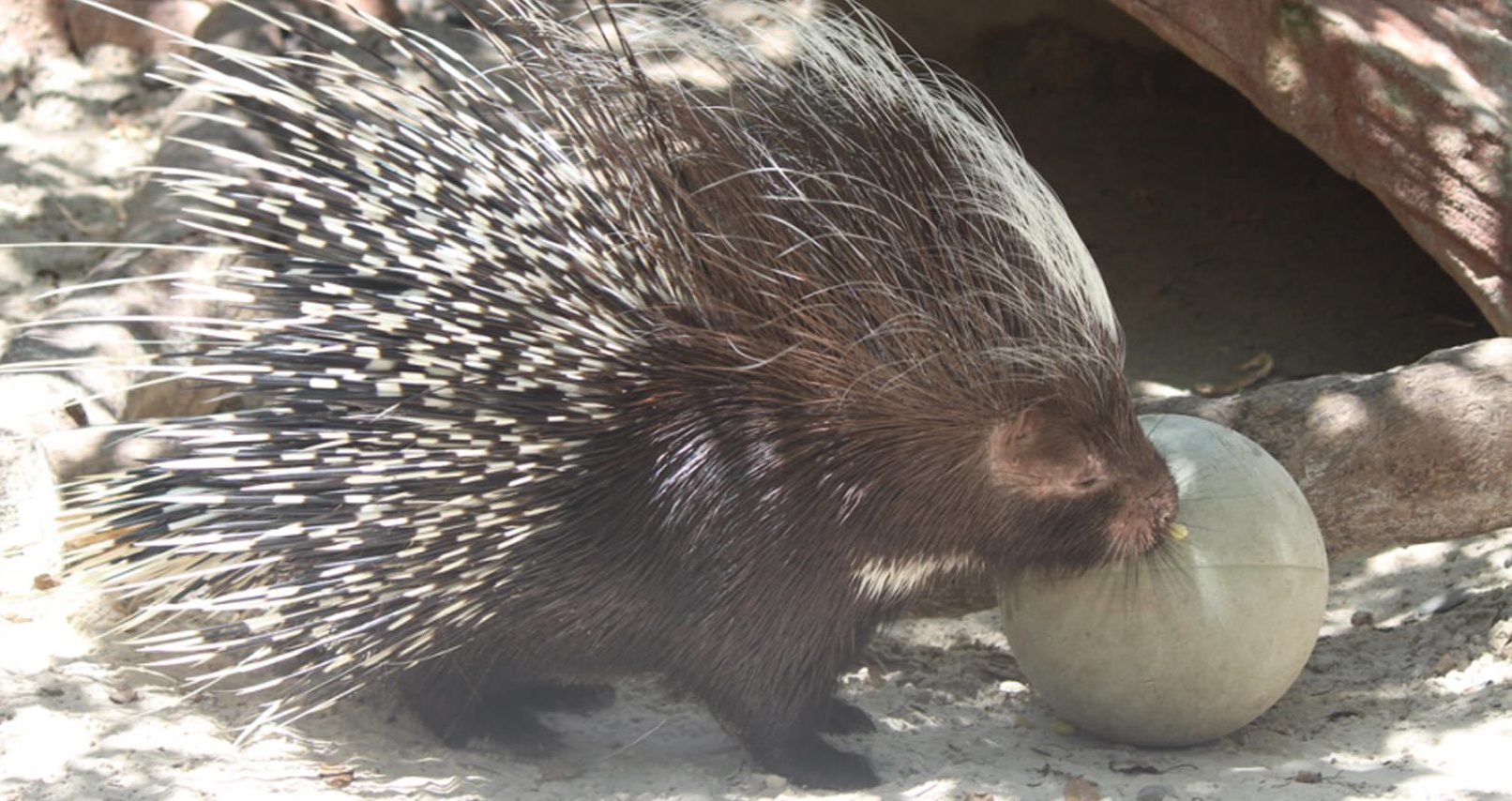
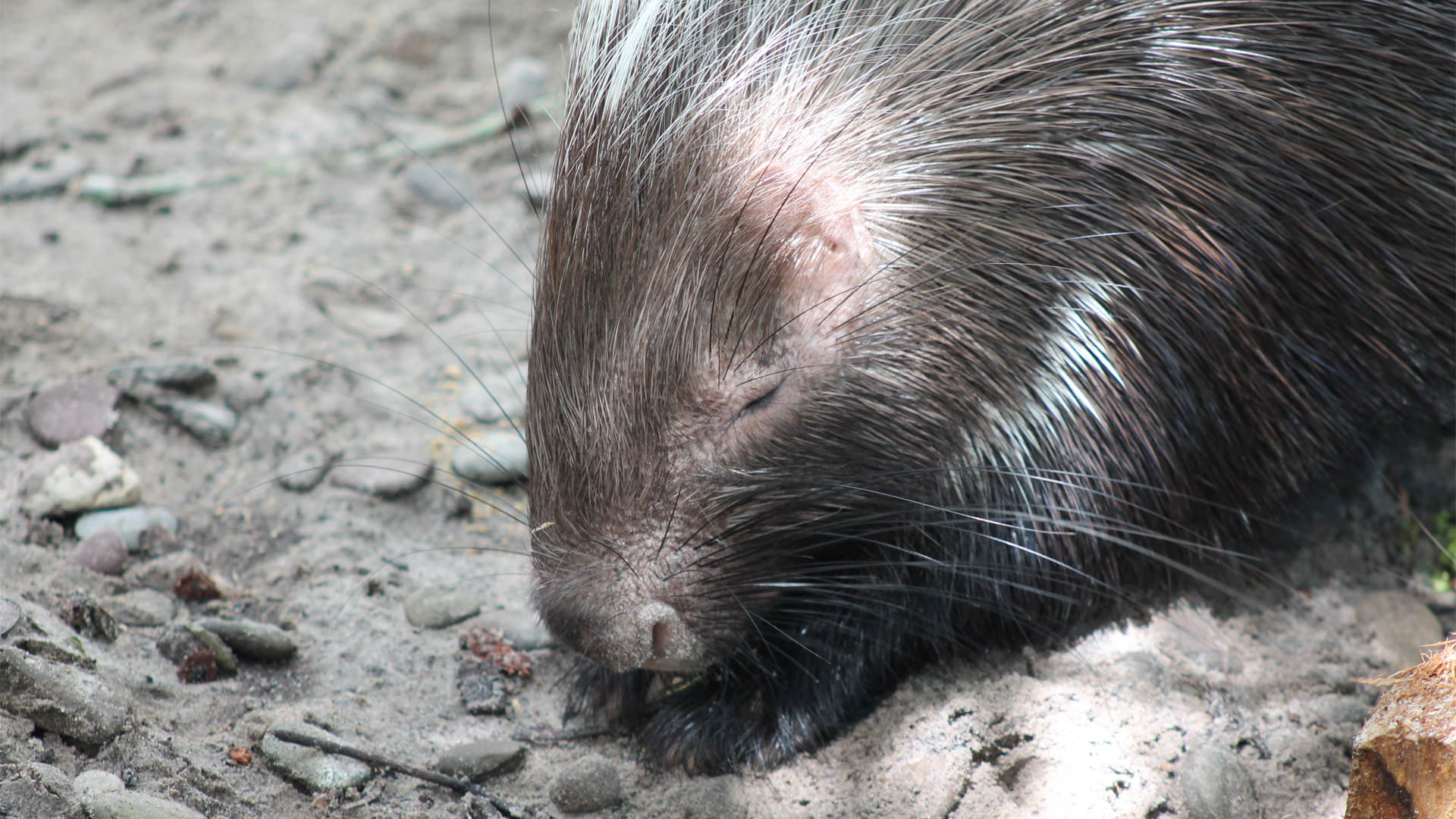
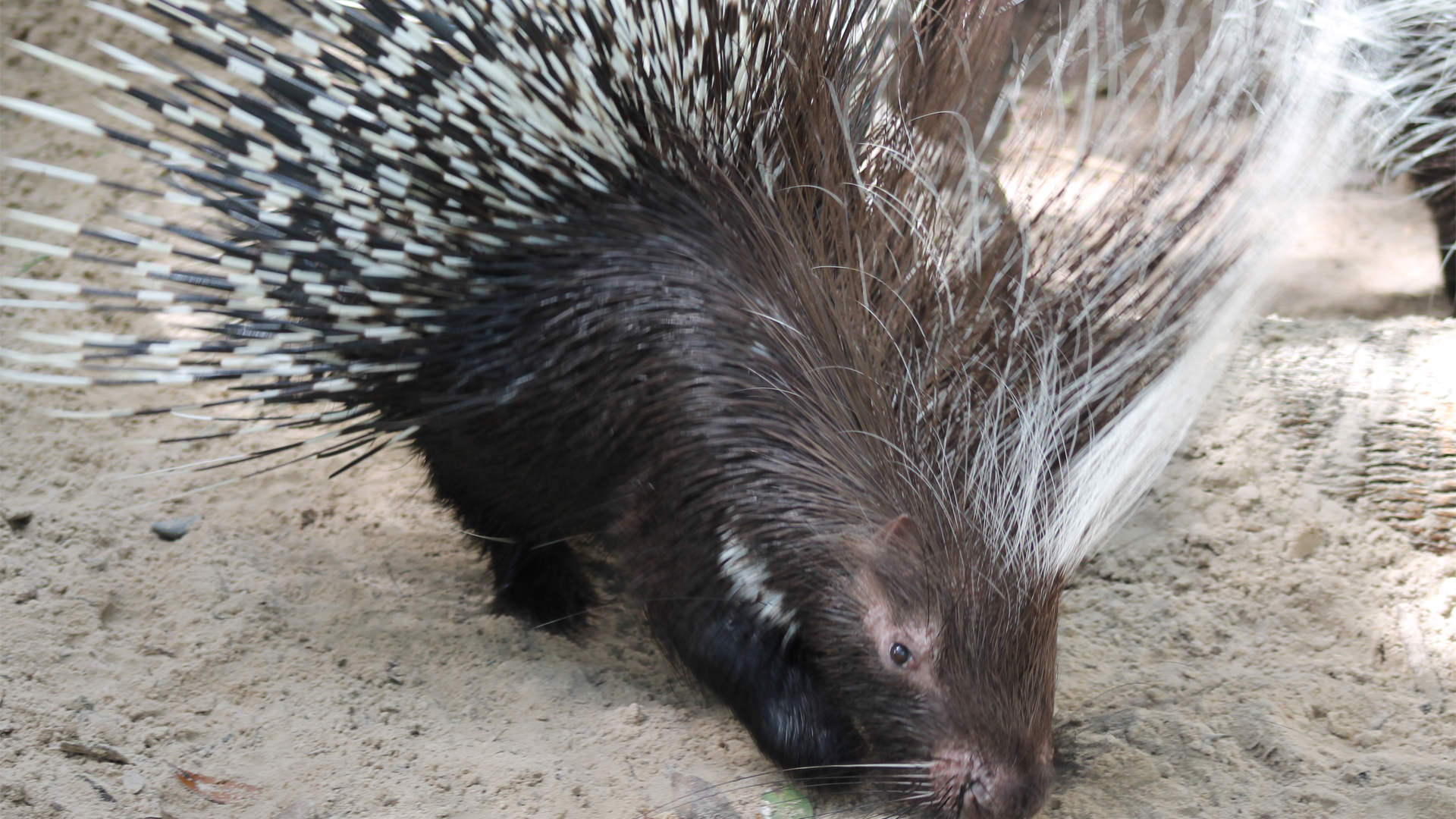
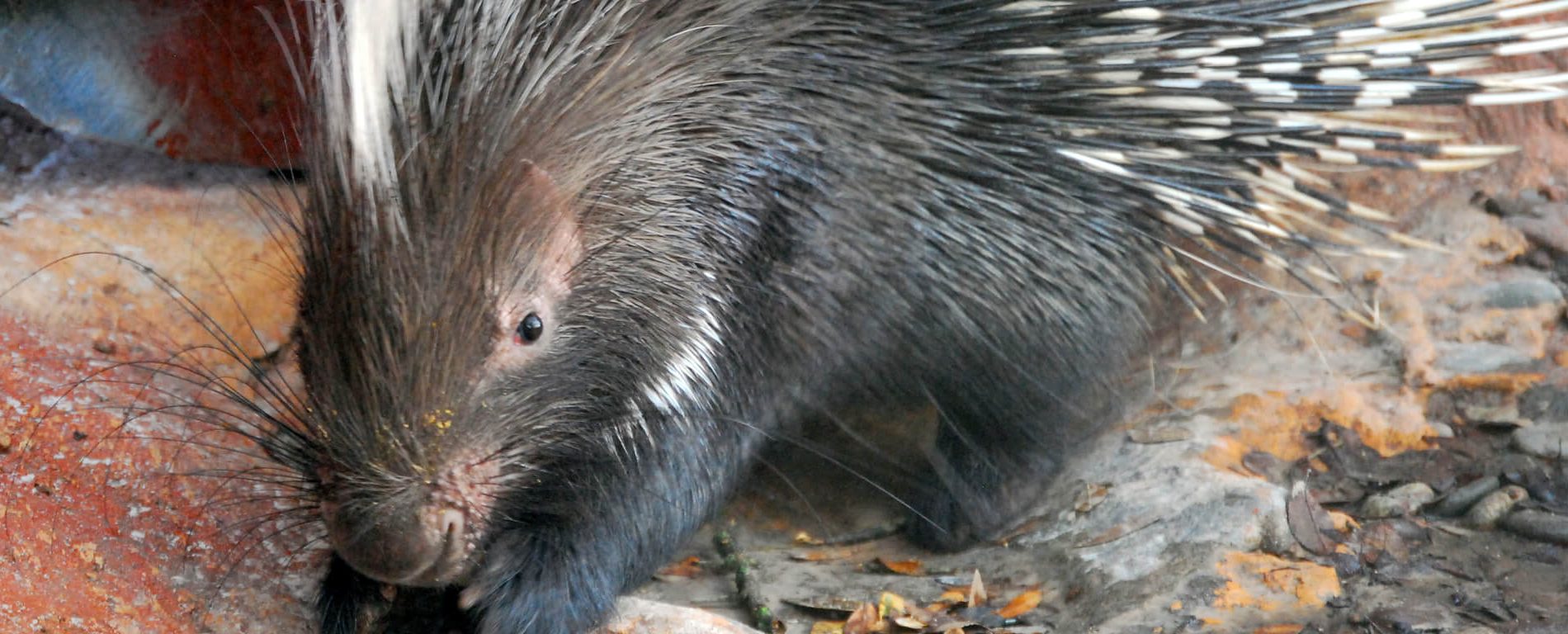
LOOKIN’ SHARP The African cape porcupine is the largest species of porcupine in the world. They are nocturnal, spending most of their day sleeping.
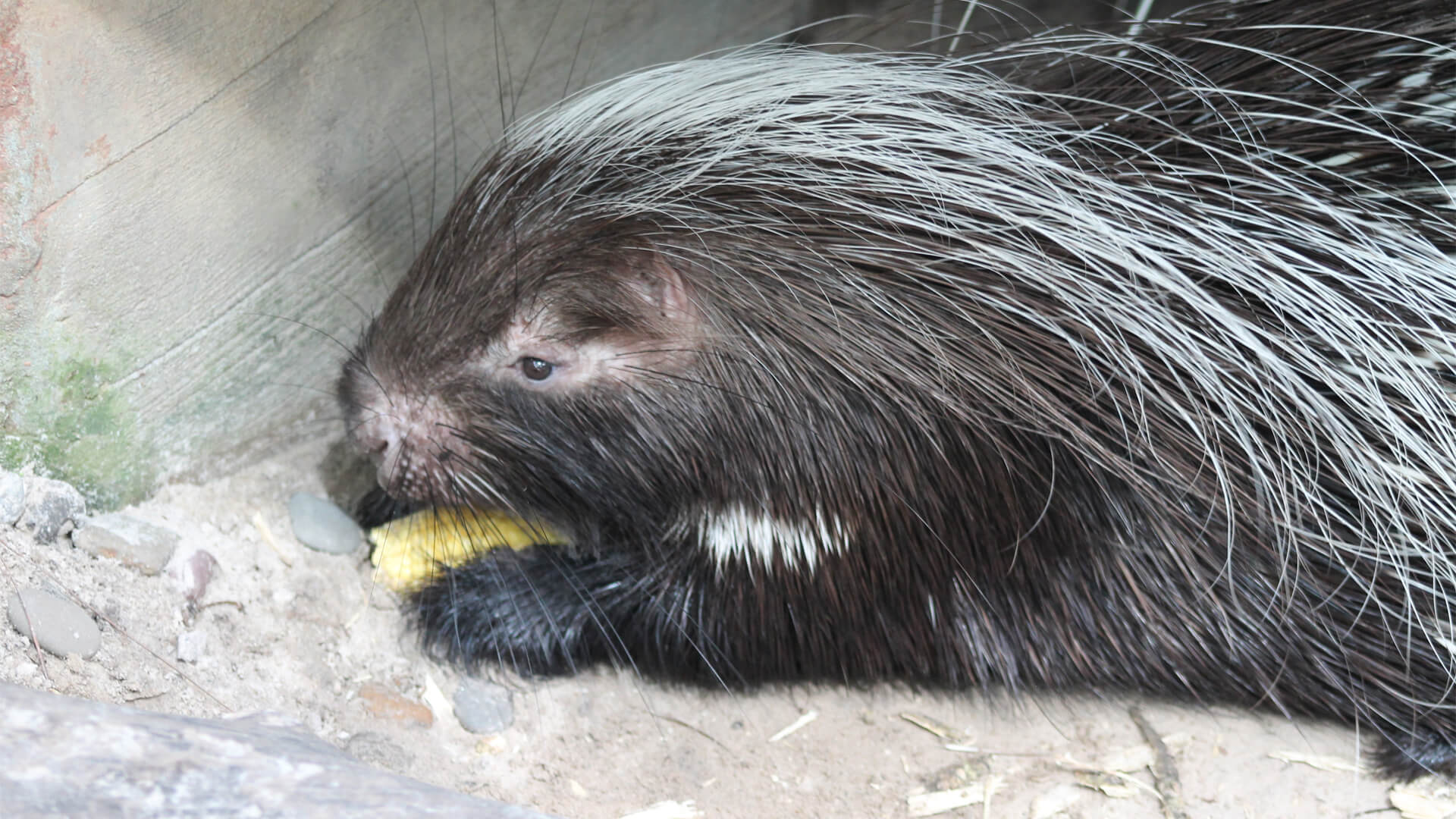
Rodents, such as our African cape porcupines, have ever-growing front teeth (called incisors). Because of this, they must grind their teeth down to prevent them from growth into the mouth which would prevent them from being able to eat. We provide our porcupines with logs and branches to chew on, in addition to crunchy food items.
The African cape porcupines we have here at the Zoo are actually sisters!
You can see them sleeping together, with their quills facing outwards- a natural behavior. In their natural habitats, African cape porcupines often steal burrows from other animals, and will sleep head first with their quills facing outwards as defense. No one ever wants to go in after that!
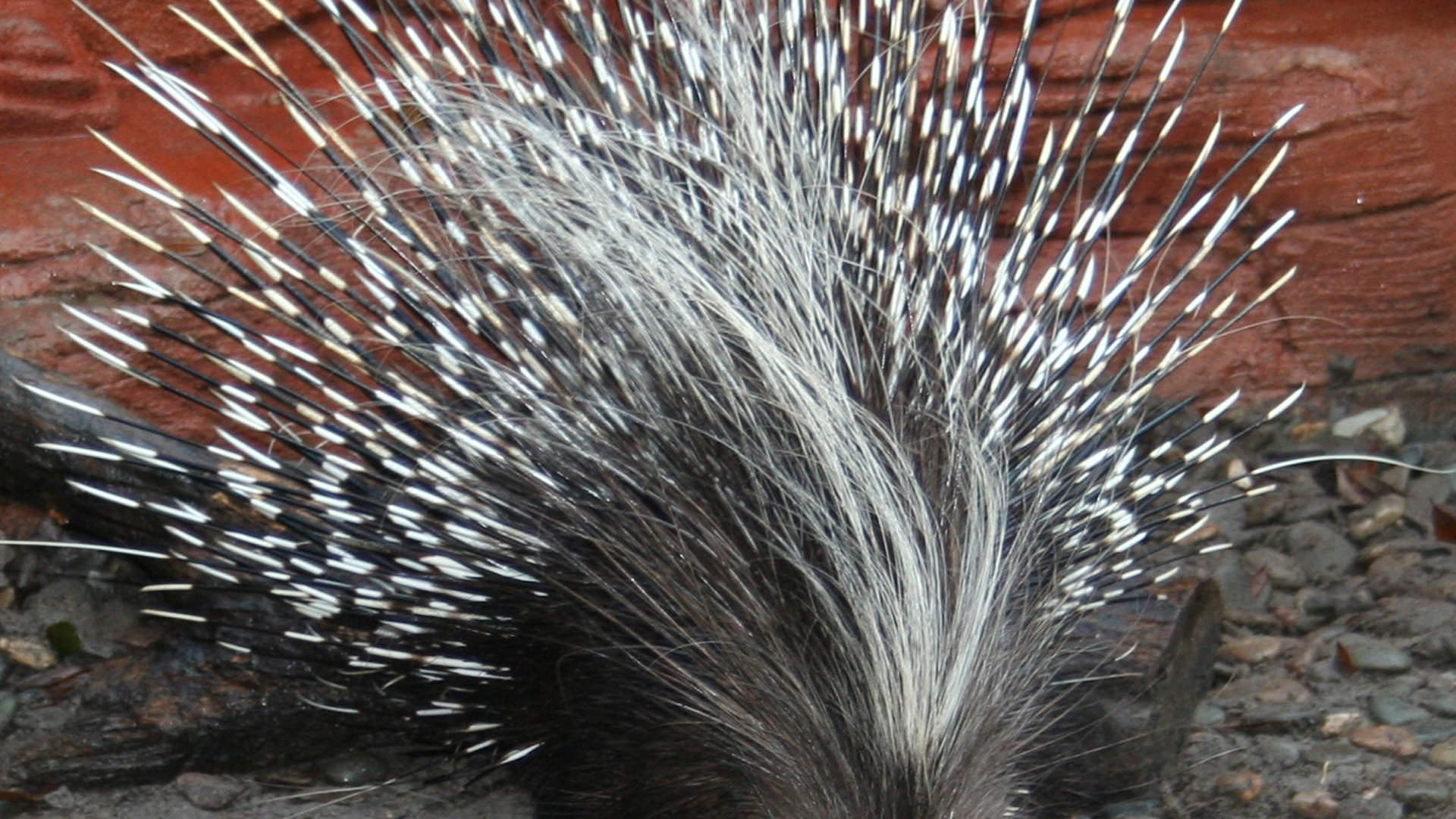
QUILL QUESTION The belief that porcupines can shoot their quills is an old wives’ tale. Their quills are made up of modified hair attached to their body. When chased by a predator, however, a porcupine will stop suddenly, causing the predator to run into the quills.
SCIENTIFIC NAME
Hystrix africaeaustralis
Fun Fact
Porcupines are rodents, meaning they are herbivores who need to chew on things like bark to file down their sharp incisor teeth that never stop growing.
You will often hear the keepers at the Zoo refer to these porcupines as Hystrix after their scientific name, Hystrix africaeaustralis, because African Crested porcupine is such a mouthful.