
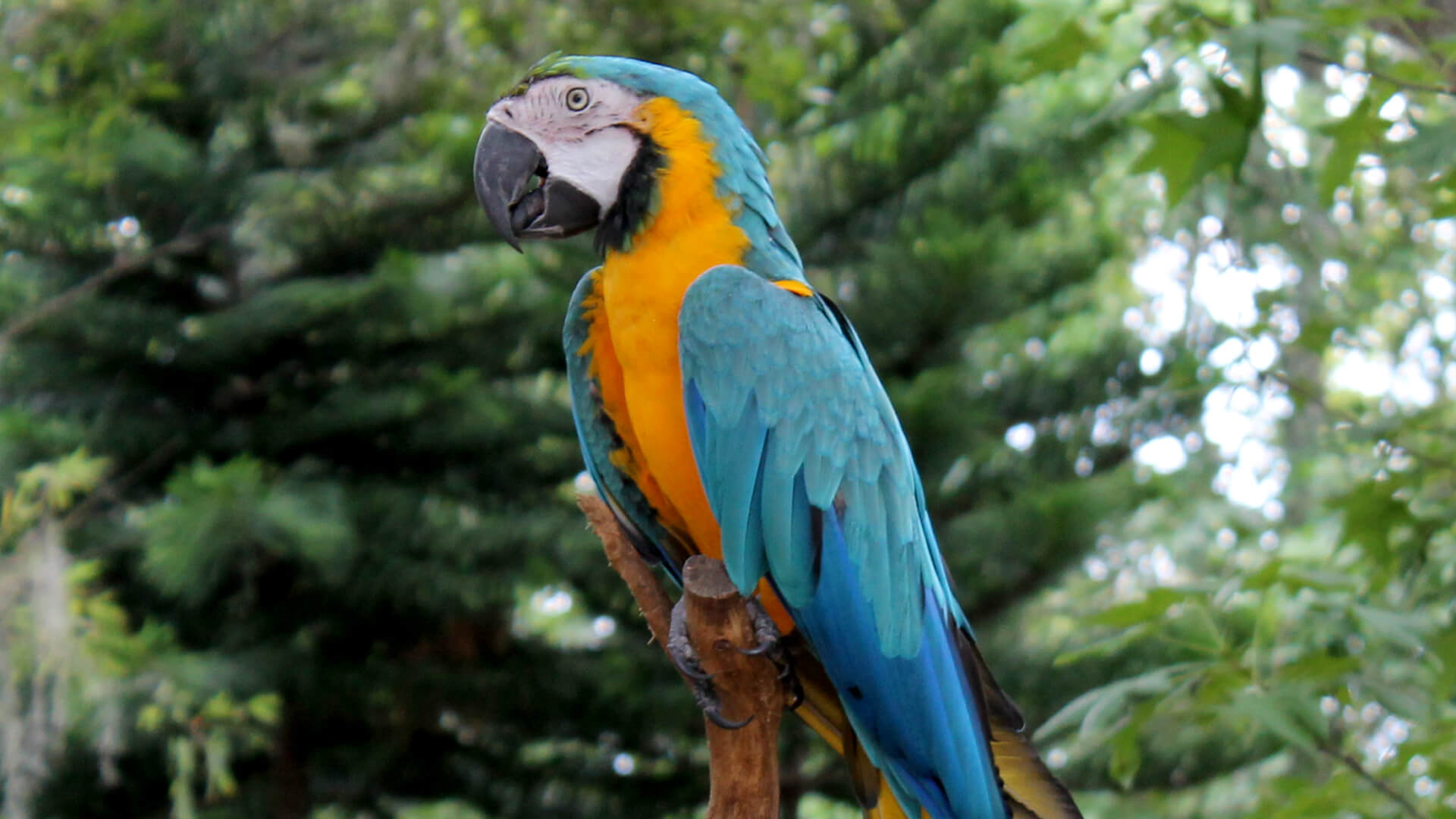
Blue and Gold Macaw

Content Image

TYPE: Bird

STATUS: 
Least Concern

QUICK STATS

Body size

Height: 76–86 cm
Wingspan: 104–115 cm
995–1380 g

native habitat

Tropical forests, swamps, savannas of Eastern Panama and South America

diet

Seeds, nuts, fruits, vegetation

Reproduction

1–2 eggs per clutch

life expectancy

30–35 years in the wild, and up to 50 years in human care

predators

Harpy eagles, hawk eagles, orange-crested falcons, humans

natural defenses

Strong and sharp bills and claws, flight, predator mimicry

About the Species

These South American birds are highly intelligent and congregate in massive flocks in the wild. They are very social, colorful animals with a penchant for loud vocalizations.

Blue and gold macaws are some of the largest parrots on earth, with long tail feathers that spread like a fan while in flight.

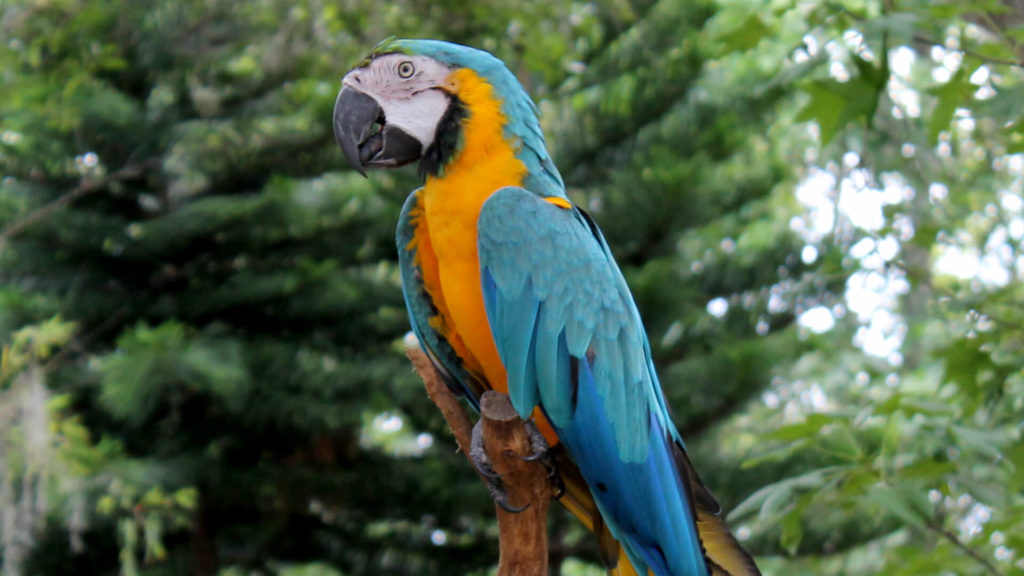
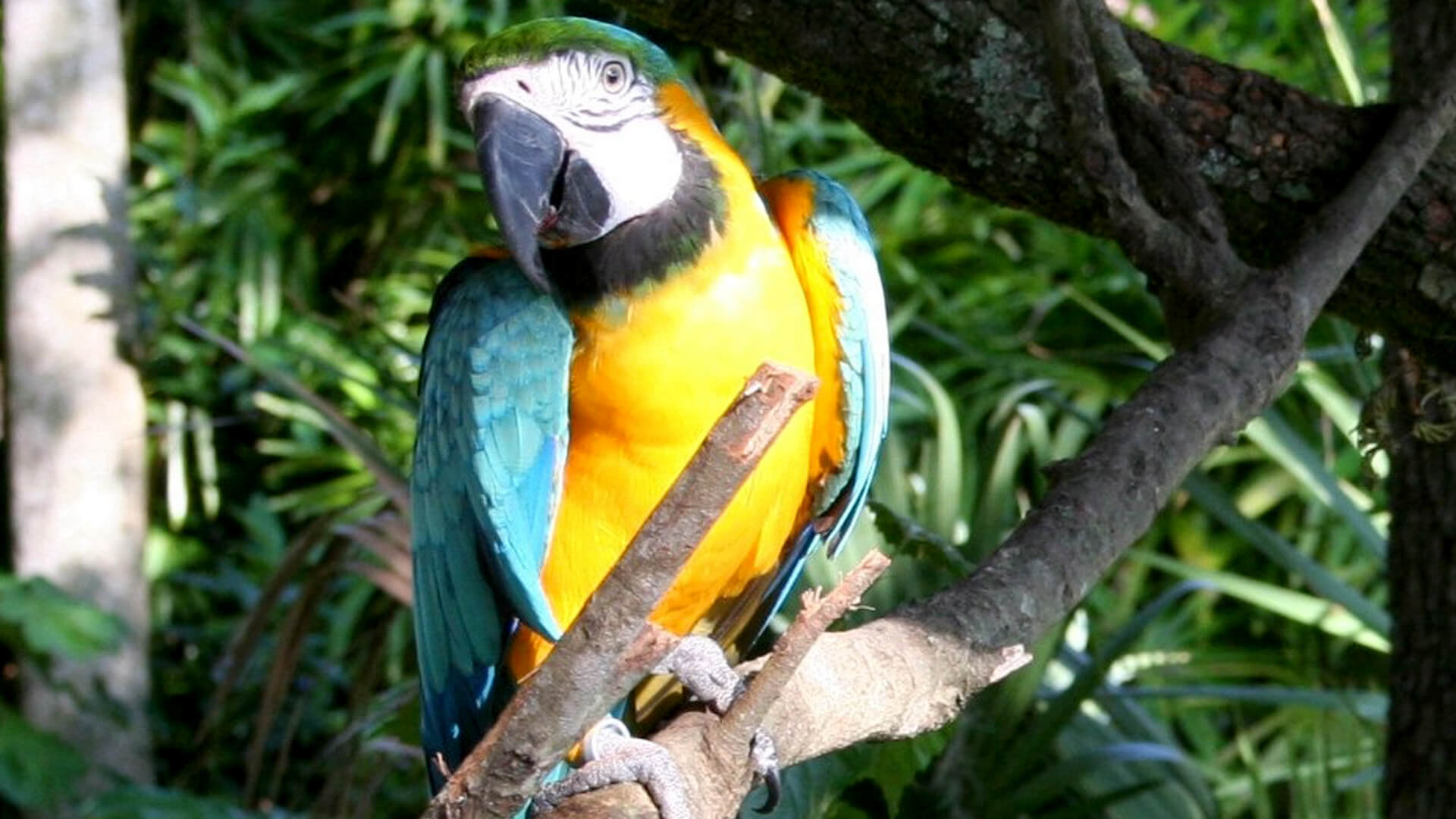
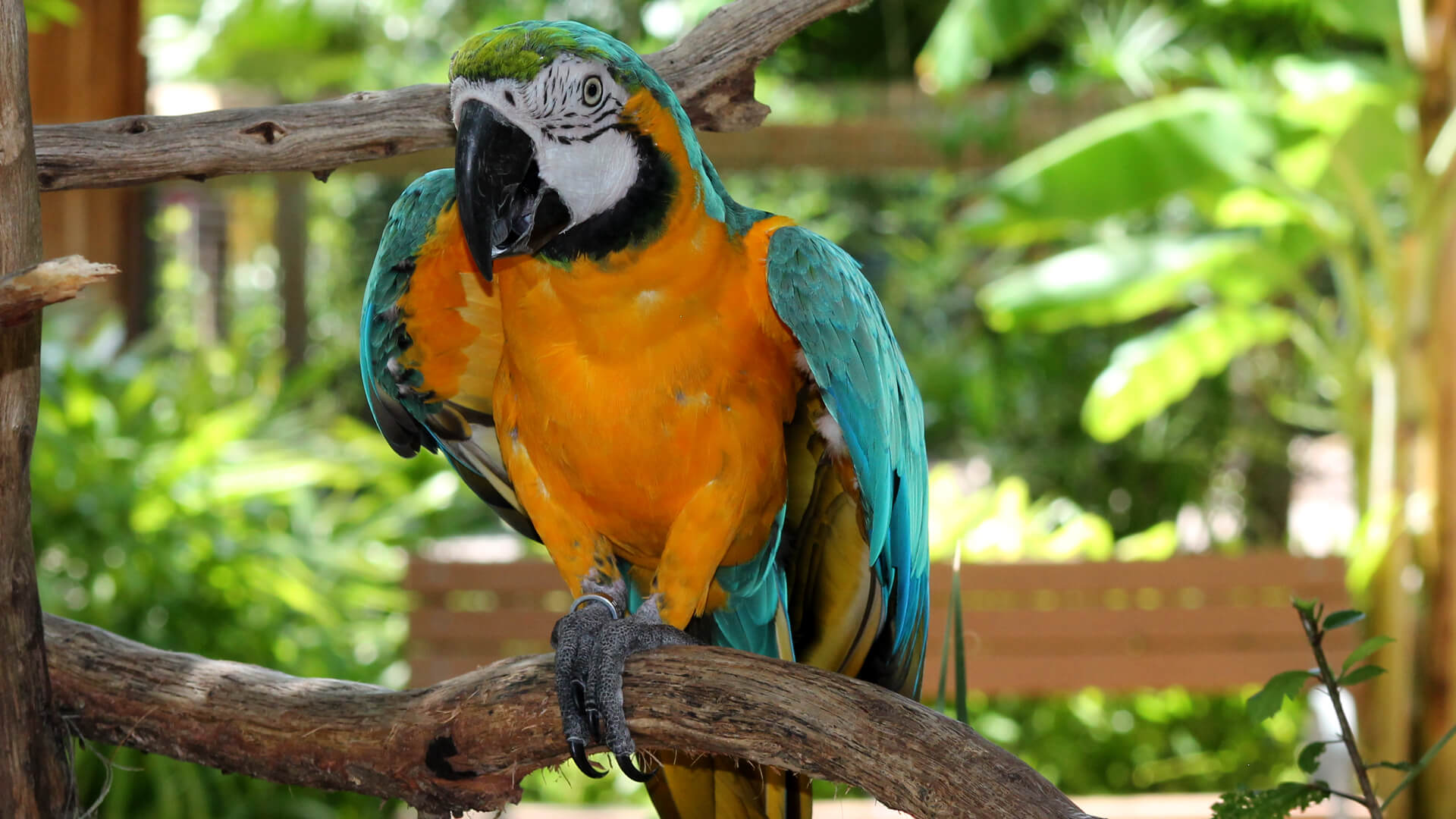
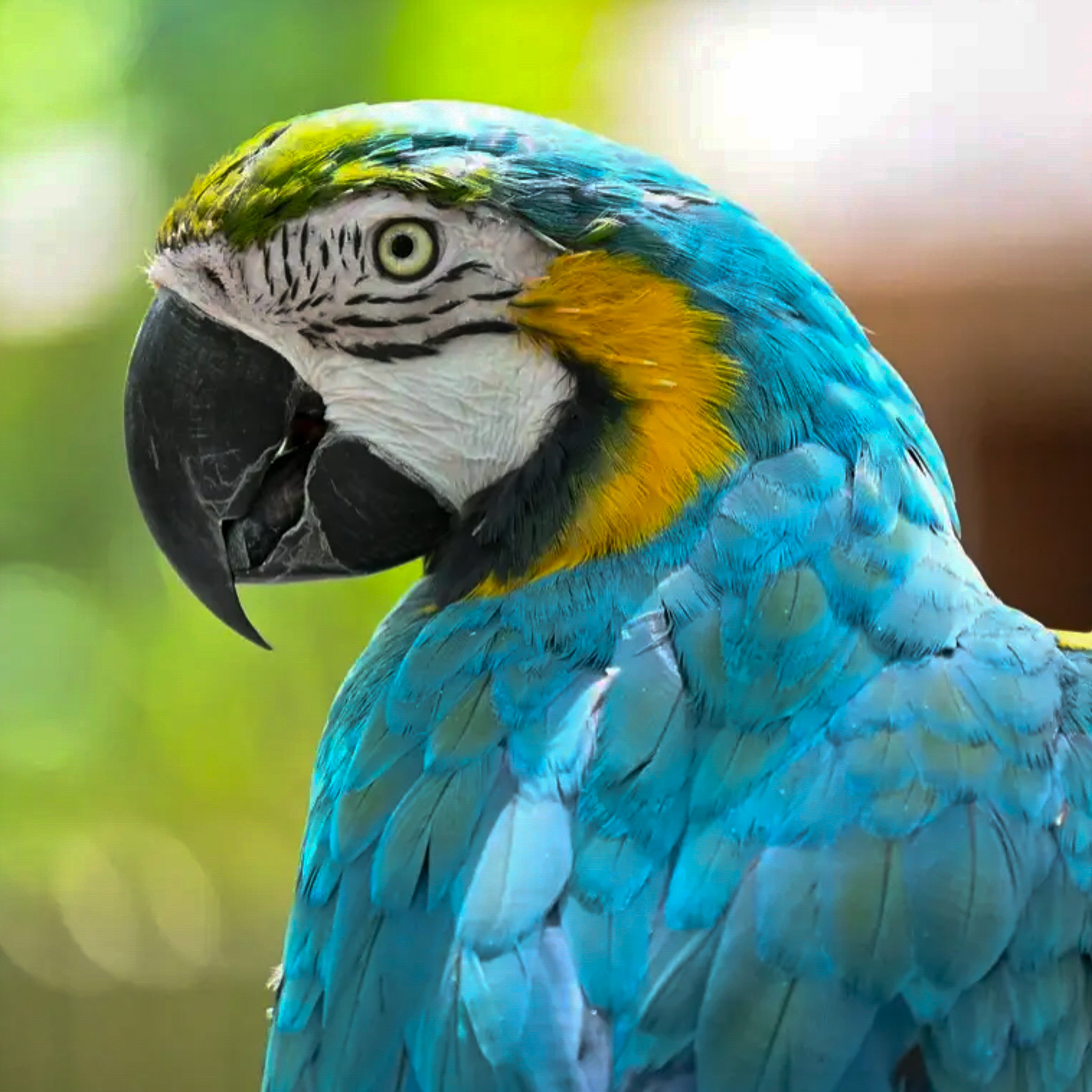
These large parrots have beautiful ultramarine plumage along their backs and bright yellow feathers on their undersides. They are gregarious birds who are rarely seen outside of large groups or in pairs. Often found eating and socializing in rainforest canopies, they are common throughout most of tropical South America and up into parts of Panama.

Unfortunately, populations in certain areas are threatened or endangered.

These macaws were once plentiful on the island of Trinidad, but are no longer be found there. This phenomenon is known as local extinction. You can help protect these beautiful macaws in your own home by using recycled paper products and making sure to recycle aluminum cans, since both of these resources come from the Amazon and can contribute to deforestation.

SCIENTIFIC NAME

Ara ararauna

Fun Fact

Macaws have more taste buds on their tongues than any other type of bird!

Wildlife Insights

WORD FROM
THE EXPERTS

Here at the Zoo, we have Diego, our blue-and-gold macaw. Most days, he can be seen on exhibit with our green-winged macaws in the Spectrum News 13 Children's Garden. Diego loves interacting with our guests!

Courtney, Keeper