Hiss and rattle before striking. Venom not fatal but painful
About the Species
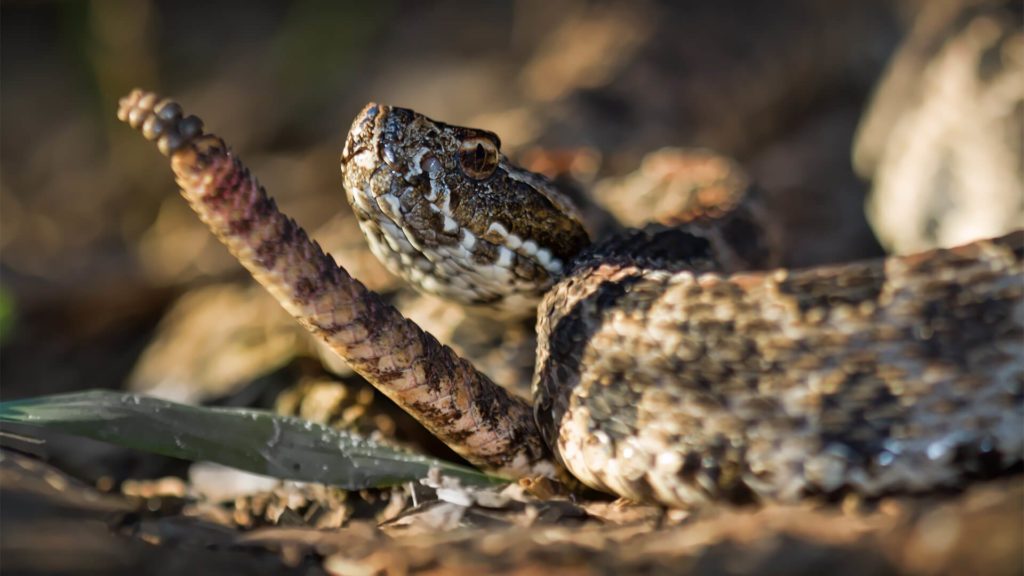
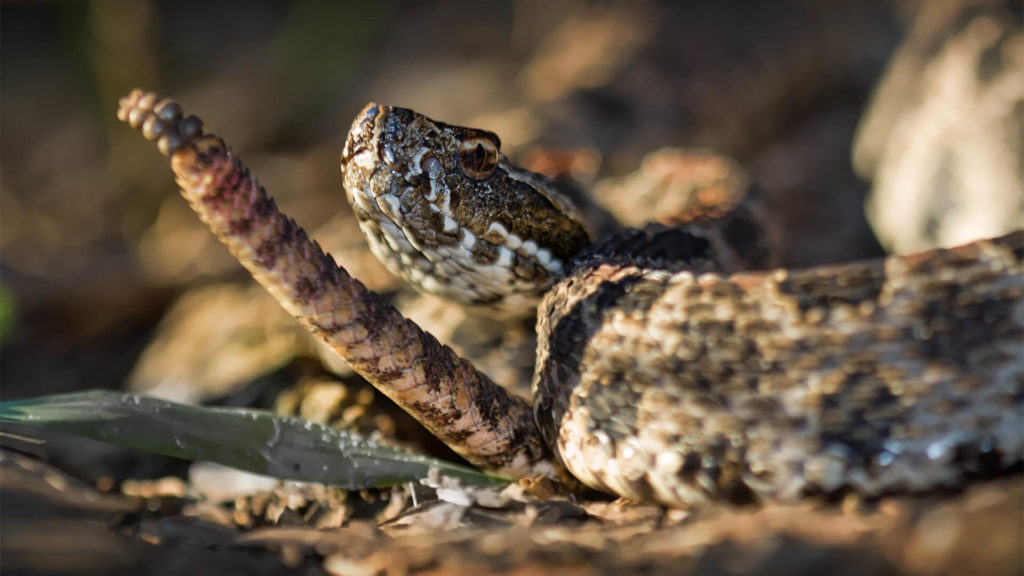
BUZZ BUZZ! The tail of a dusky pygmy rattlesnake rarely has more than just a few rattles. This, combined with the fact that the rattle is so small, causes the sound of the rattle to be similar to the buzzing of an insect.
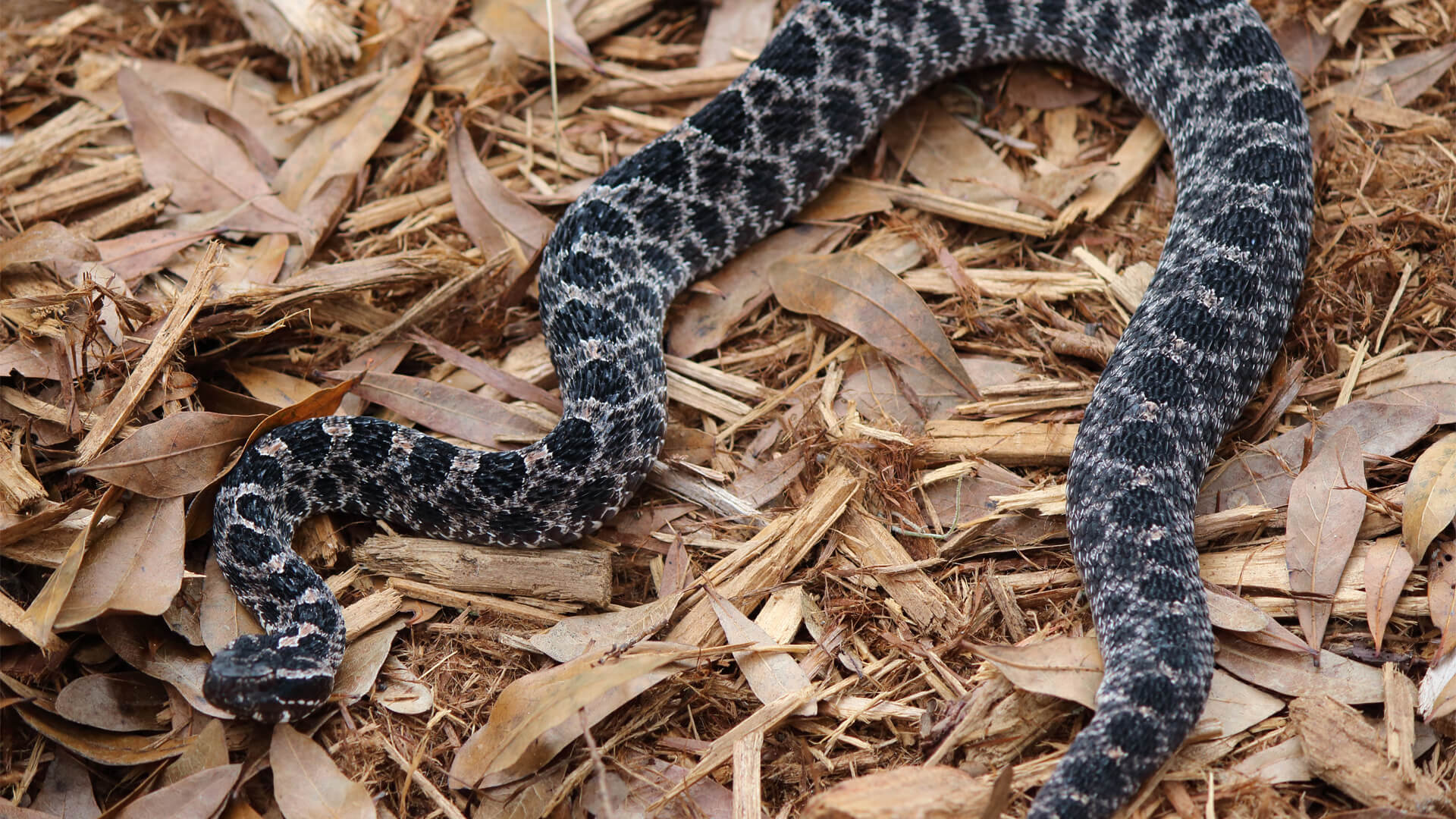
The pygmy rattlesnake is a short snake, although rather thick-bodied for its size. Markings include a dark line through each eye, roughly circular spots running down the center of the back, a thin reddish-orange stripe along the body line, and dark spots on its white belly.
The dusky pygmy rattlesnake is found all throughout Florida, except for in the Florida Keys.
They are “sit-and-wait” ambush predators, often not moving from their location for days at a time. As young snakes, their diet is primarily frogs and lizards.
Because these prey items eat insects, the dusky pygmy rattlesnake often use “caudal luring”, a method in which the snake moves its tail in a way that mimics an insect. As young snakes, the dusky pygmy rattlesnake also has a brightly colored tail, which aids in this trickery. As they get older, this coloration wears off, but the snakes begin to hunt slightly large prey (such as mice) and use their heat-seeking pits on their faces to do so.
SCIENTIFIC NAME
Sistrurus miliarius barbouri
Fun Fact
The pygmy rattlesnake is also called a ground rattler. It is the most abundant venomous snake in Florida.
This small species of rattlesnake is the most common venomous snake in Central Florida. Good news though, there is not one recorded fatality from a pygmy rattlesnake bite!