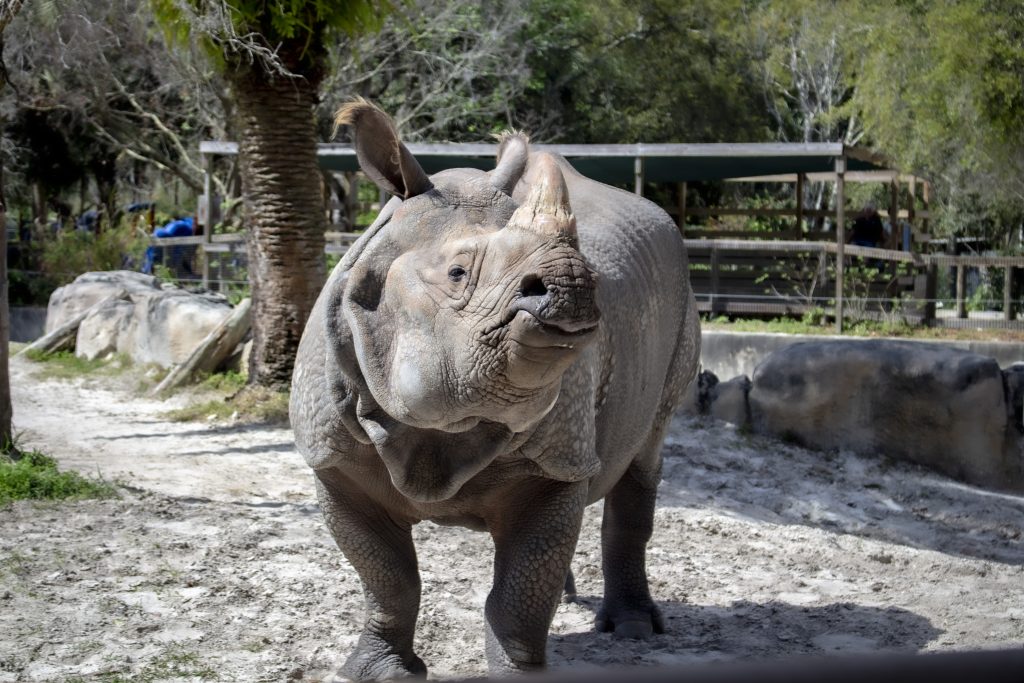
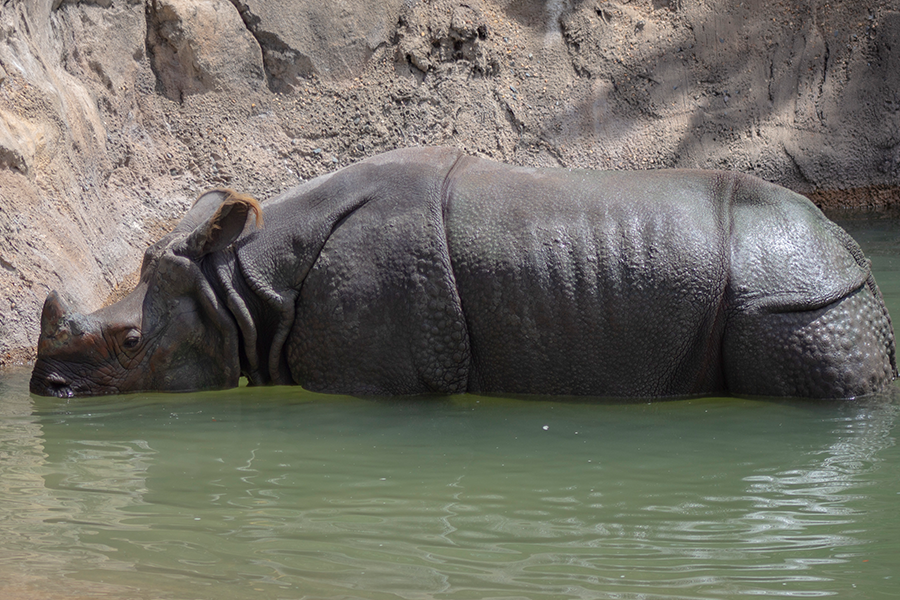
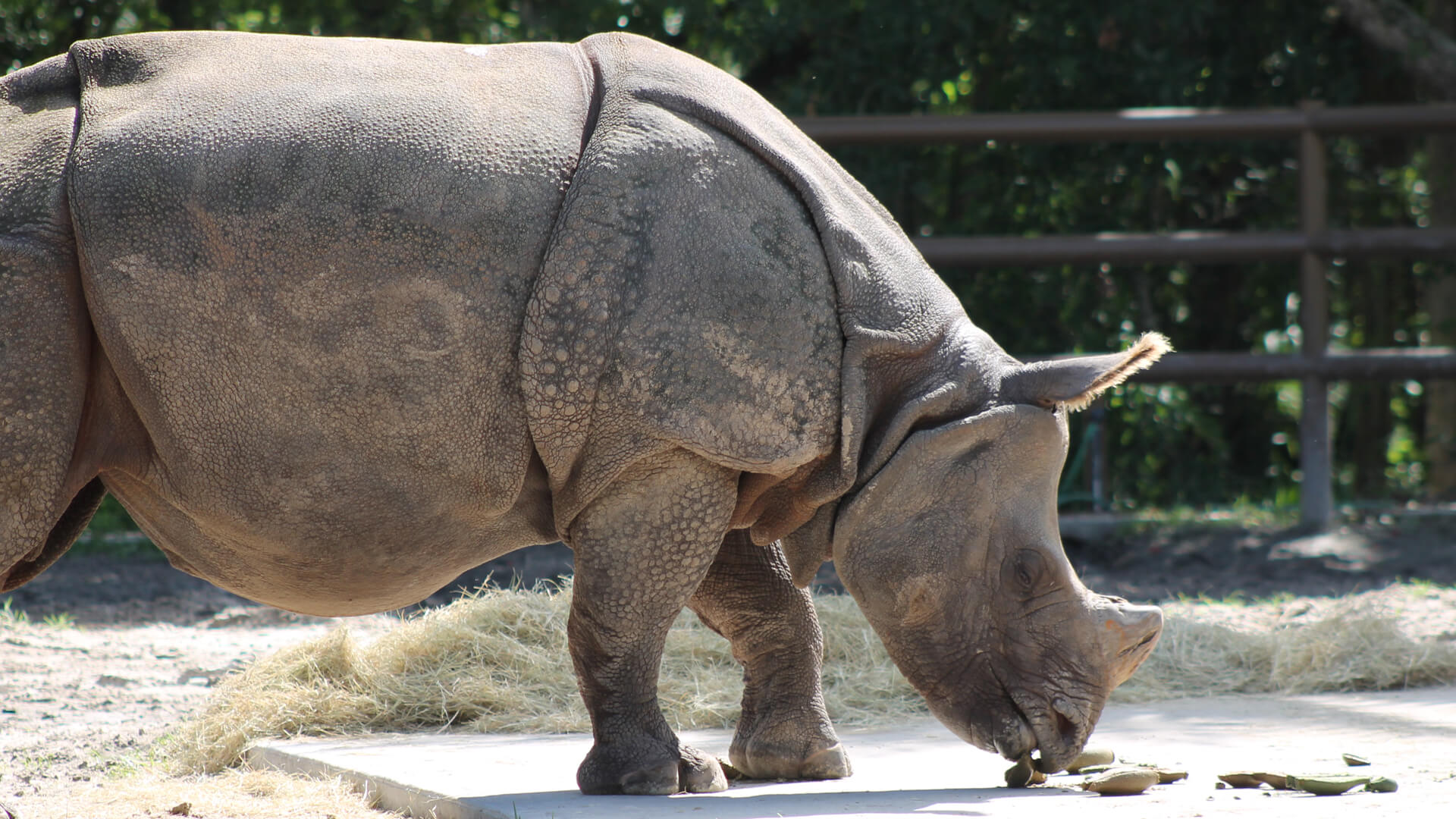
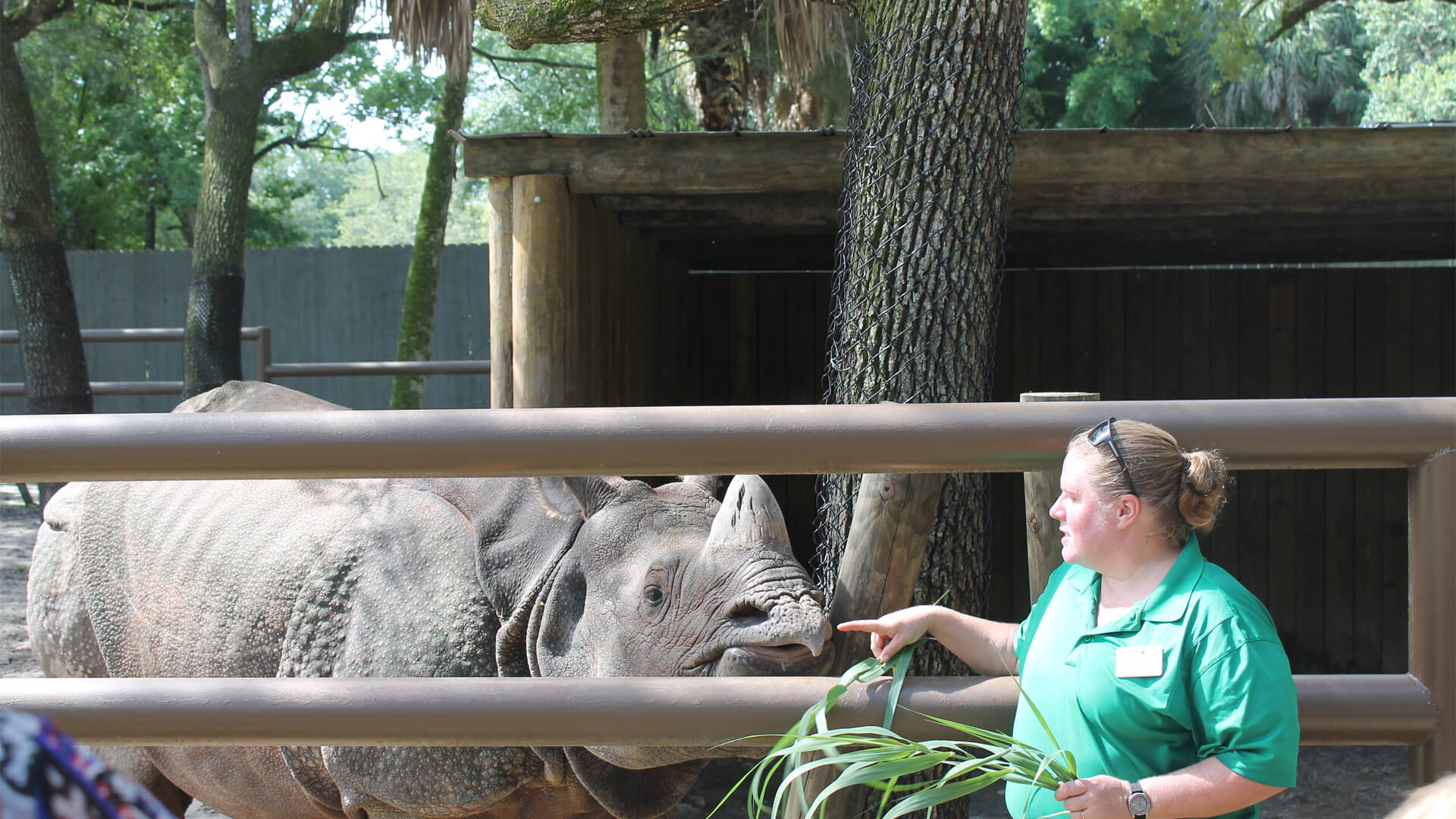
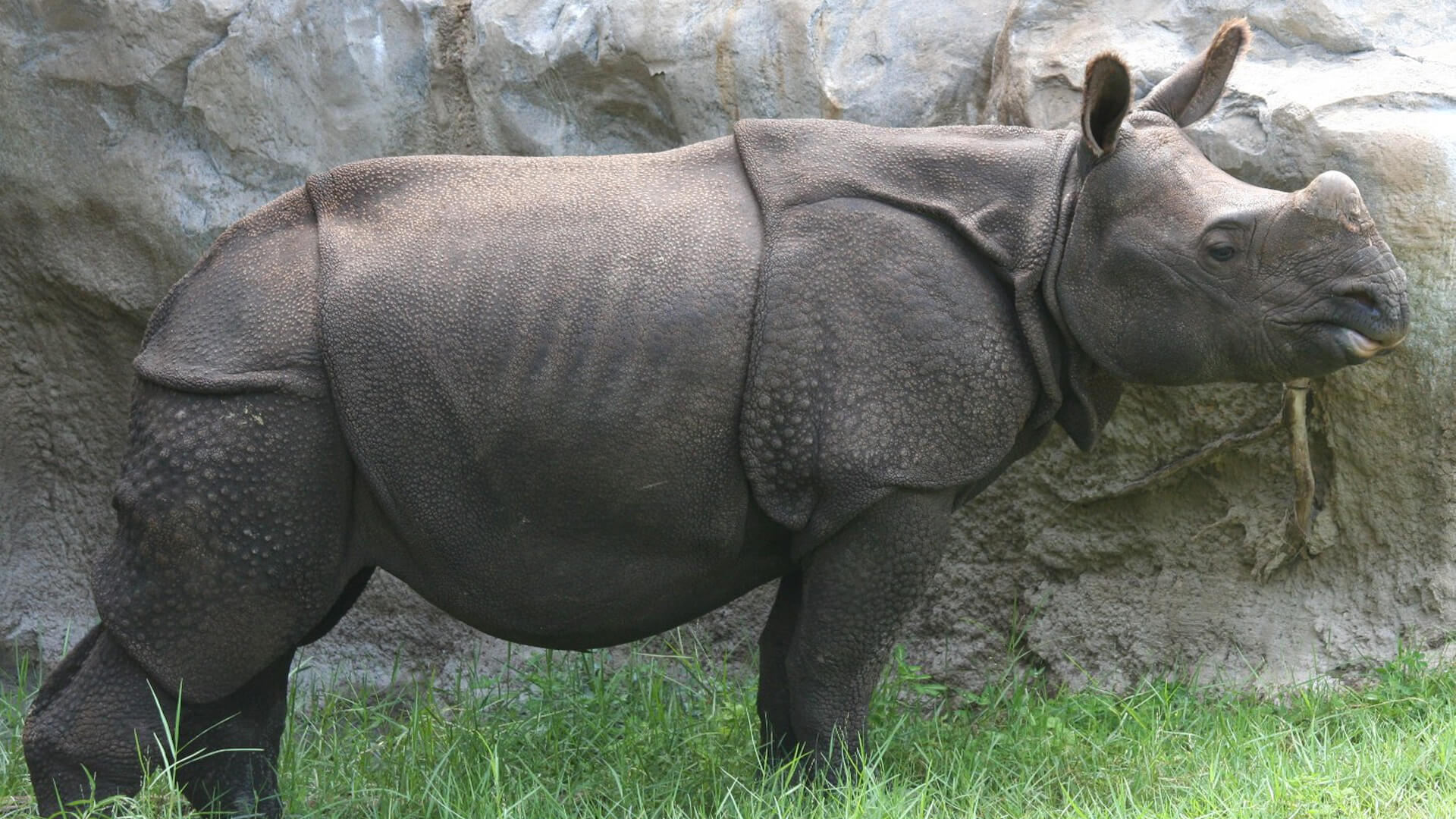
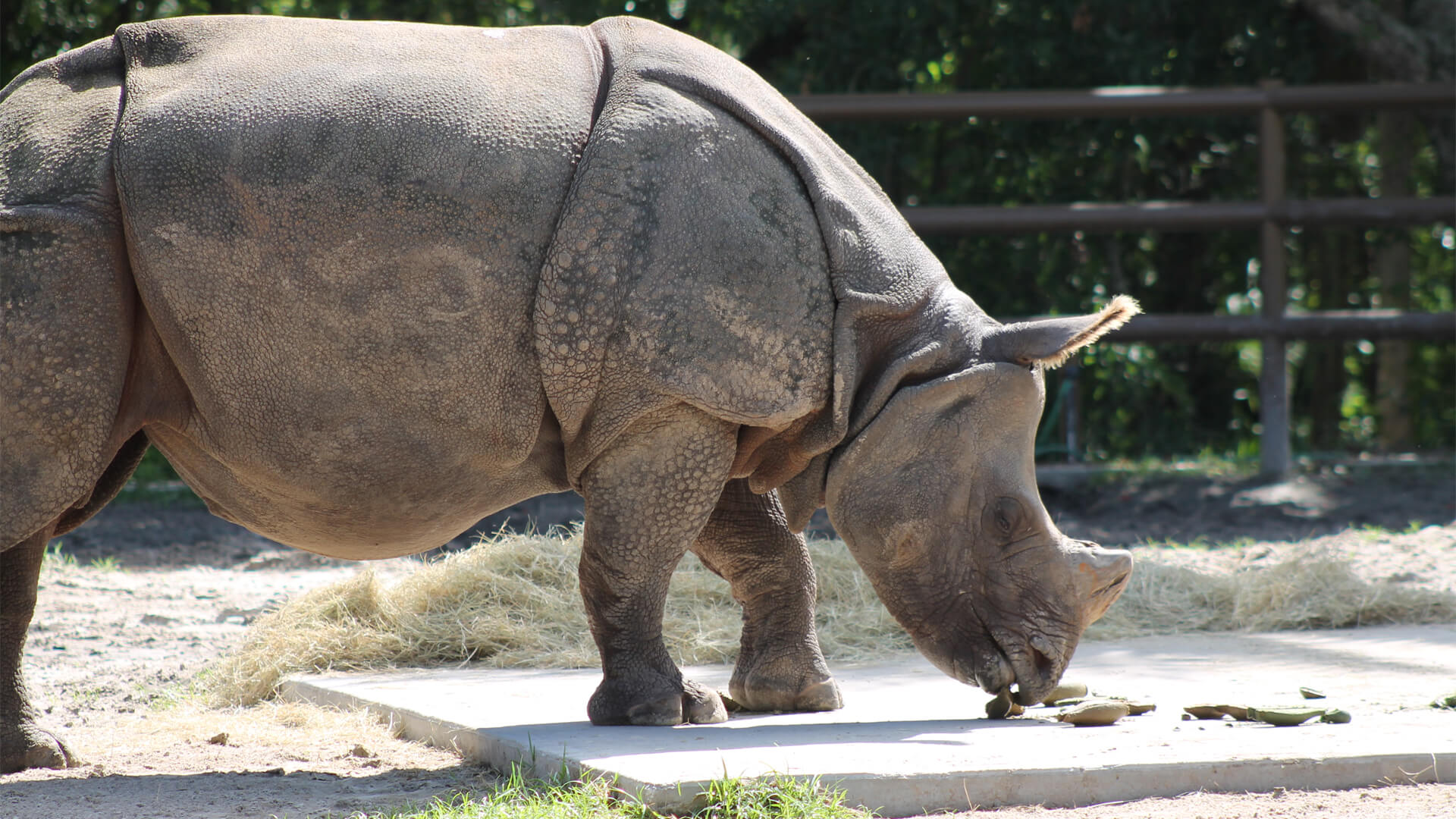
MEET PJ PJ is the Central Florida Zoo’s resident greater one-horned rhino. There are five extant species of rhinos: black rhino, white rhino, greater one-horned rhino, Sumatran rhino, and Javan rhino. Today, few wild rhinos survive outside of national parks and reserves.
Greater one-horned rhinos, also called Indian rhinos, are the second largest rhino species.
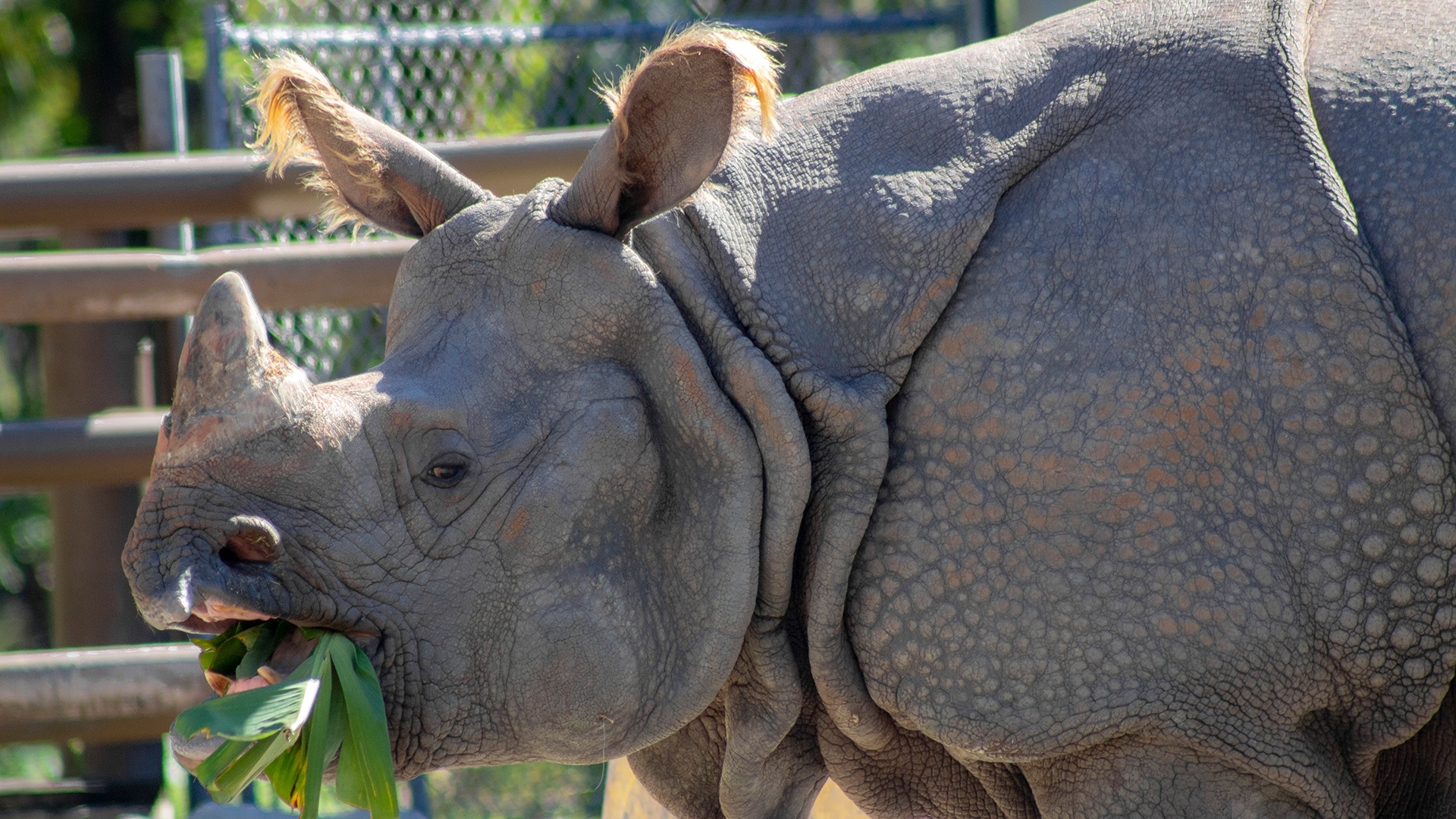
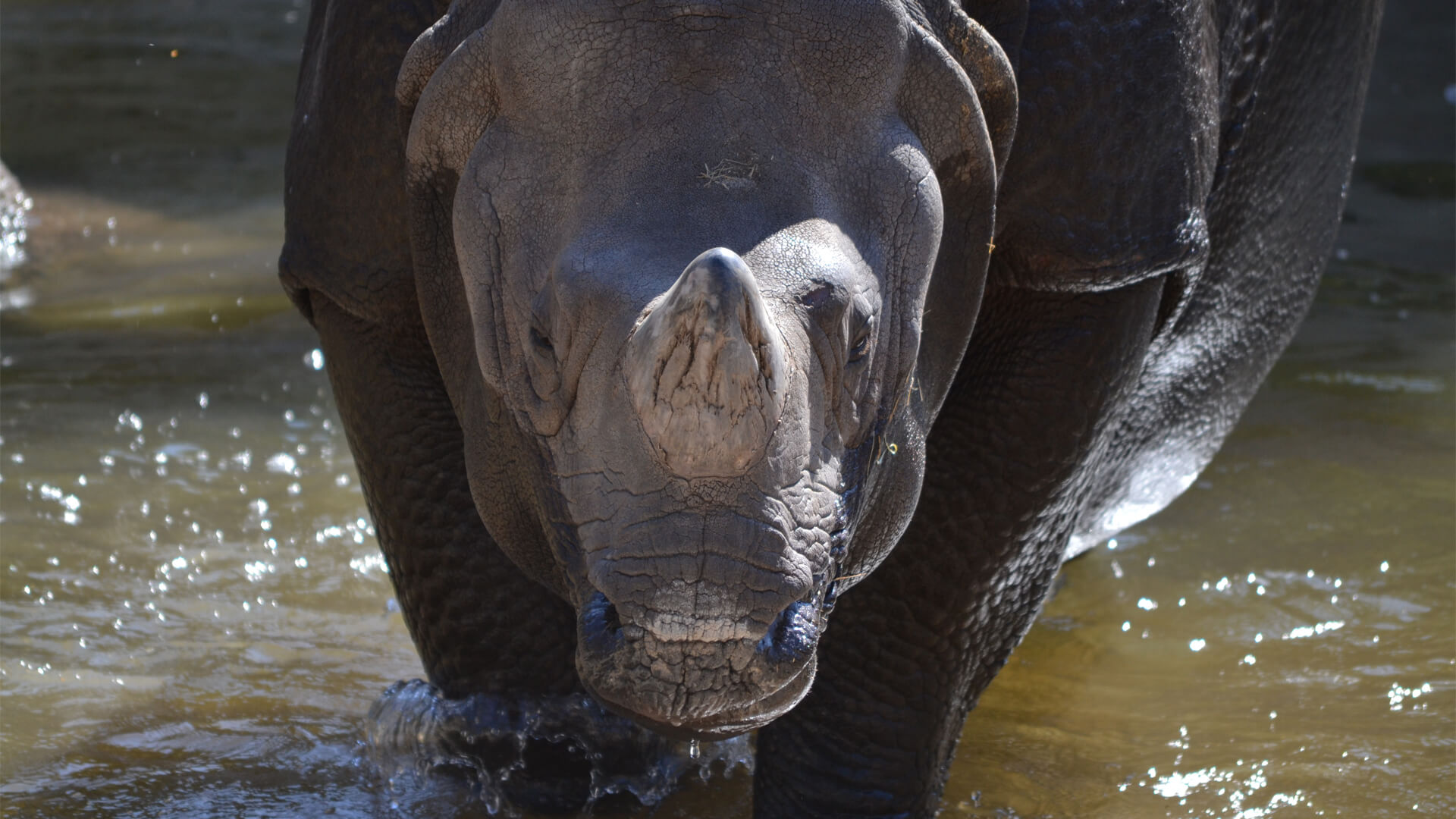
These rhinos weigh between 4,000-6000 pounds and can be over 6 feet tall. Their thick skin is an ashy gray, and has an armor-like appearance due to thick folds and tubercles. They have very little hair, only found around their eyes, along their ears, and at the tip of their tails.
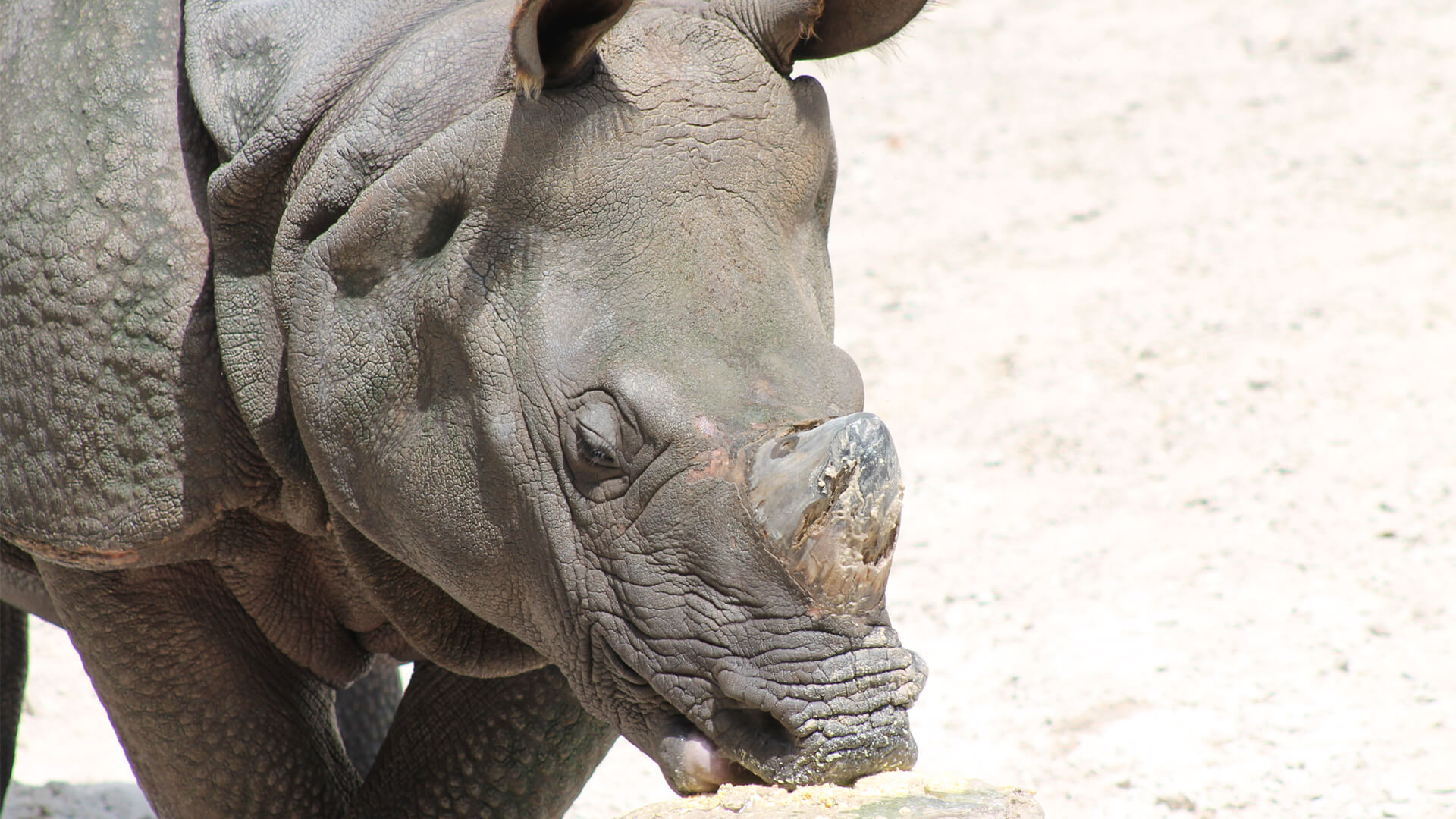
As their name suggests, they have only one horn about 8–25 inches long which will continue to grow throughout their lifetime. It proves to be helpful in searching for food and foraging for roots.
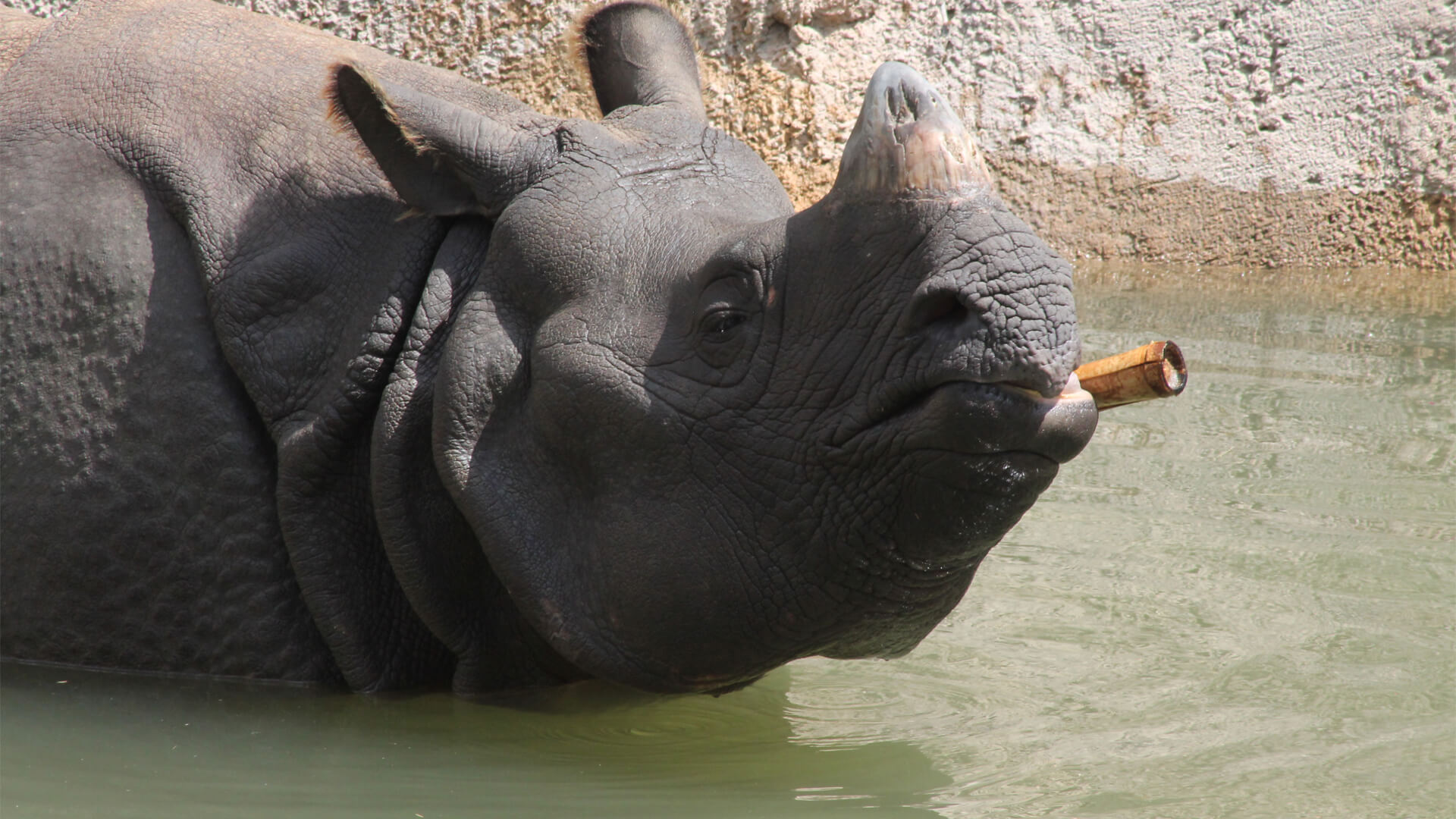
Their herbivorous diet includes a variety of grasses, fruits, leaves and branches. Their upper lip is semi-prehensile, allowing them to use it to curl it around grass stems. The greater one-horned rhino has relatively poor eyesight, thus they must rely on their heightened sense of hearing to detect danger.
Their ears work independently of each other, moving like satellites to pick up sounds around them. When startled, rhinos will charge, reaching speeds of up to 30 mph. Their sense of smell also plays a large role in communication. Greater one-horned rhinos are usually solitary beings, but several rhinos will defecate in the same spot, creating a midden (a large pile of dung that the rhinos can smell and learn about the rhinos in the area).
Meet PJ Up Close
PJ is big. Really big. But there’s more to this greater one-horned rhino than his impressive size.
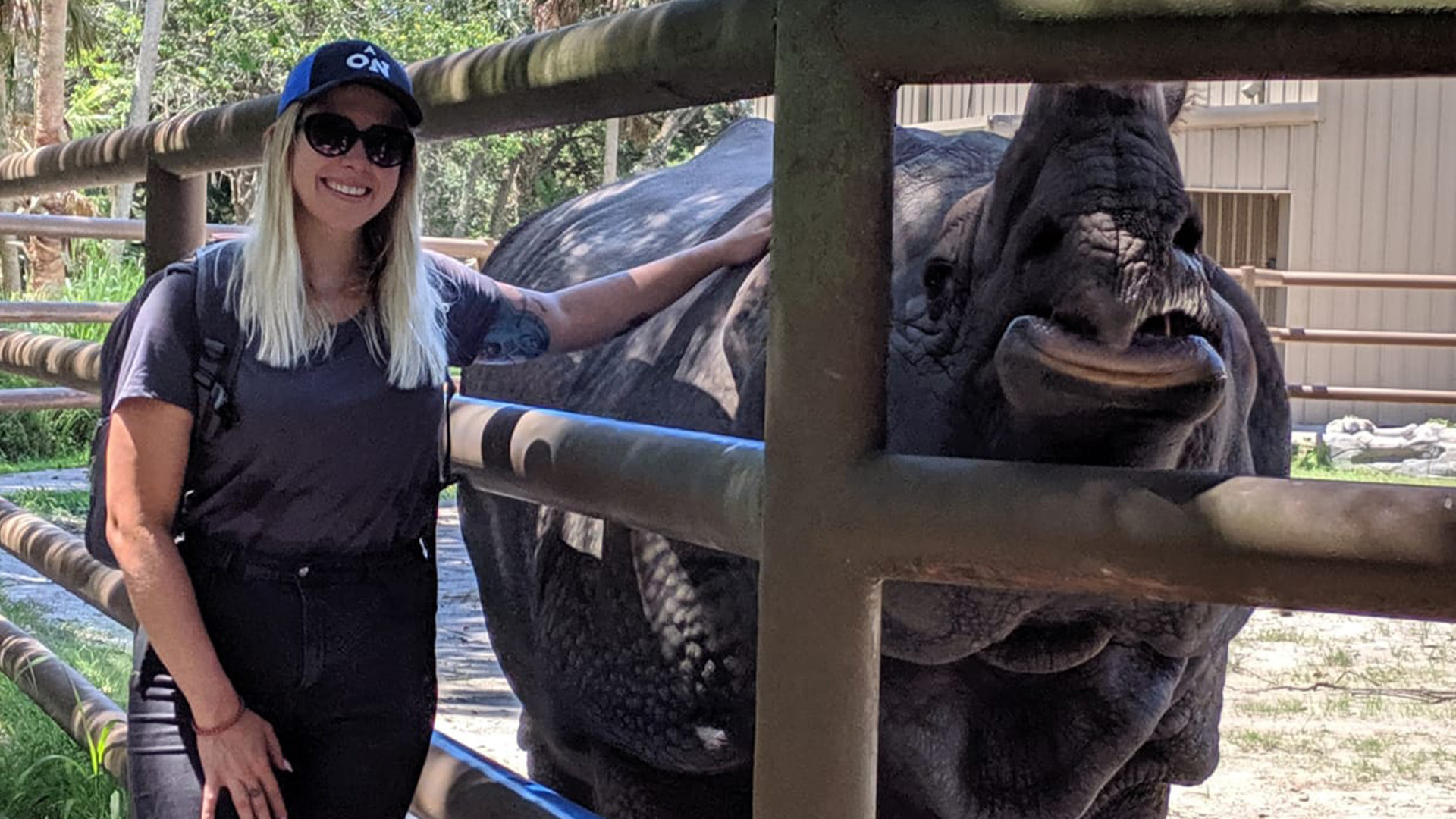
A Rhino Encounter gives you the chance to meet PJ up close, spend time with him alongside one of his keepers, and learn what makes caring for a 4,000-pound rhino so special. You’ll get to touch him and snap a few photos while you’re at it!
A rhino’s horn is not bone, but rather made of a protein called keratin. Keratin is found in your hair and nails, the feathers of birds, and the quills of porcupines!