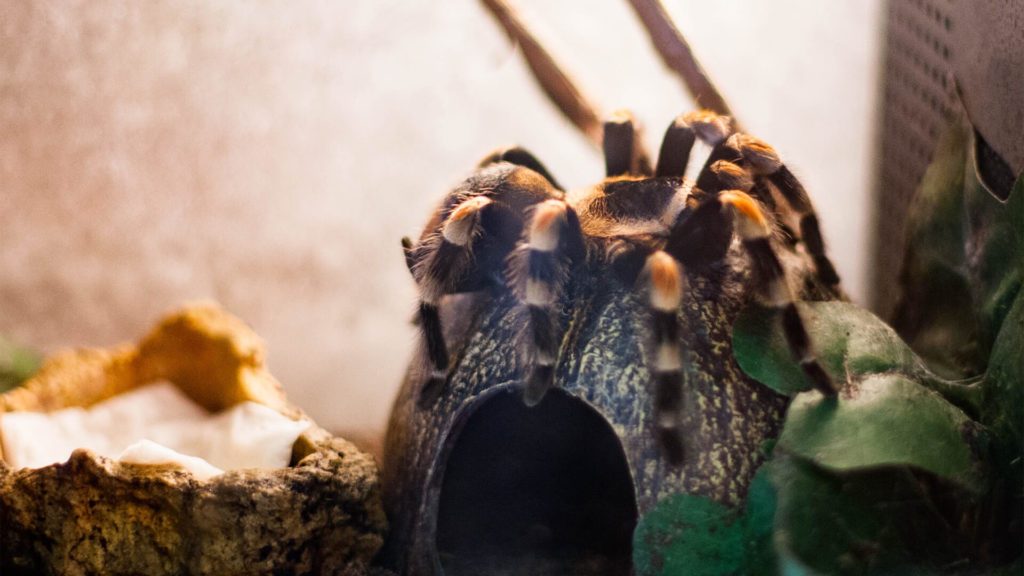
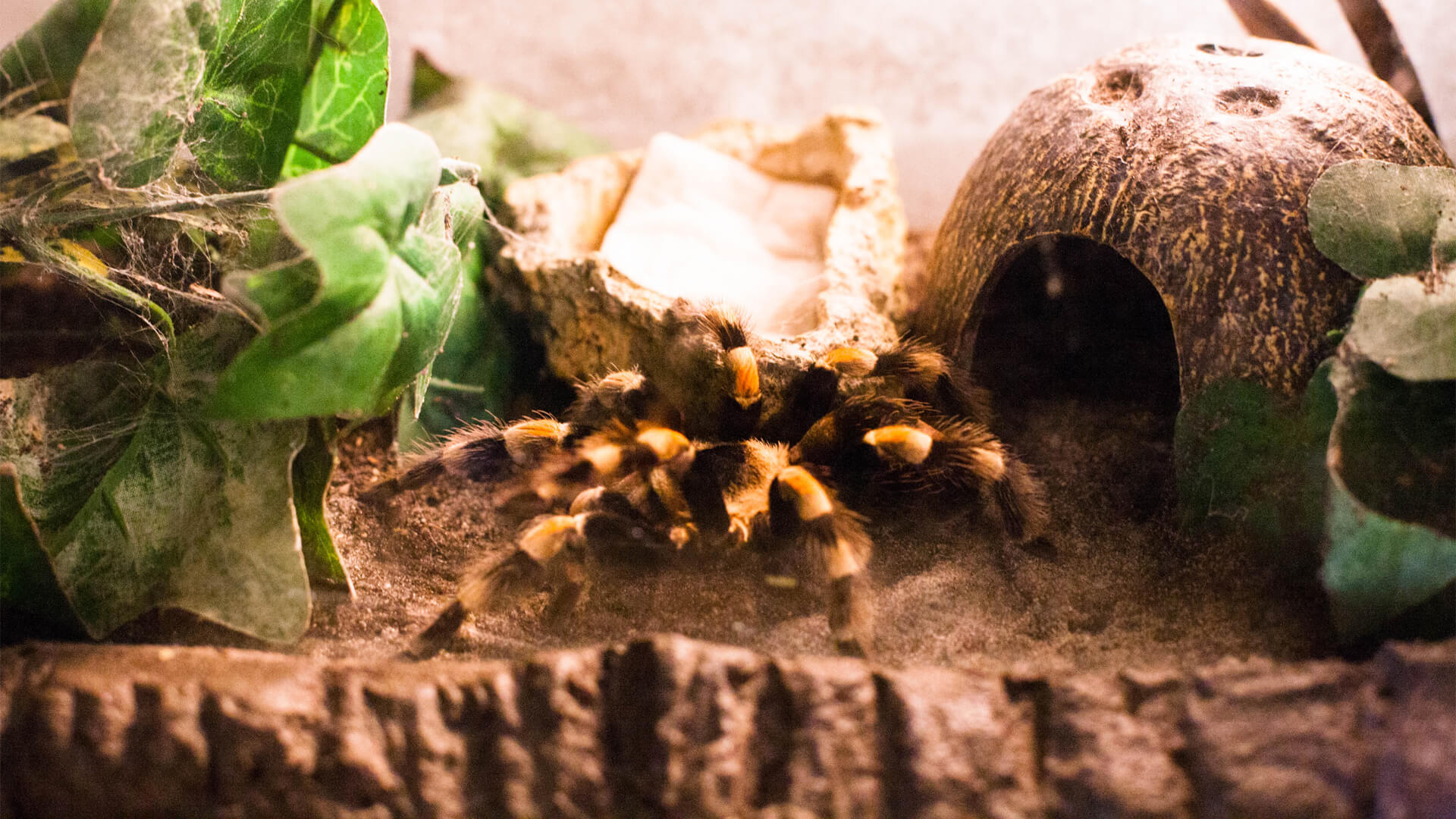
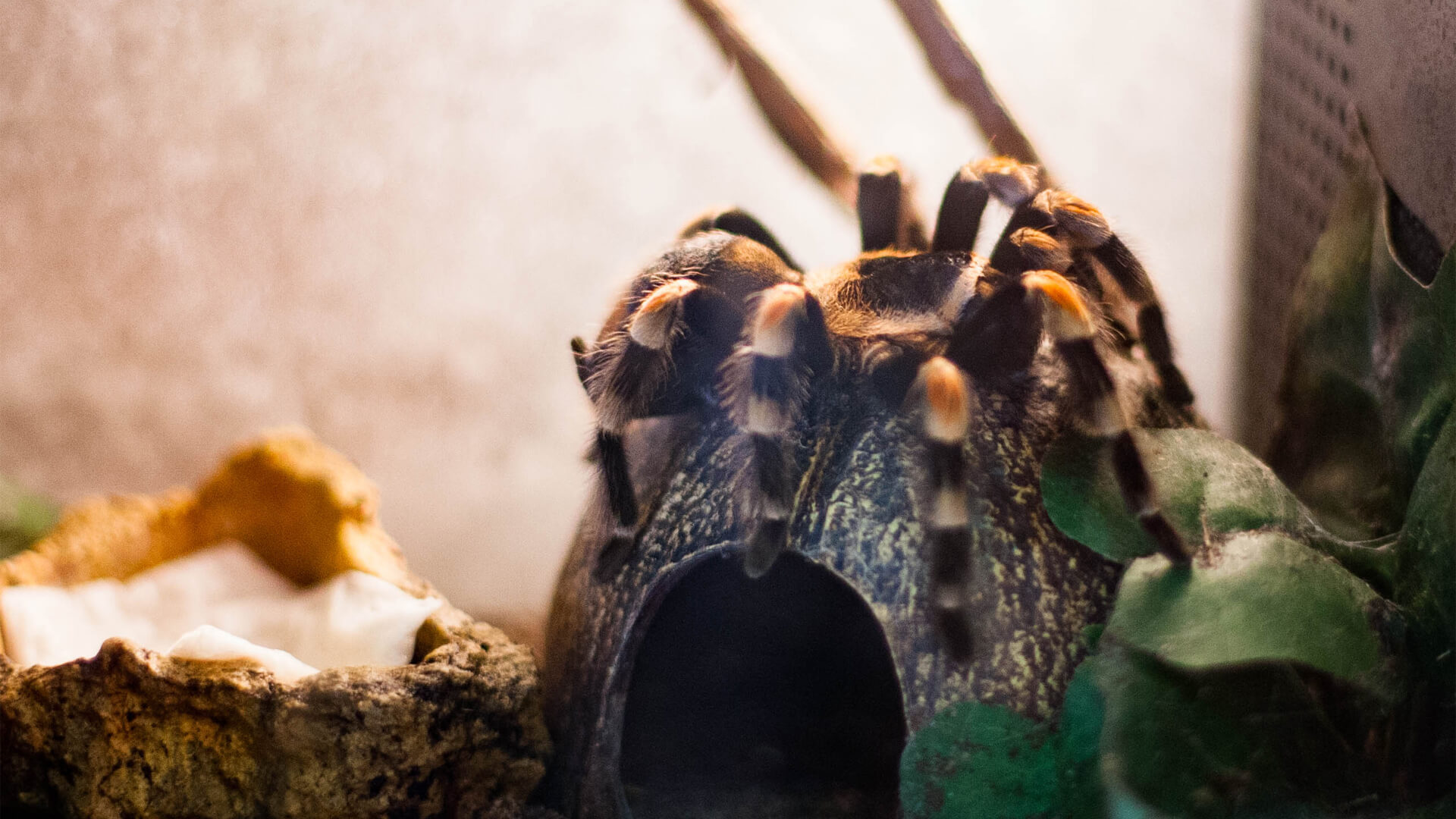
The Mexican redknee tarantula has a brown base coat with red-orange on their legs. Native to Mexico, this species is potentially threatened due to over-collection for the pet trade.
Tarantulas appear very furry. These hairs actually help to protect the tarantula from predators.
When a tarantula feels threatened, it will flick the hairs off its back and back legs into the face of what is trying to capture it. These are called urticating hairs. The hairs are barbed on the end, and will stick to the predator, causing extreme irritation.
One of the main predators of tarantulas is a type of parasitic wasp that stings the tarantula and paralyzes it. However, this is not what kills the tarantula. After paralyzing the tarantula, the wasp lays its eggs on the tarantula’s back, and when the larvae emerge, they devour the tarantula.
SCIENTIFIC NAME
Brachypelma smithi
Fun Fact
The Mexican redknee tarantula is one of the longest lived species of tarantula, living over 20 years.
Not only will Mexican redknees tarantulas use their beautiful legs to capture prey, but also to find it first! Using specialized vibration sensing hairs, they can detect an approaching insect that could make a tasty snack.