Dense tropical forests of the Northeastern peninsula of Madagascar
life expectancy
15-20 years
diet
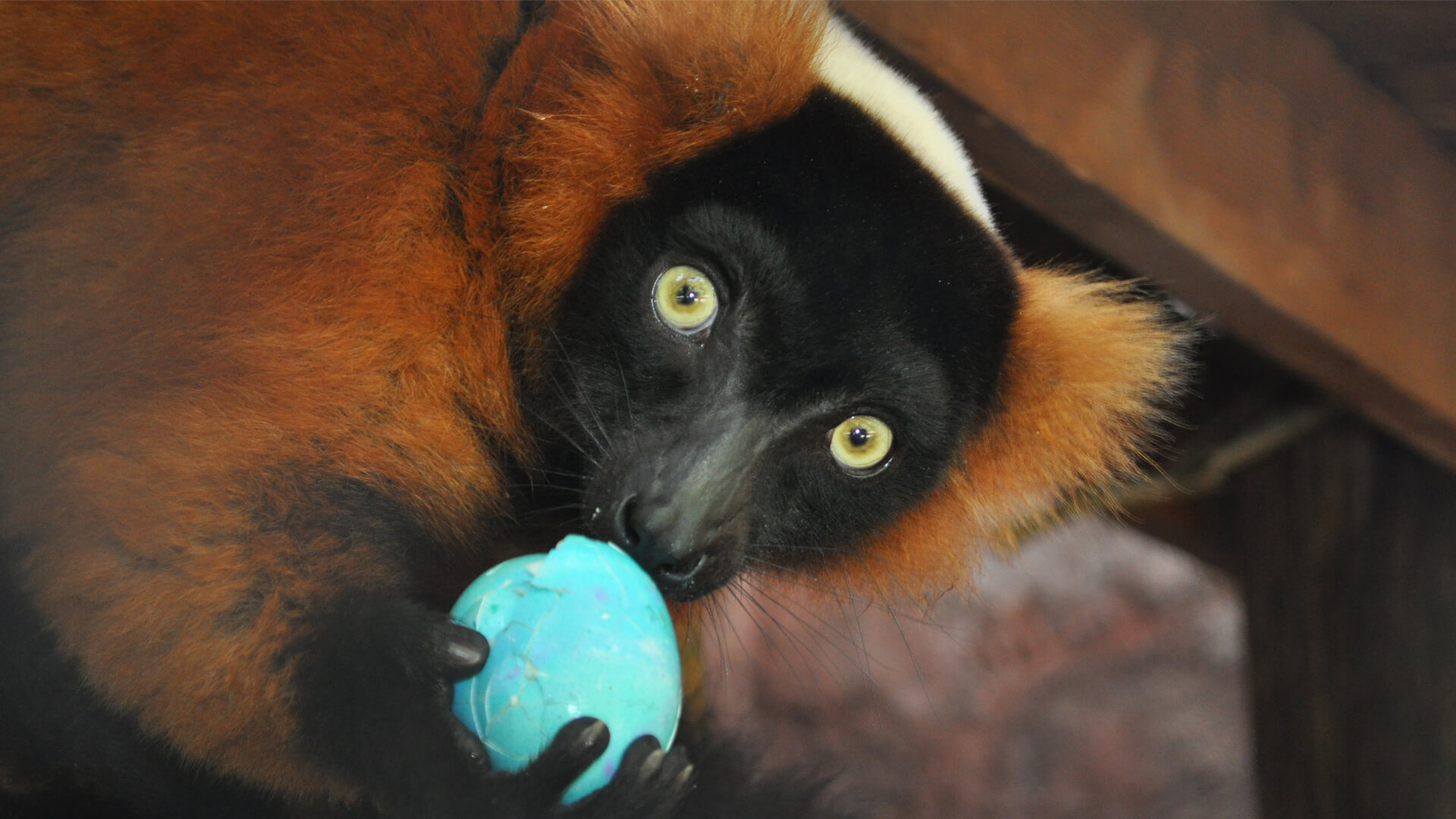
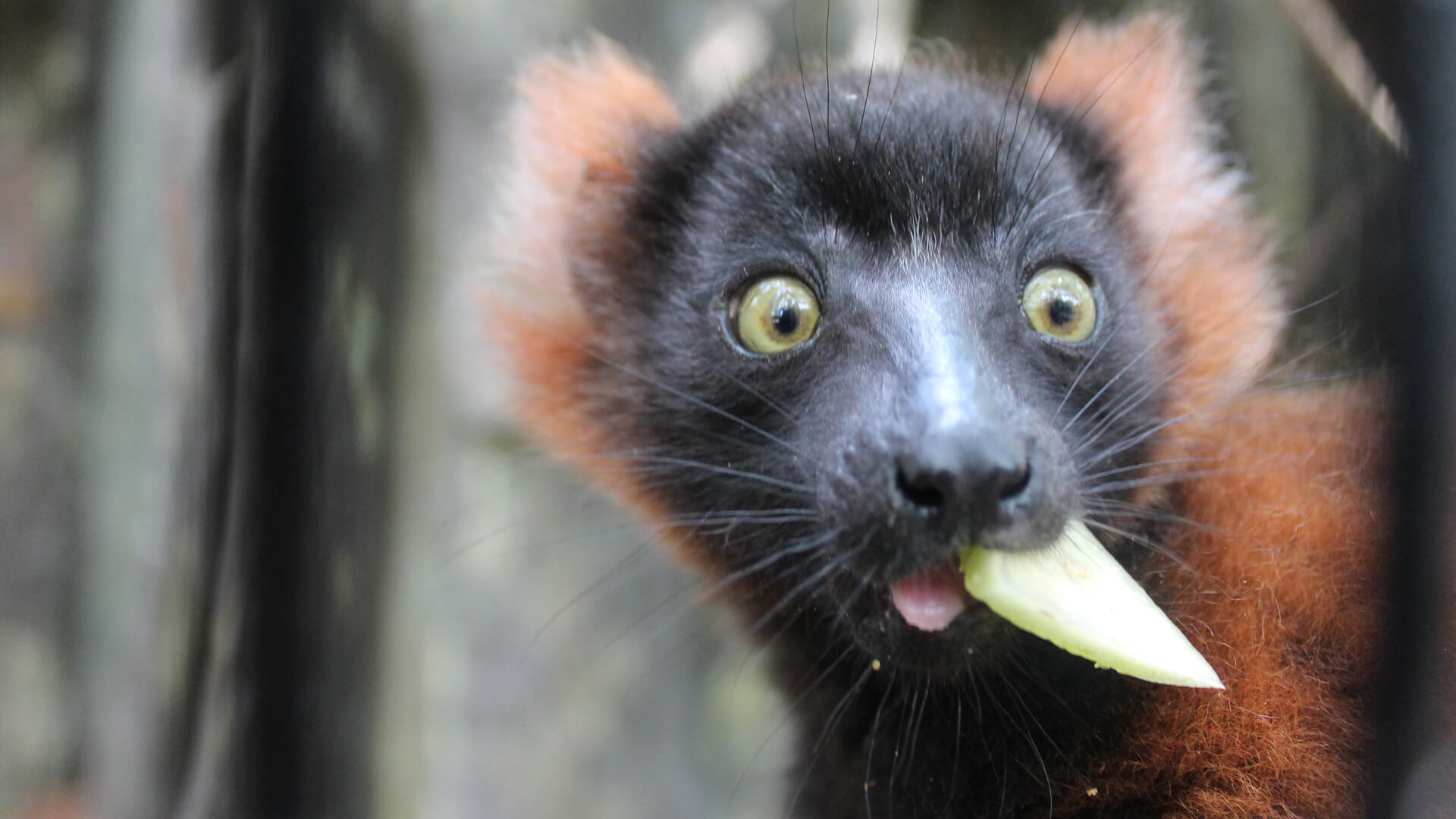
Fruit, leaves, flowers, nectar
Reproduction
Mother red ruffed lemurs give birth to 1-5 babies
predators
Fosa
natural defenses
Warning calls, climbing abilities
About the Species
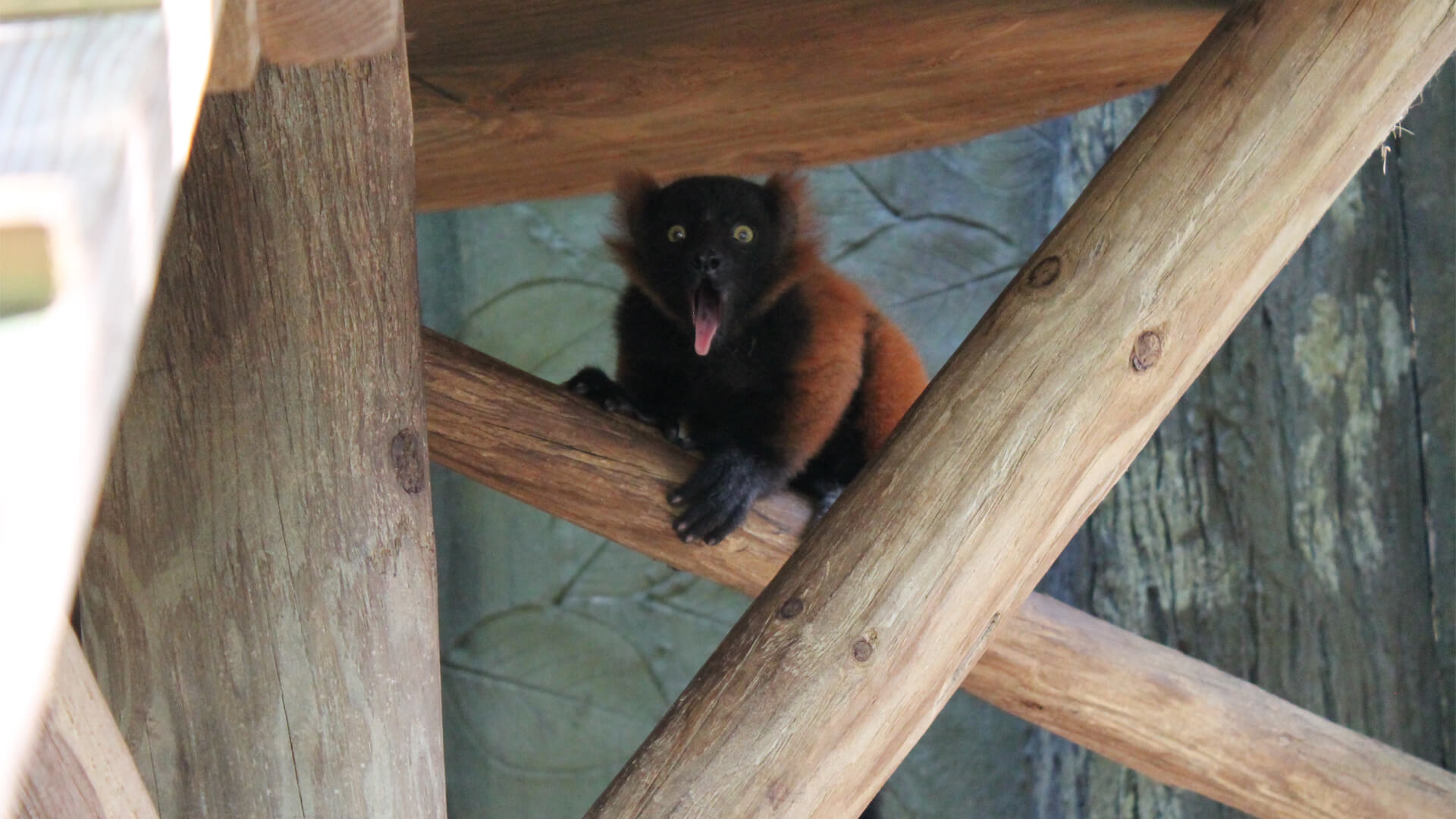
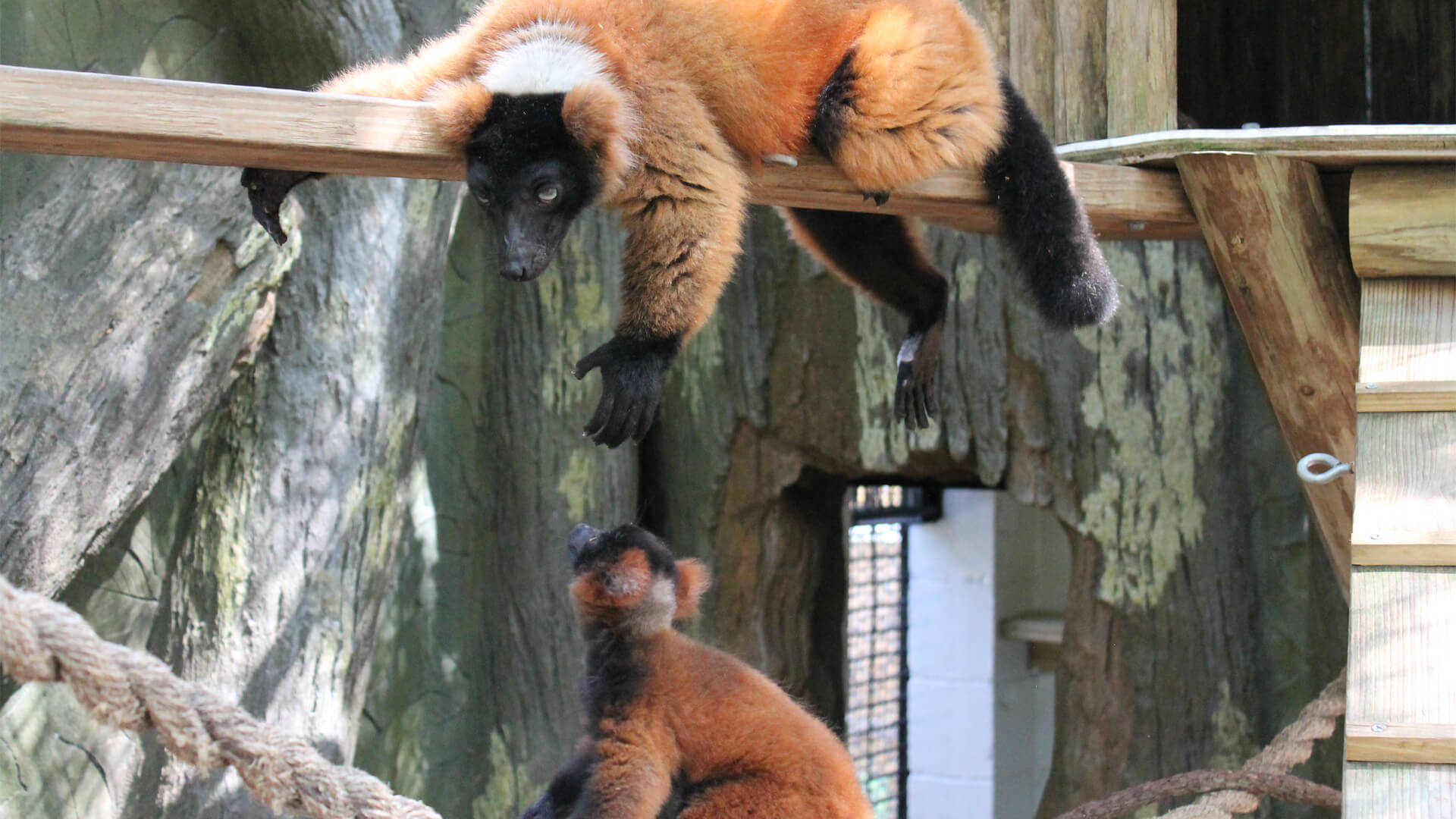
RUFOUS & RAUCOUS Red-ruffed lemurs are some of the most vocal of all the primate species in the world. The calls of our lemurs can be heard throughout the entire Zoo. Females are dominant in red-ruffed lemur society, with her offspring second on the totem pole above dad. Their loud calls can be a result of a food dispute, seeing a hawk flying overhead, or just making sure they know where every family member is.
The red-ruffed lemur is restricted to the northeastern Masoala peninsula of Madagascar.
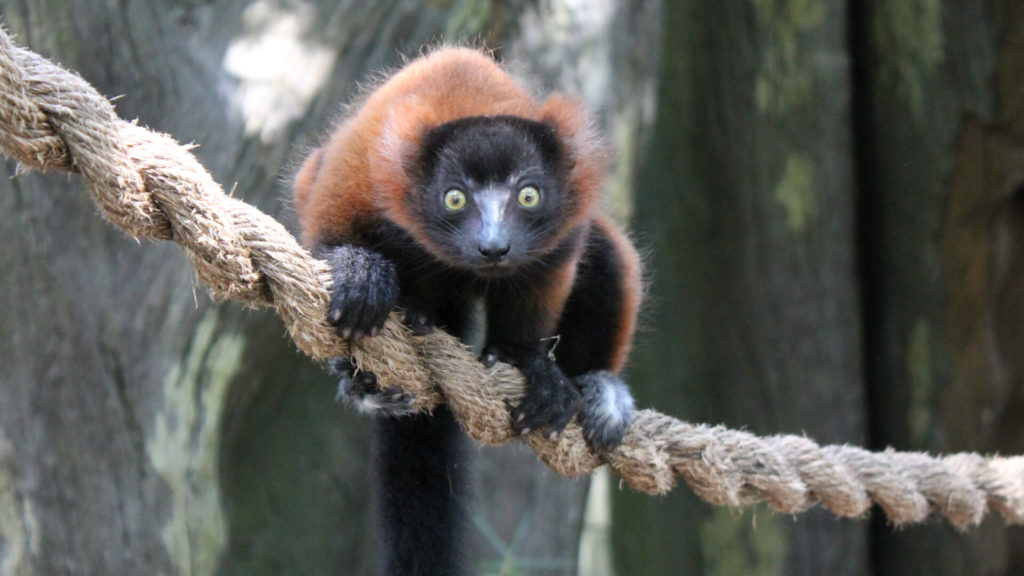
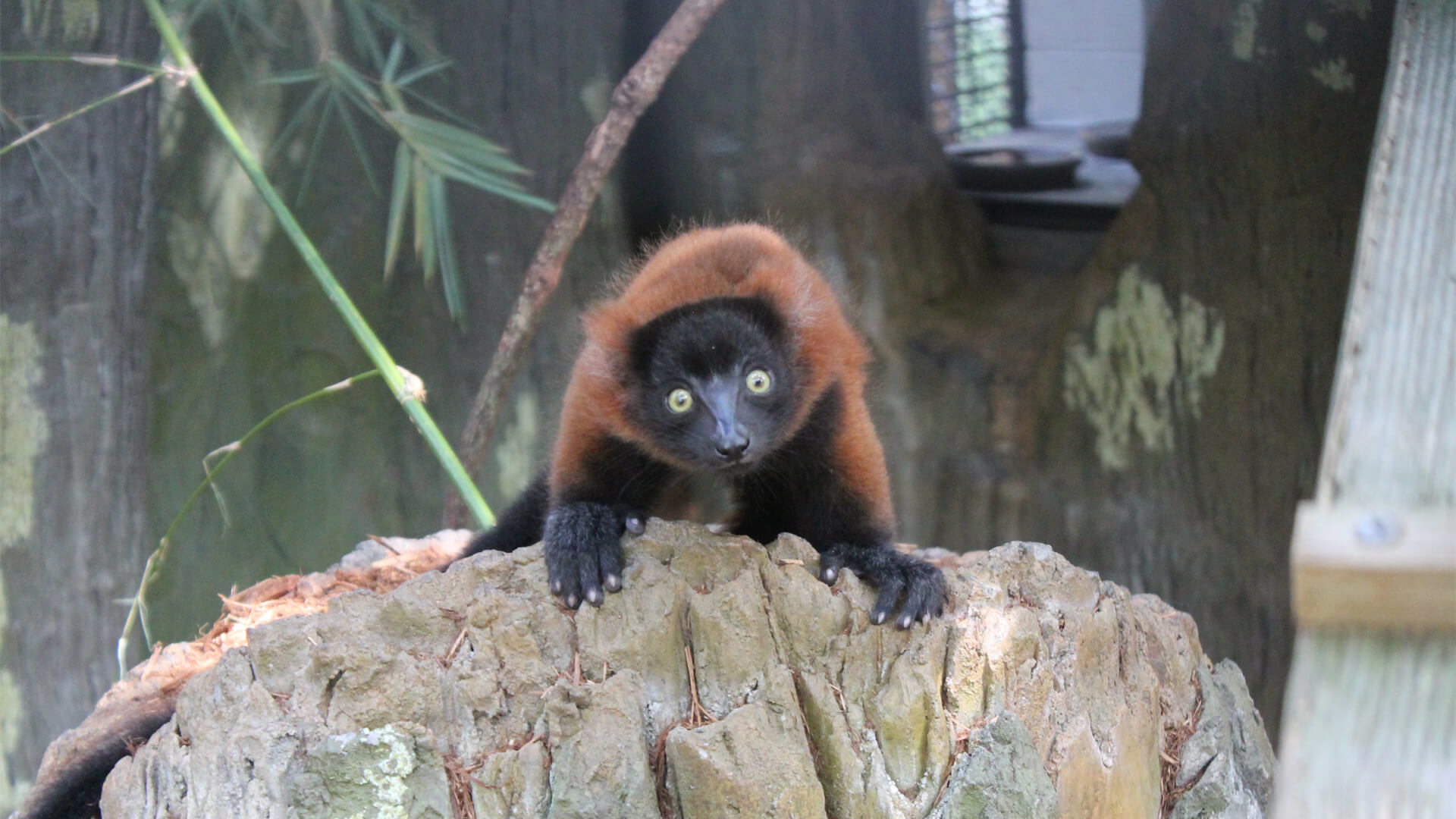
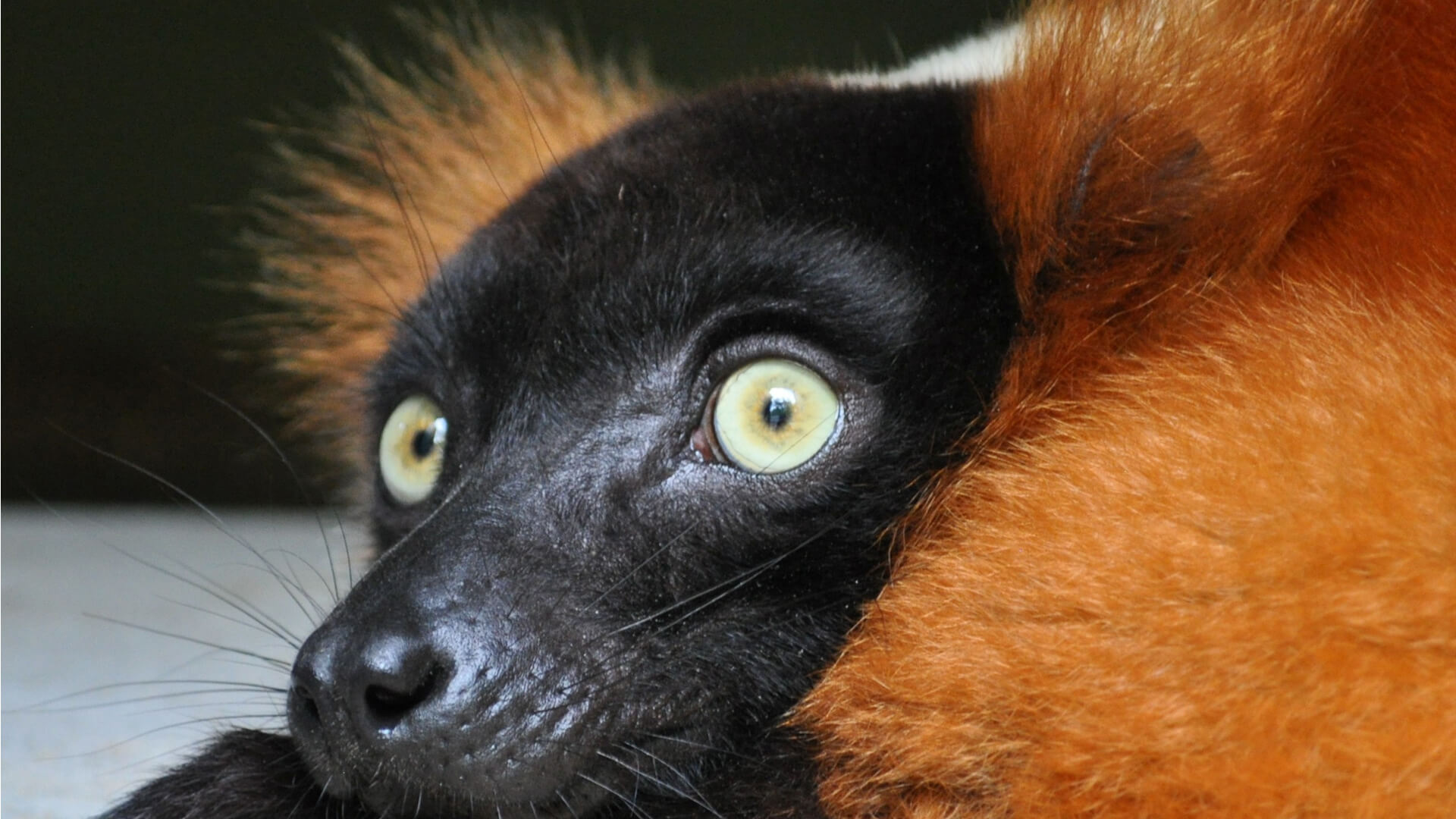
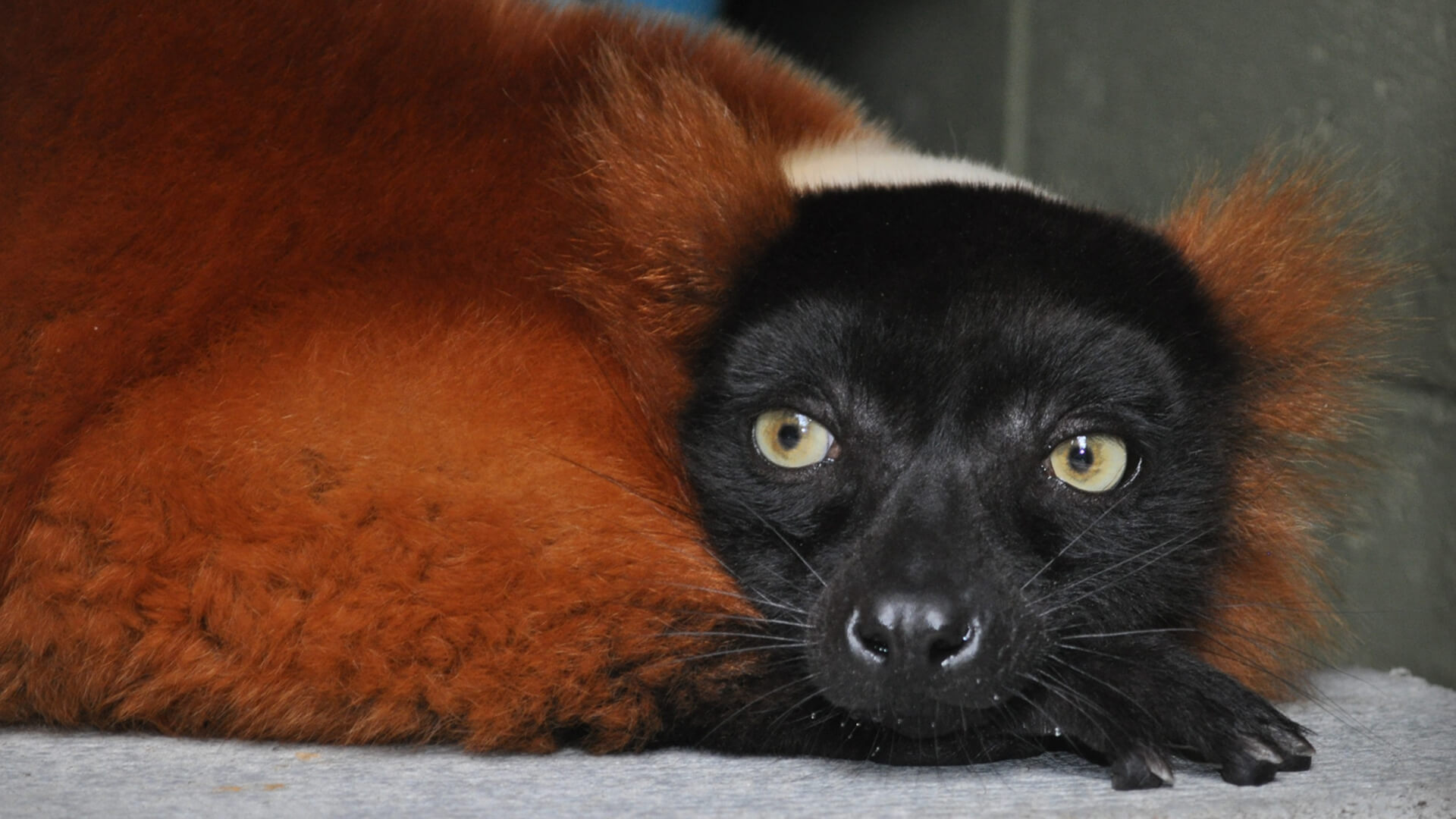
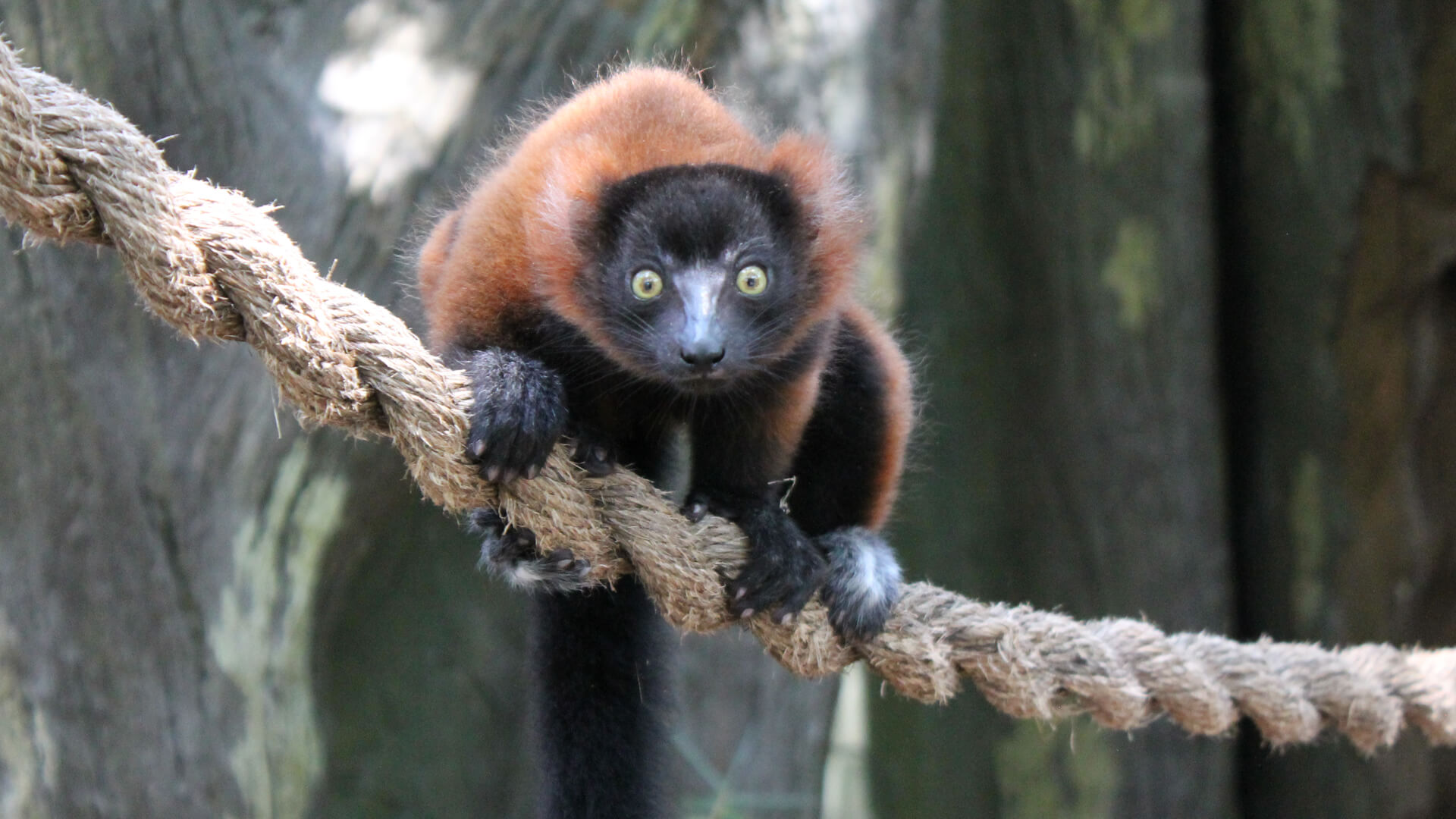
Red-ruffed lemurs are characterized by dark reddish brown fur, with black and white markings on their head and a black tail. These lemurs are unique among the other species of lemurs, in that their babies are unable to cling to the mothers back. Instead, the mother lemur will “park” her babies in a nest or in the crotch of a tree while she forages nearby. The red-ruffed lemur is one of the larger lemur species. It prefers to make its home in tall, mature trees. Unfortunately, these trees are also highly desirable to loggers. Habitat loss and destruction are the main threats to this species.
SCIENTIFIC NAME
Varecia rubra
Fun Fact
Red ruffed lemurs are important pollinators and seed dispersers for several plants in the forests of Madagascar.