Tropical forests, cliffs and trees of Asia and the Indo-Australia Archipelago
life expectancy
10 years in human care
diet
Insects, such as cockroaches and locusts
Reproduction
Females lay 3-4 eggs a month during the 4-5 month mating season
predators
Birds and snakes
natural defenses
Strong bite, hissing and males vocal croak
About the Species
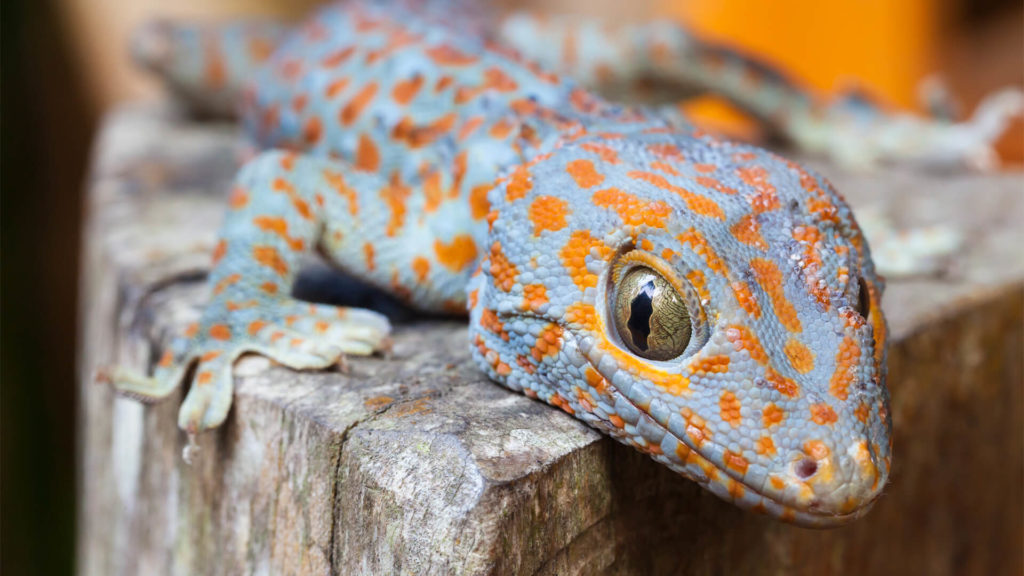
“STICKY” FINGERS The grey-blue, but colorfully orange spotted, tokay gecko is the best known for climbing any surface, including glass. They often are found living around people in Asia, eating common household insects.
One of the largest geckos in the world, these solitary animals have a fearsome bite when threatened. Tokay geckos can be hard to spot due to their flat bodies and camouflaged skin. If caught, they can shed their tail, although it may take three weeks for it to grow back. With a strong sense of smell, using their tongue and a Jacobson’s organ, insect prey can be found easily.
Their tongue is also used to clean the scale located on their eye as their eyes do not close. Tokay geckos can be found in and around homes in their native habitat, and unfortunately have been introduced into Florida, where they may become an invasive species.
SCIENTIFIC NAME
Gekko gecko
Fun Fact
The males are vocal, making calls that sound like “gek-ko” to attract a mate.