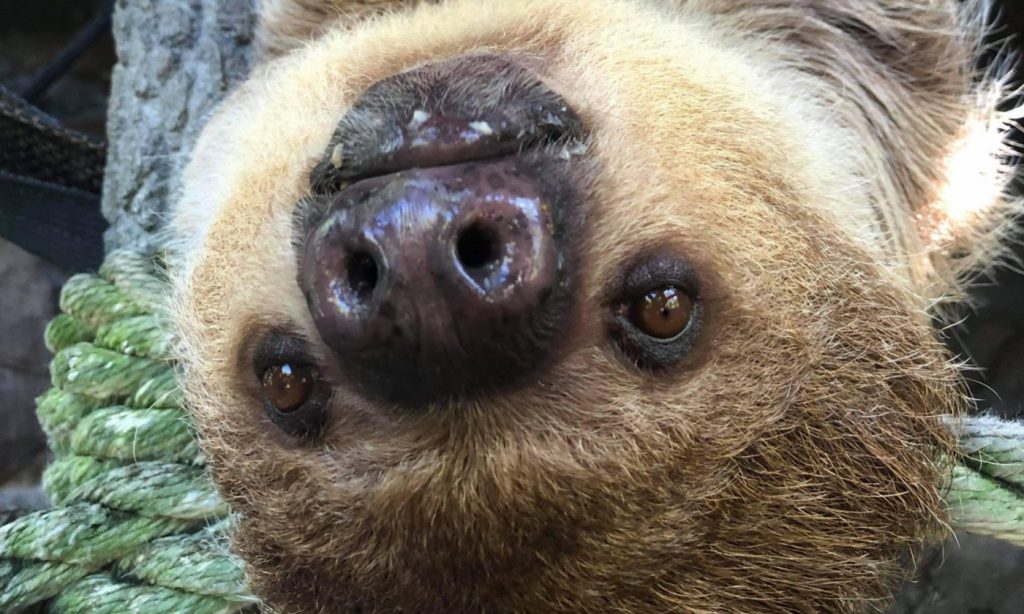
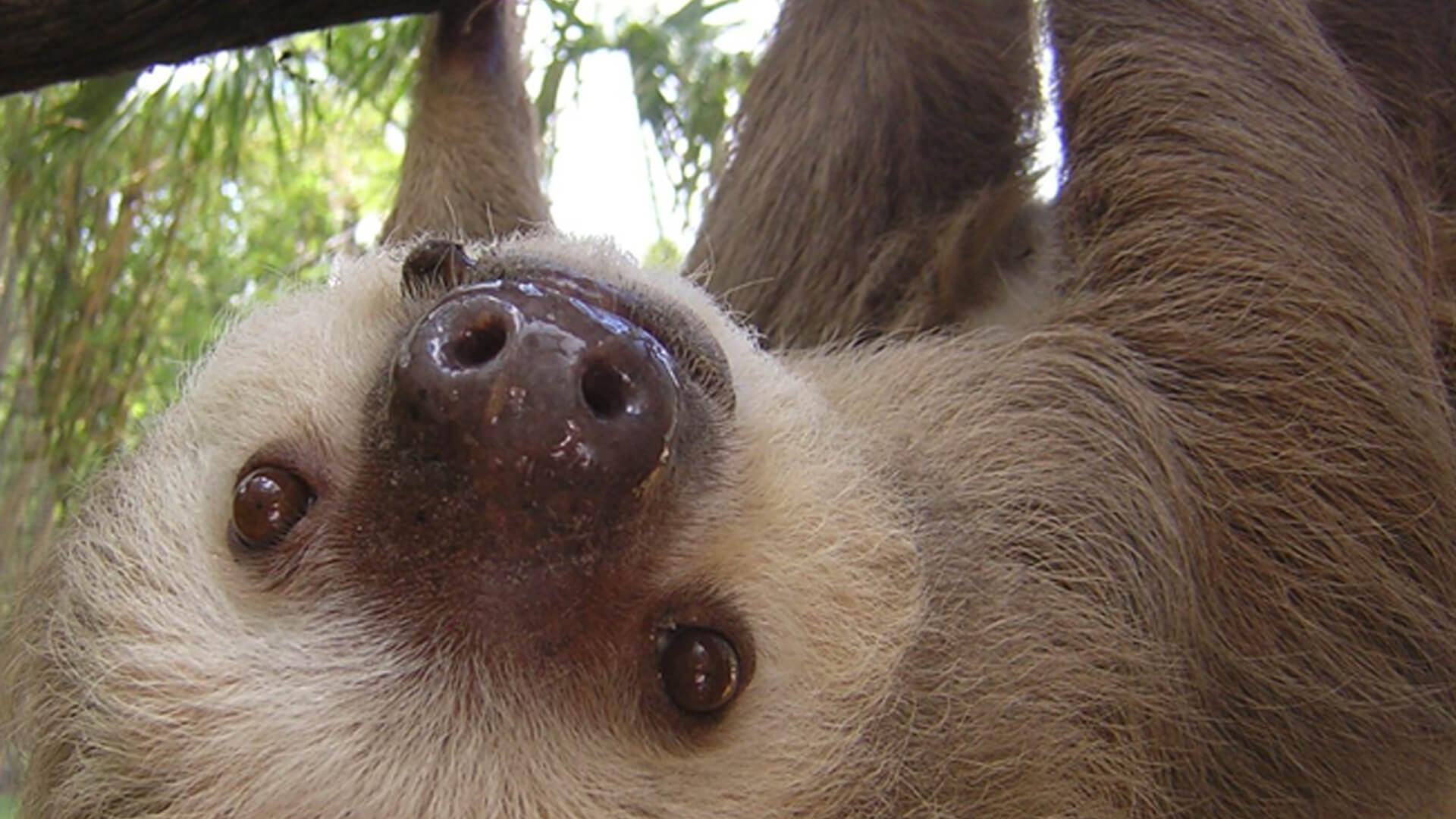
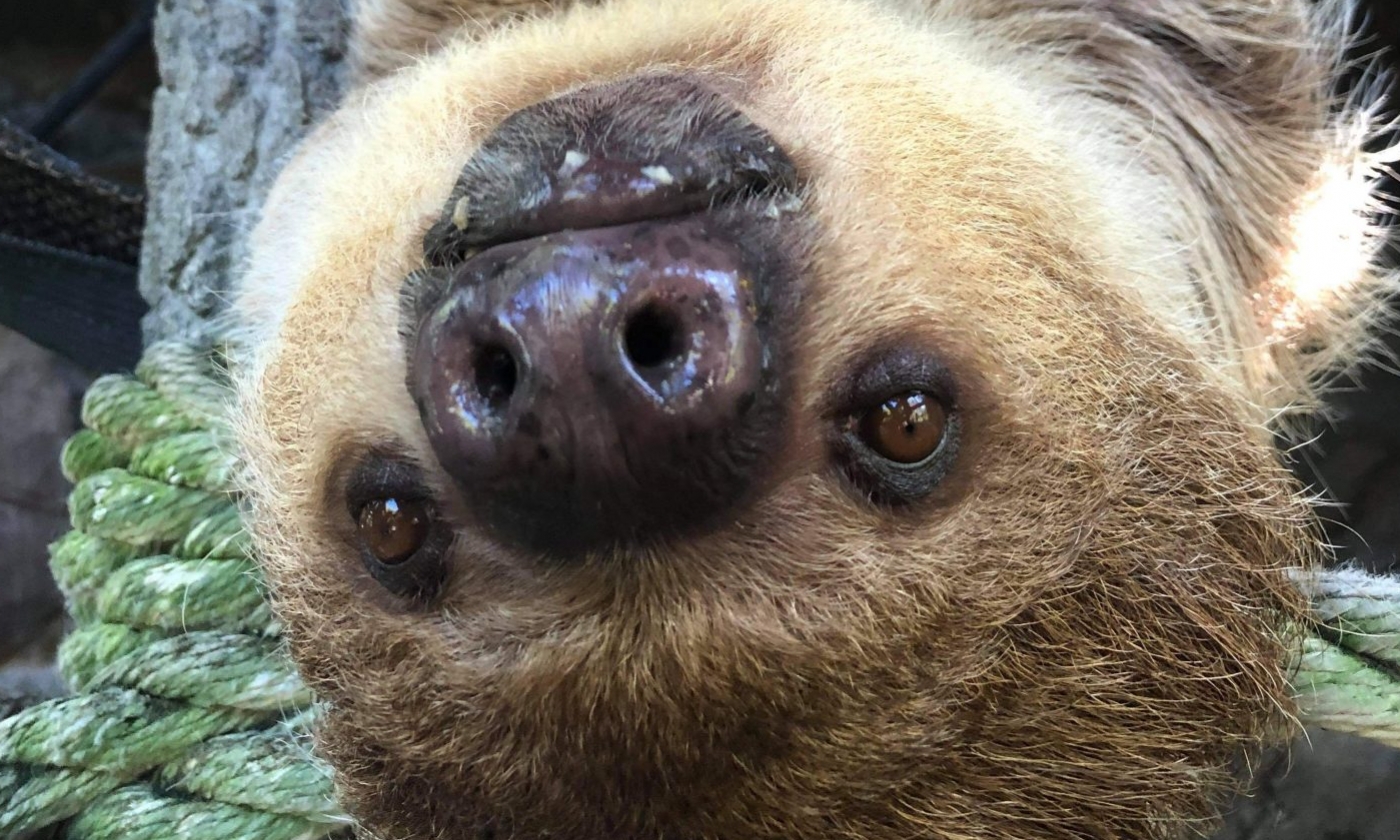
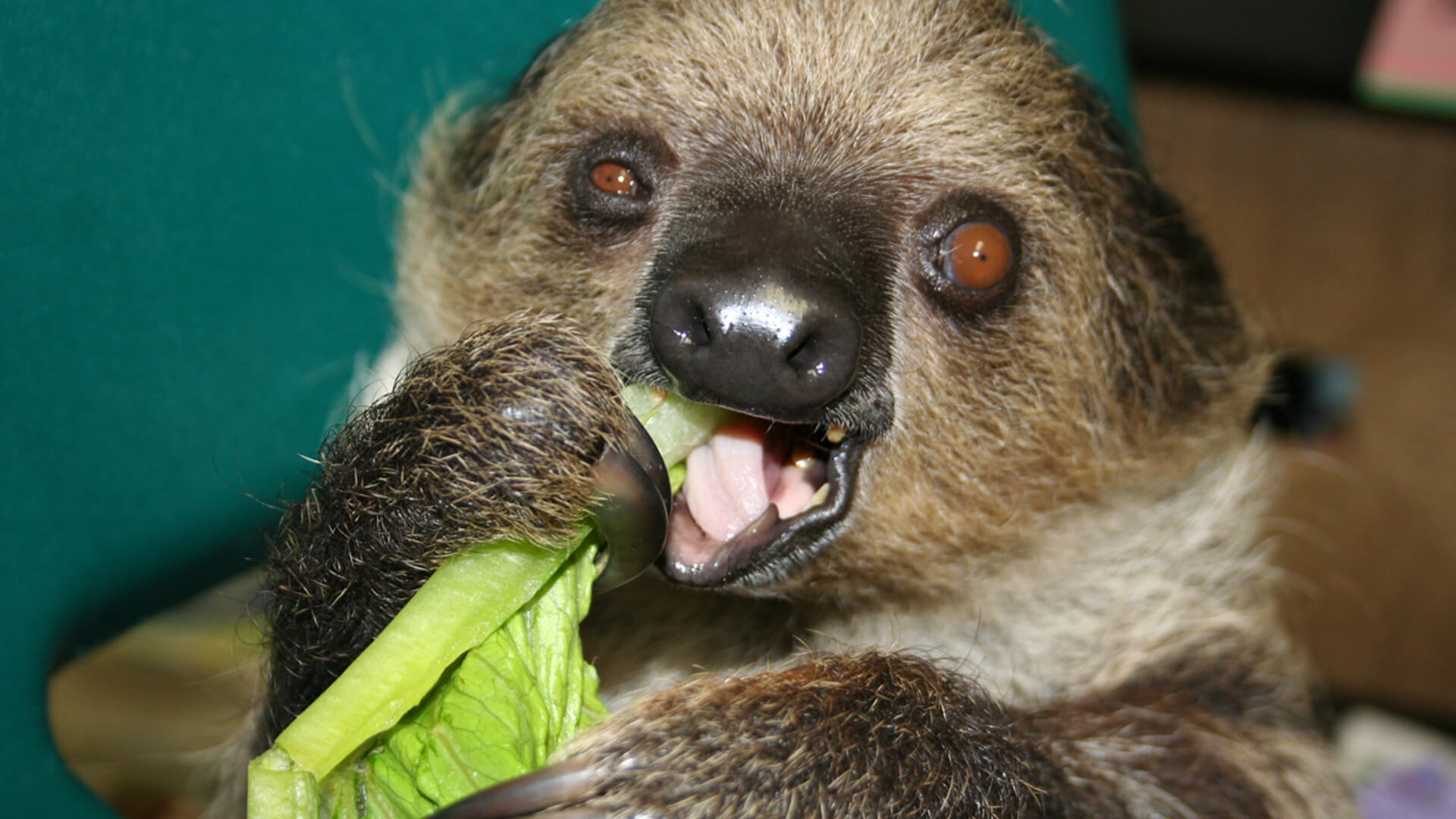
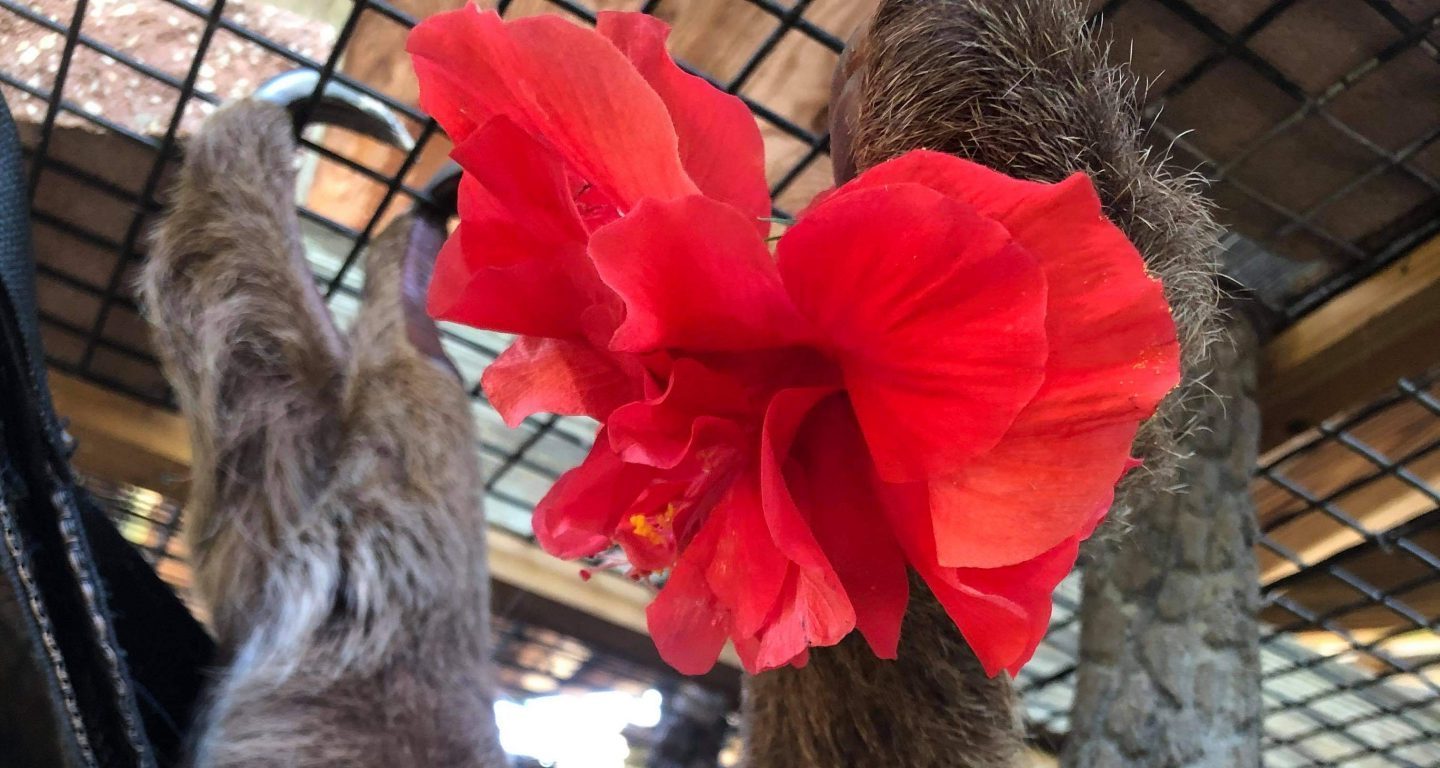
Sloths have a variety of adaptations for their upside-down, slow lifestyle. Sloths are one of the only mammals with hair that parts from their stomach and flows towards their back. Additionally, sloths, along with manatees, are the only mammals that do not have seven cervical vertebrae.
Thousands of years ago, giant ground sloths roamed the United States and ranged in size between a dog and an elephant. Today’s sloths are smaller and most-closely related to anteaters.
The two-toed sloth is mainly nocturnal, sleeping up to 20 hours every day. Sloths are extremely adapted to their “slow” and arboreal lifestyle, spending almost their entire life upside-down in the trees. Sloths only come out of the trees about once a week in order to defecate on the ground. Because of their long claws, sloths are not good at walking on the ground, and are very vulnerable to predators when they do so.
They are decent swimmers, however. The hair of the sloth is very unique, as it parts down the middle of their stomach and flows towards their back: the opposite of most other animals. Yet another adaptation to life upside down! The two-toed sloth is characterized by two large, three-inch claws on both the front feet. All sloths, whether one of the two-toed or three-toed species, have three claws on the hind limbs
SCIENTIFIC NAME
Choloepus didactylus
Fun Fact
The sloth’s speed, or lack there of, is actually one of its defenses against predators. If they don’t move, predators can’t see them! Additionally, algae grows on their fur, and the green color helps them blend in with the trees.