Mainly fruit, some insects, amphibians, birds, small mammals
Reproduction
Females lay up to 3 eggs in a tree cavity
predators
Humans
natural defenses
Large size, flight
About the Species
Wreathed hornbills are large, visually striking birds that can be found throughout a large range in Southeast Asia.
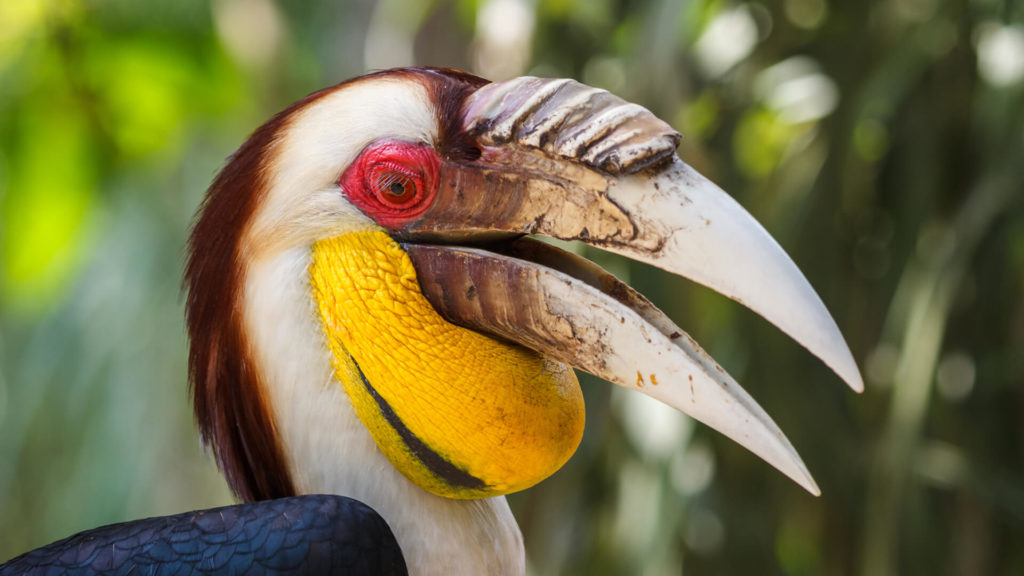
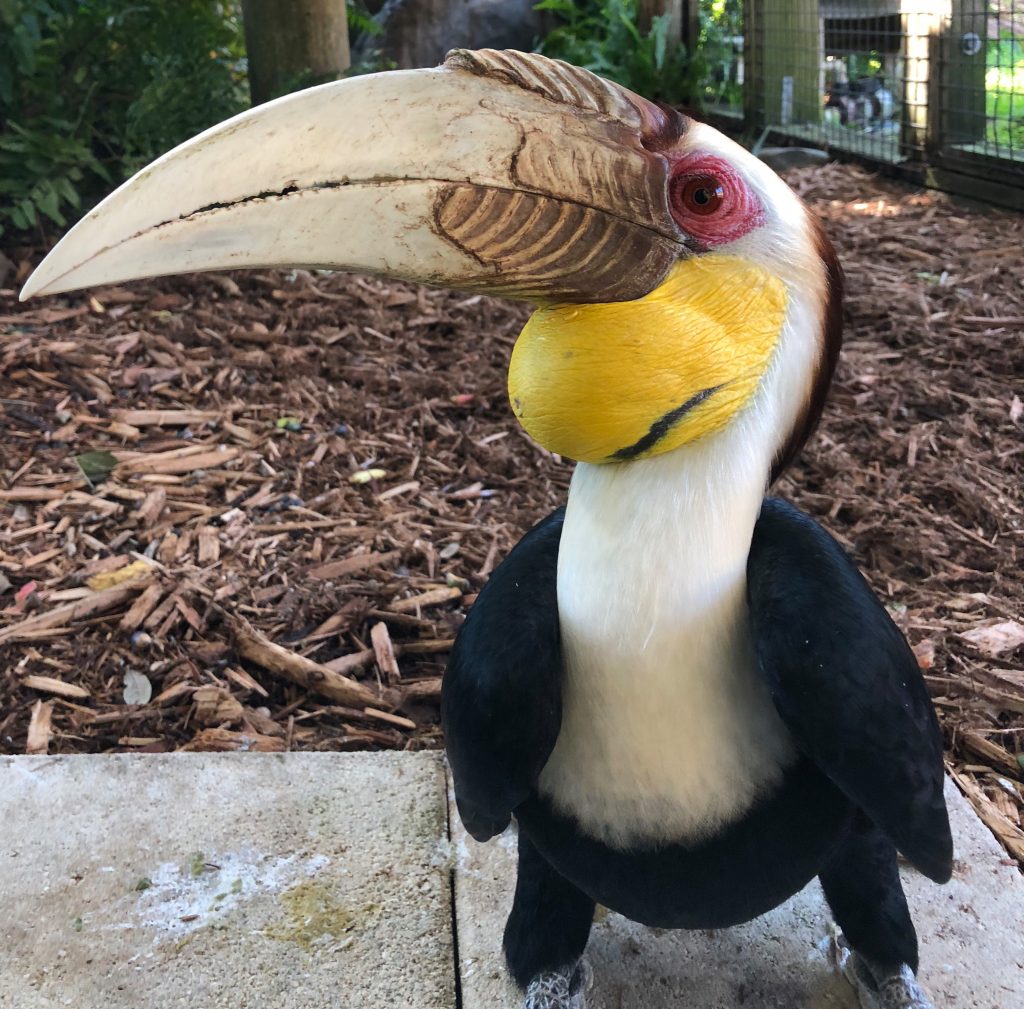
Adult male wreathed hornbills have bright yellow skin around their bills and throats. In contrast, adult females have bright blue skin. This makes it very easy to distinguish the genders in this species!
There are many different species of hornbill, and most of them share several features that are quite unique and set them apart from the rest of the bird world. One truly interesting feature of most hornbills is the presence of a casque. This is a large protuberance on top of the long, decurved bill that is common to all hornbills. The wreathed hornbill is no exception. These Asian bird have a flattened, grooved casque atop their bills. The casque is common to both males and females of this large Asian species, but their coloration is what sets them apart.
When wreathed hornbills are young, both genders possess a bright blue throat. However, as these birds mature, the male’s throat will become bright yellow and the female’s will remain blue. This is a great example of sexual dimorphism, or difference between genders.
Wreathed hornbills are predominantly frugivorous, meaning that they prefer to eat fruit over other foods.
SCIENTIFIC NAME
Rhyticeros undulatus
Fun Fact
The name “wreath” refers to the flattened band around their bill near the base.
Wildlife Insights
WORD FROM THE EXPERTS
These Asian hornbills get their name from the wreaths, or ridges you can see around the base of their bill. These birds generally don't drink water from a ground source as they are very arboreal and are rarely seen going to the ground. They get their water from either their food, like the figs they eat in the wild, or from the leaves when it rains.