Desert, semiarid grasslands, savannahs of Southern edge of Sahara Desert in Northern Africa
diet
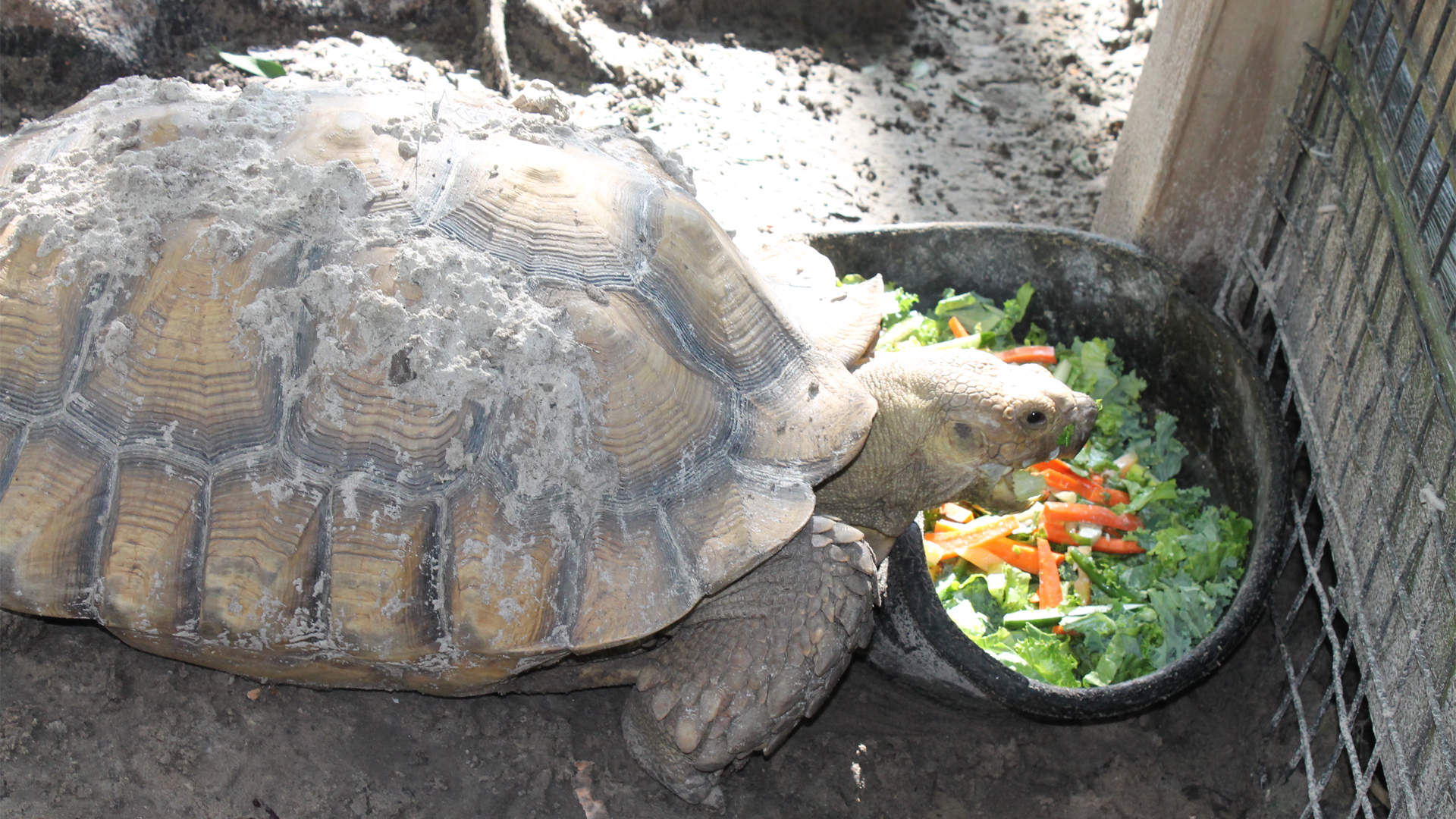
Grass, plants, fruit
Reproduction
15-30 eggs per clutch
life expectancy
50+ years
predators
Opossums, raccoons, other small carnivorous mammals
natural defenses
Shell and thick skin
About the Species
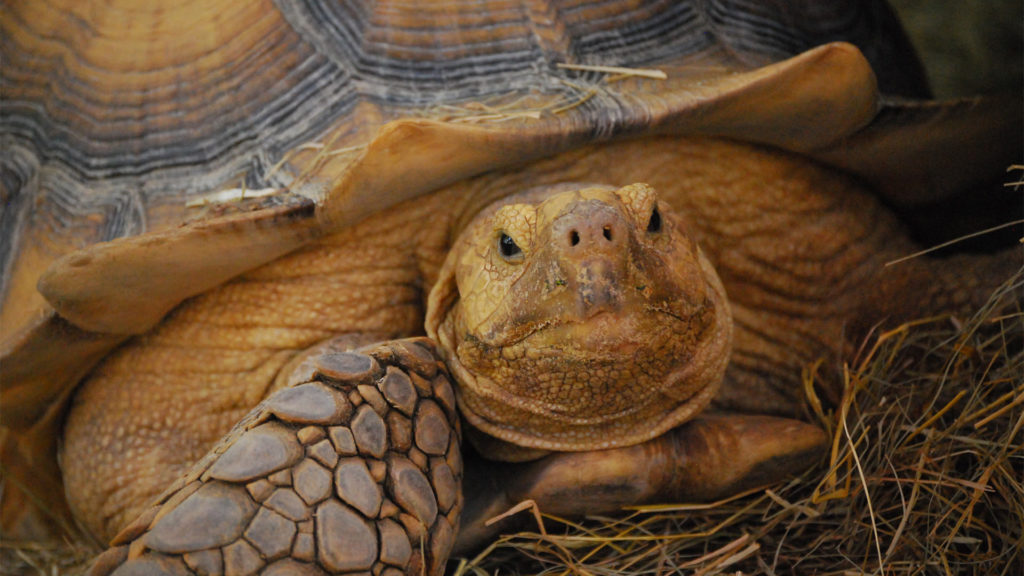
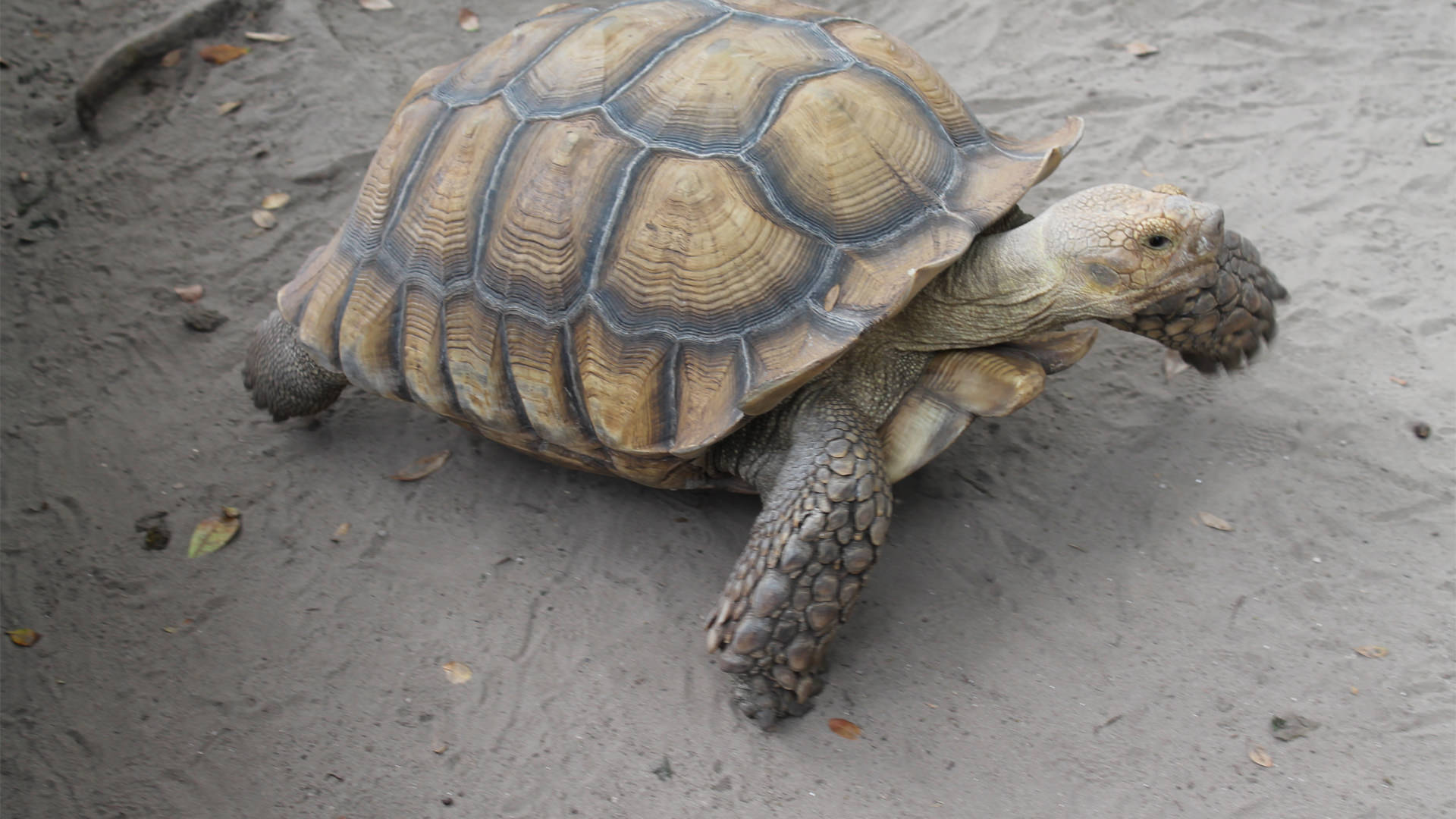
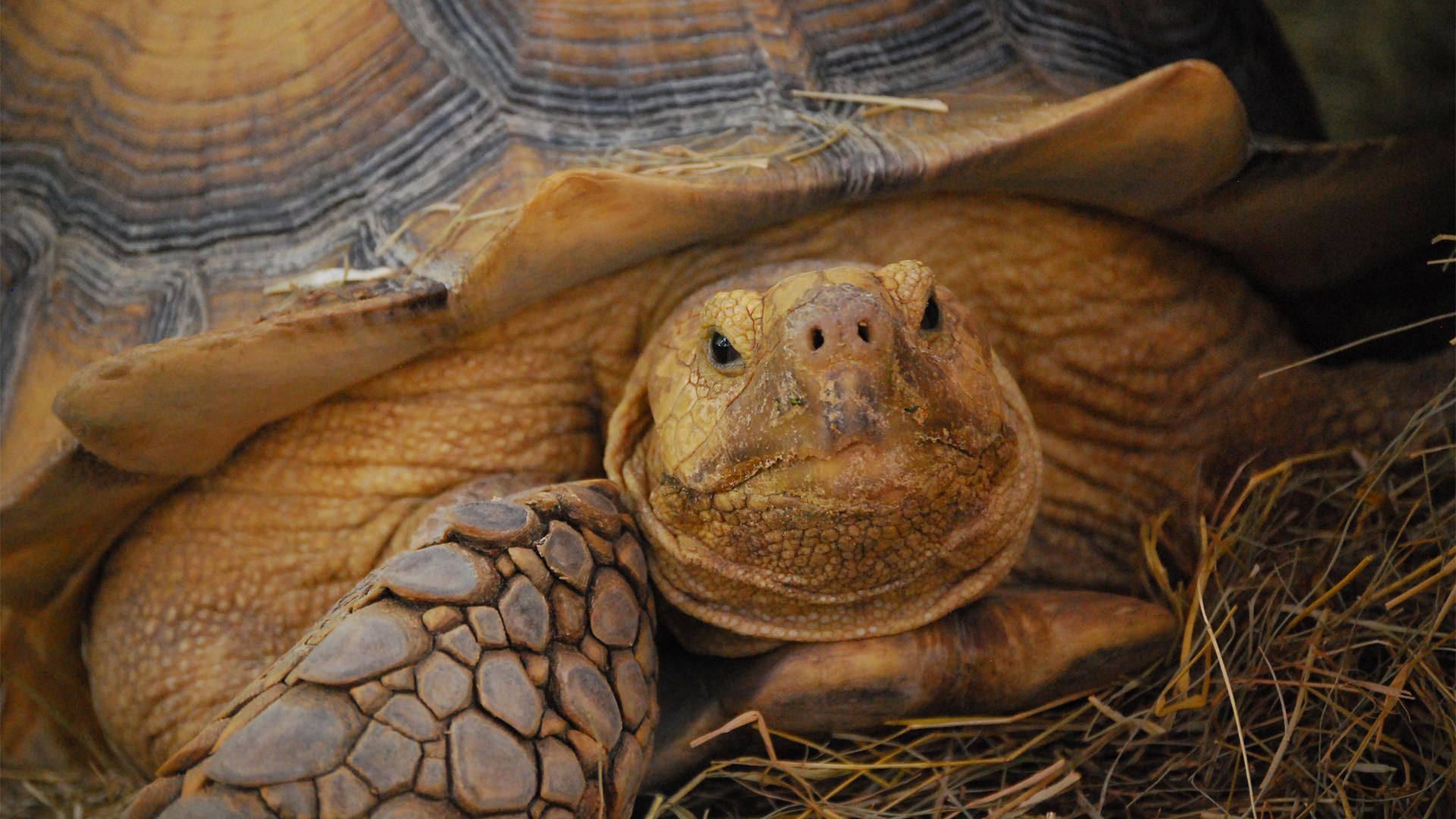
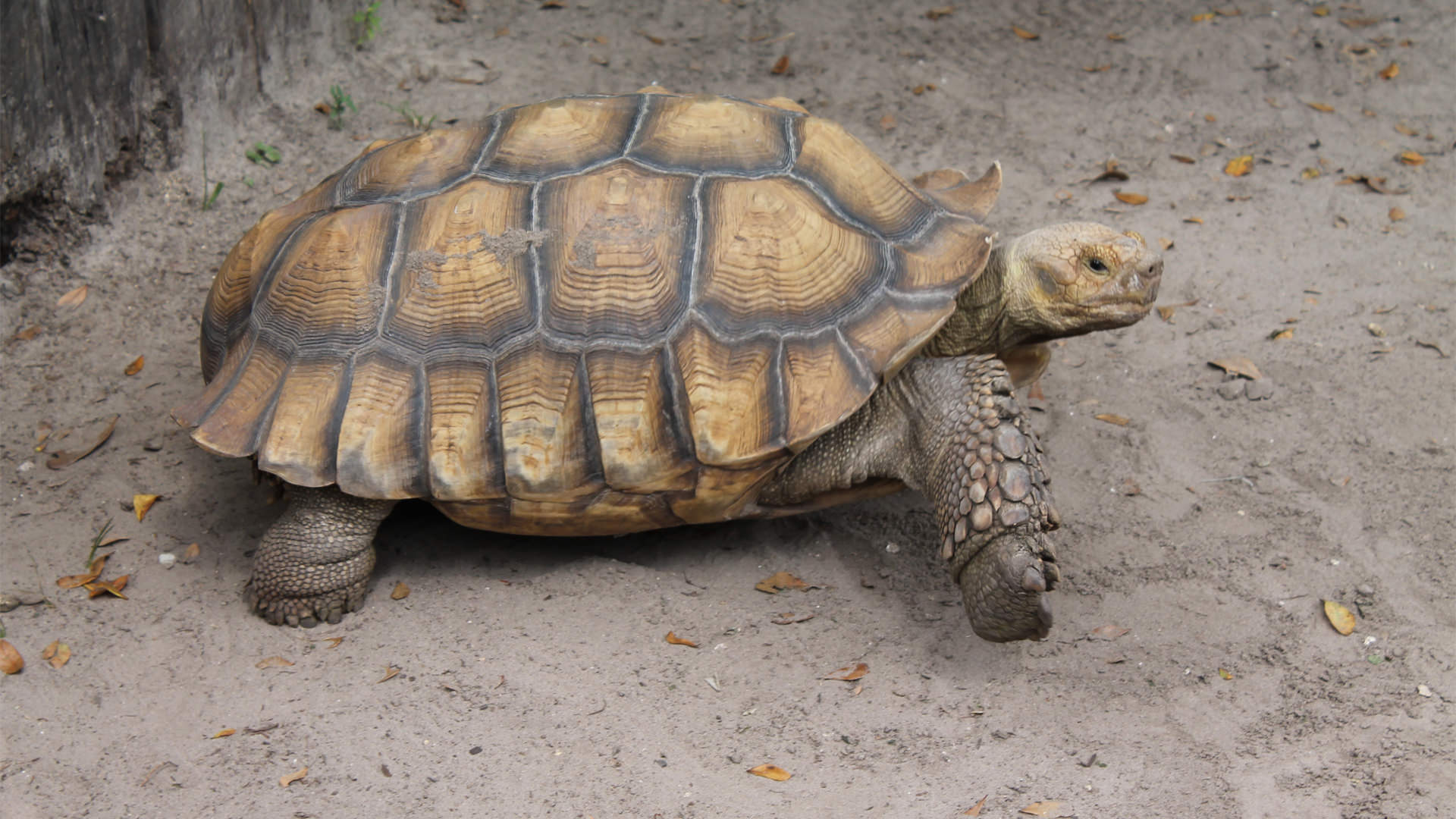
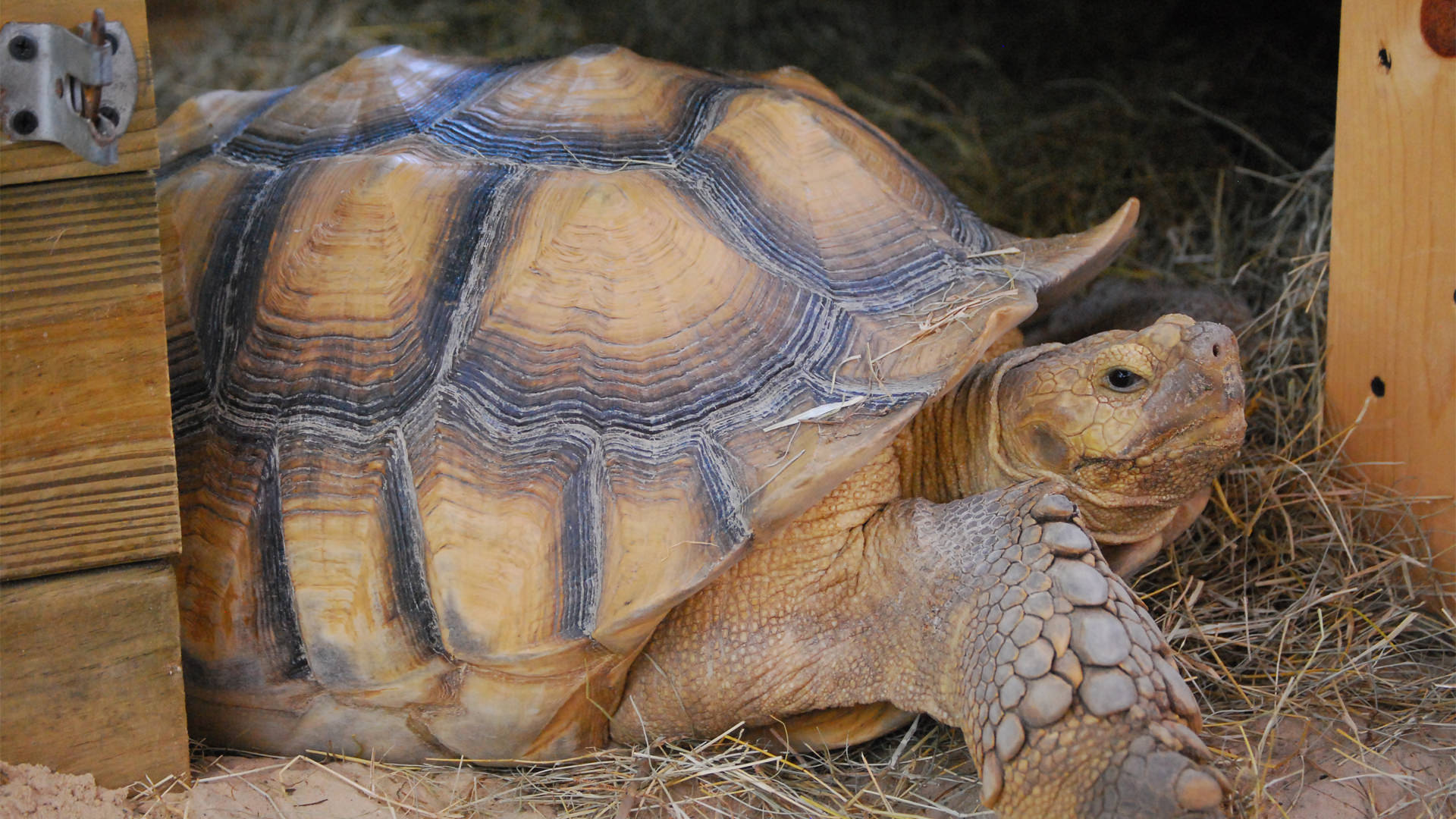
REPTILIAN TANK The African spurred tortoise is one of the largest tortoises in the world, with males reaching weights up to 200 pounds! They are named for the spurs located on their back legs.
These tortoises are common in the pet trade, but many owners do not realize the extreme size they reach. Spurred tortoises may double in size each year until they reach maturity, which is around 15 years old. These tortoises can live well over 50 or 60 years!
Unlike many invertebrates, turtles and tortoises cannot leave their shell behind. The backbone of the tortoise is embedded in the top of the shell (called a carapace), and the rib cage is a part of the underside of the shell. The carapace is made up of hardened scales called scutes, which are made up of keratin- the same thing our fingernails are made of!
Spurred tortoises are able to survive in the extreme heat of the desert by digging extensive burrows as deep as 10 feet.
SCIENTIFIC NAME
Centrochelys sulcata
Fun Fact
The African spurred tortoise is the largest mainland tortoise. Only the Aldabra and Galapagos tortoises, which are found on small islands, are larger.
The African Spurred Tortoise is the third largest tortoise species living today, surpassed only by the Galapagos and Aldabra Tortoises. Living in a desert makes obtaining water hard, and so they have adapted to foraging for succulents and water-holding plant material. Spending the warmest parts of the day sleeping in dark, cool burrows also helps to stay cool and retain water.