
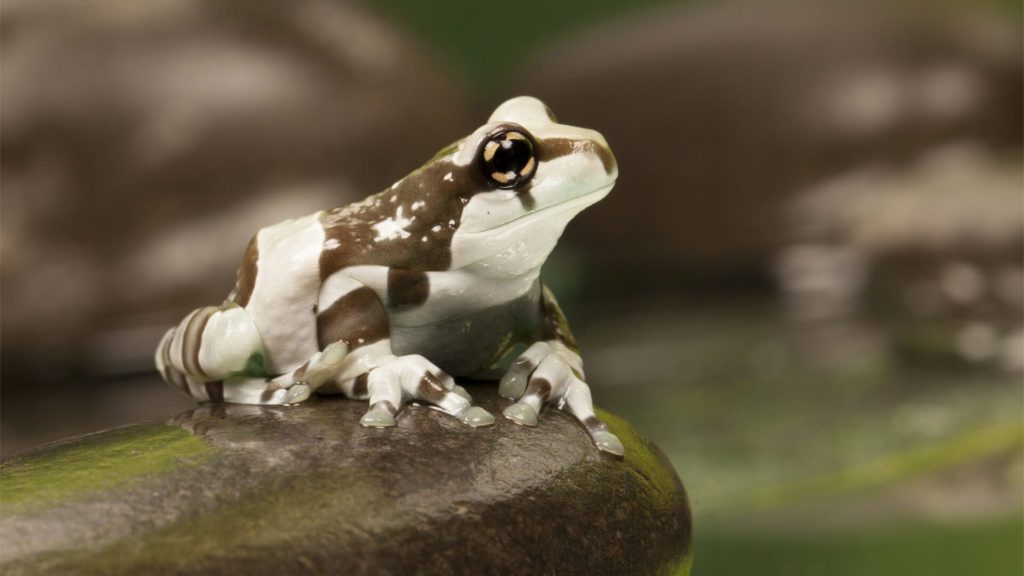
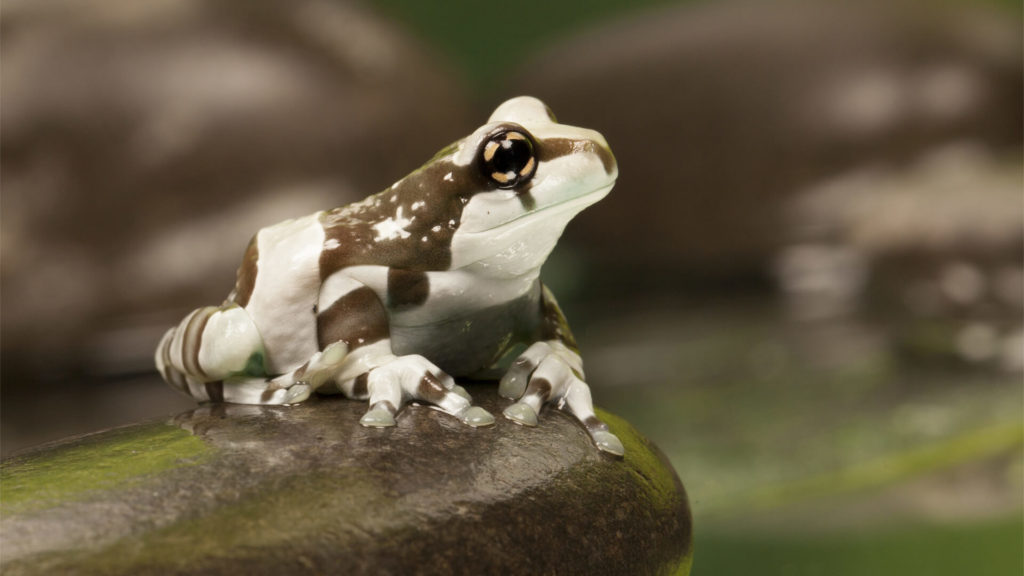
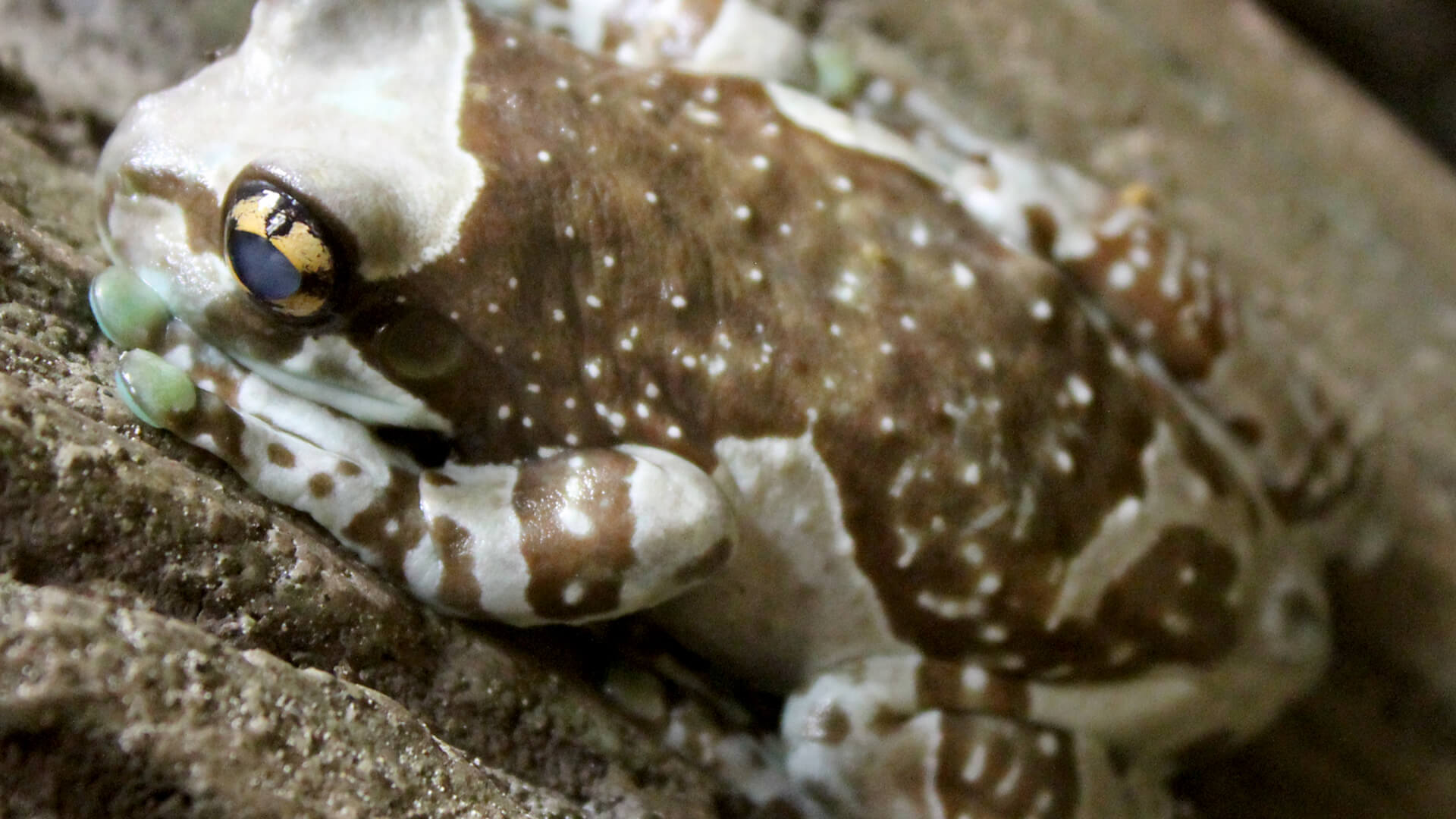
Amazon Milk Frog

Content Image

TYPE: Amphibian

STATUS: 
Least Concern

QUICK STATS

Body size

4 inches long (max.)

native habitat

Tropical rainforests of South America

life expectancy

8 – 16 years

diet

Insects, small vertebrates

Reproduction

Up to 2000 eggs per clutch

predators

Snakes, birds, lizards, mammals

natural defenses

Milky, poisonous substance

About the Species

This species gets its name “milk” frog from the milky substance they secrete from their glands when threatened.

The Amazon milk frog, also known as “mission golden-eyed” tree frog, spends its entire life in the canopy.

Amazon milk frogs have sticky toe pads to aid in climbing trees.

Even during the breeding season, they do not come out of the trees.

Males stake out a tree hole or bromeliad that is full of water and call to females. 

A female then comes and lays her eggs, which the male fertilizes. Finally, males actually then call for a second female, who lays eggs which become unfertilized food for the tadpoles.

SCIENTIFIC NAME

Trachycephalus resinifictrix

Fun Fact

The Amazon milk frog is also known as “sapo canoeiro,” meaning “boatman frog.” Their croak sounds like oars tapping the side of a canoe!

Wildlife Insights

WORD FROM
THE EXPERTS

Although a common species, Amazon Milk Frogs are highly dependent on tall trees. Thus, deforestation and habitat loss is a concern for their future.

Dave, Keeper