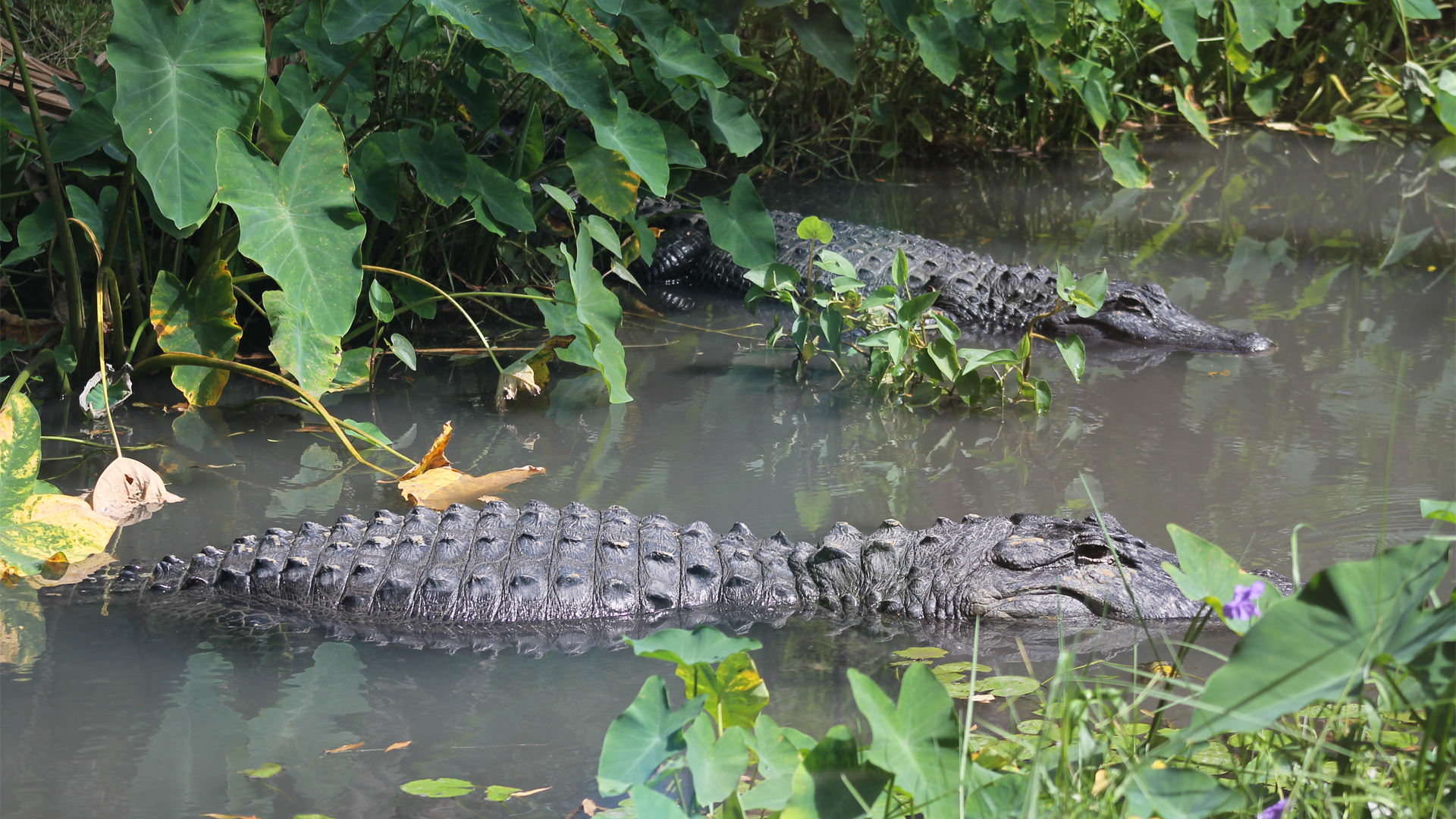
TYPE: Reptile
STATUS:
Least Concern
Females: 8 feet
Males: 11 feet
Males: 1,000lbs (max)
Freshwater lakes, swamps, bayous, marshes of Southeastern United States
Fish, turtles, mammals, birds
20–50 eggs per clutch
Up to 50 years
Raccoons, birds, bobcats (young alligators)
Size, strong bite and tail, good swimmers, camouflage
FLORIDA’S FIERCE & FAMOUS
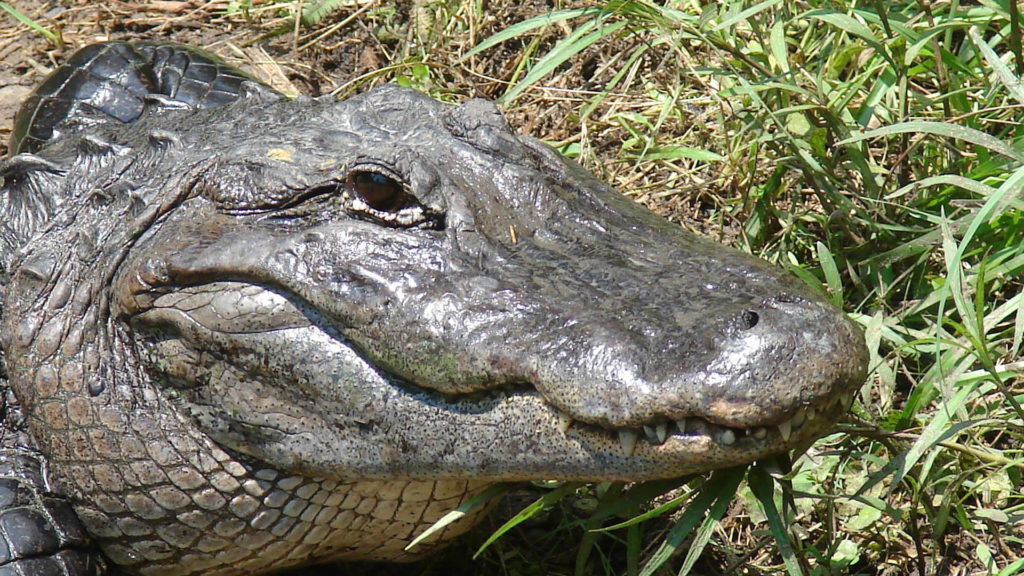
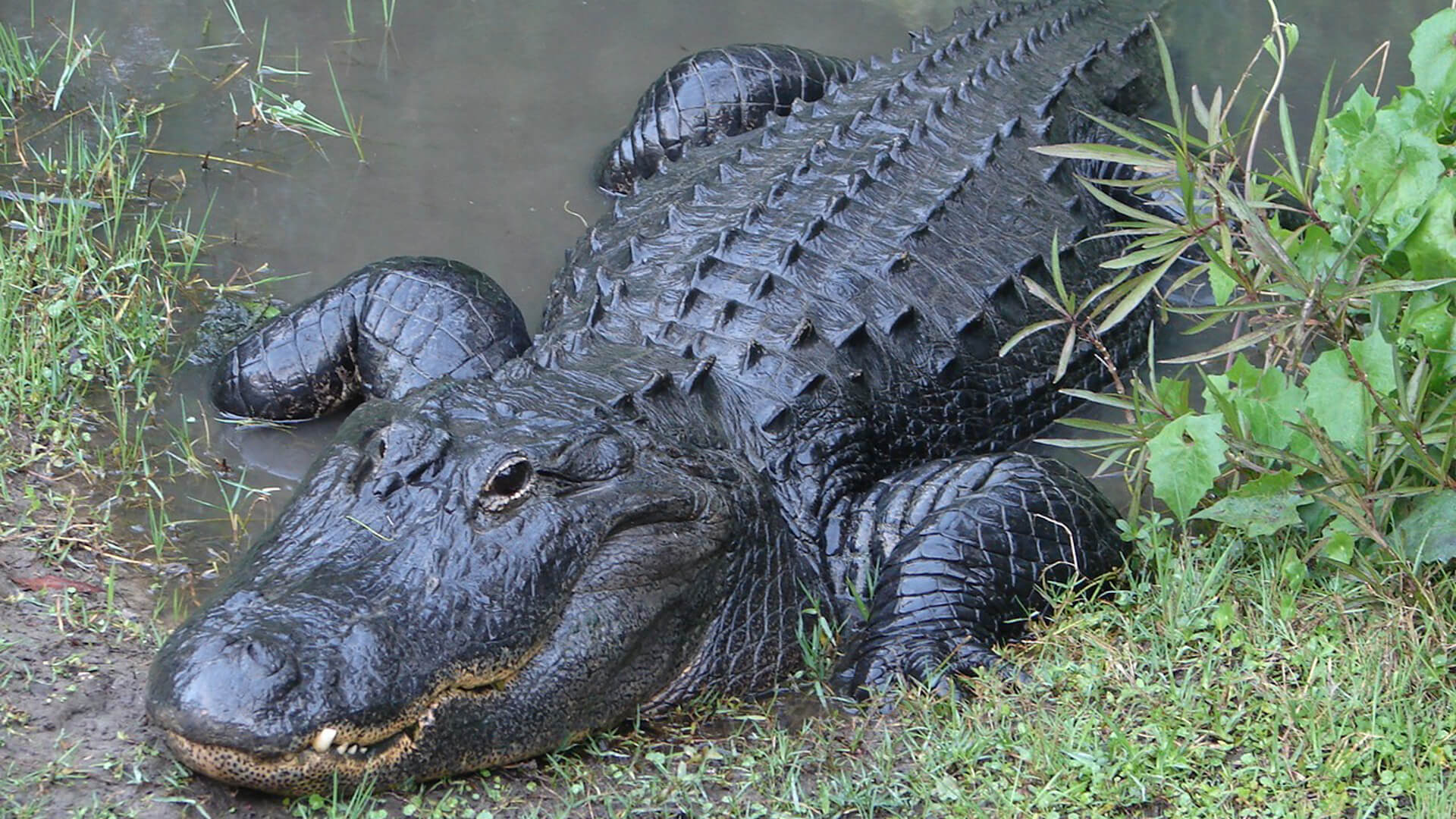
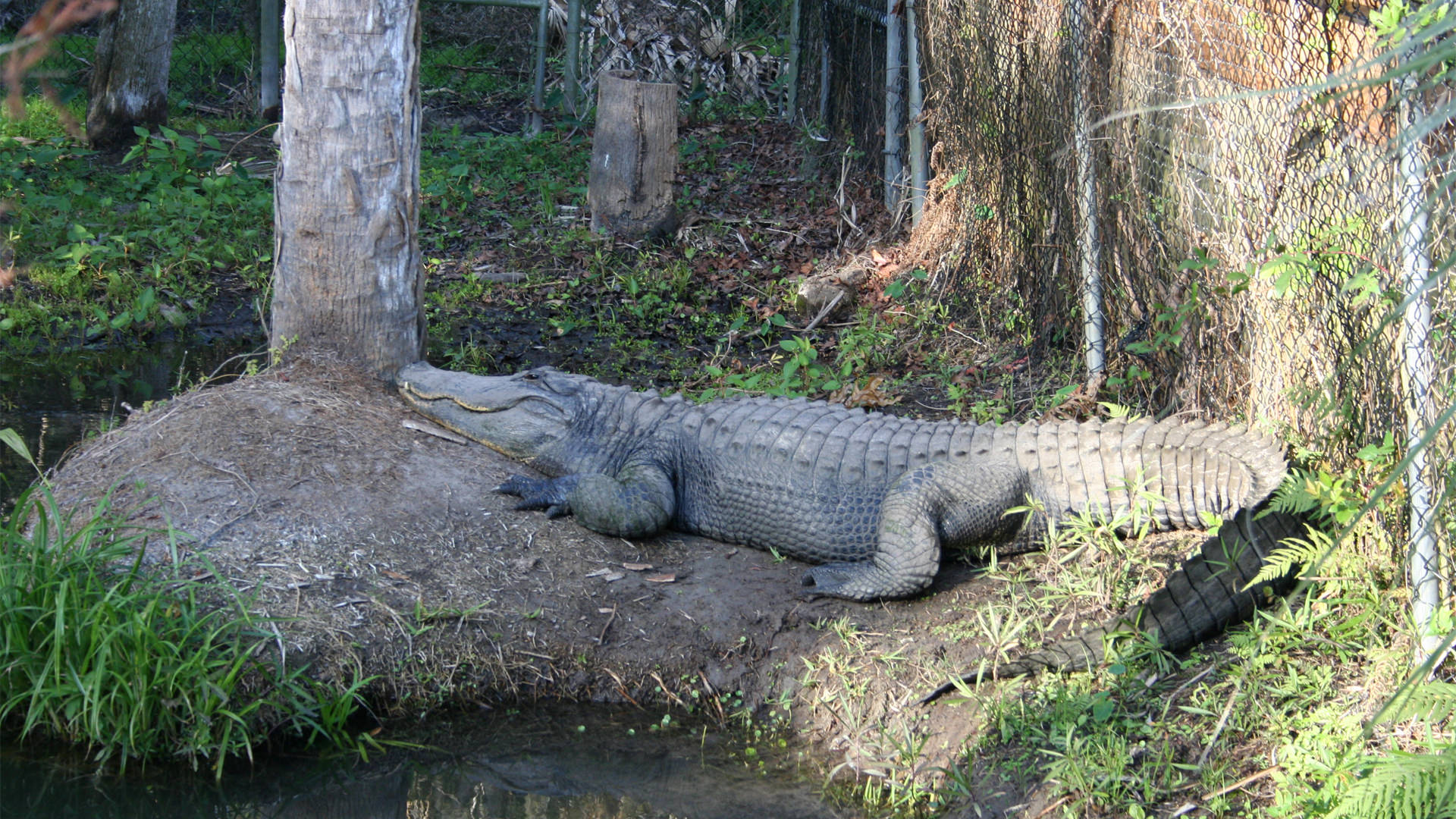
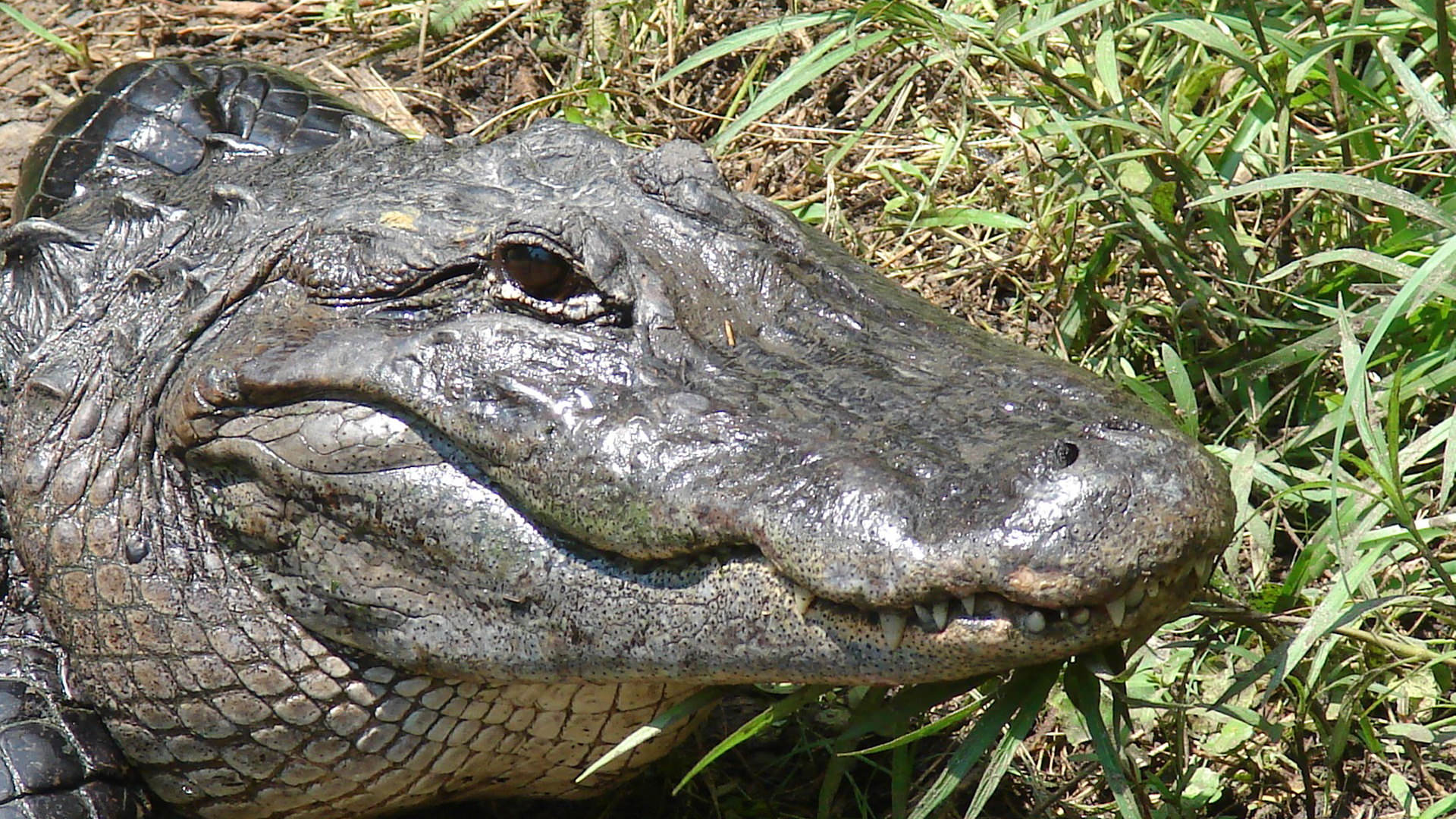
The American alligator was once almost hunted to extinction. In 1967, the alligator was placed on the Endangered Species list due to poaching and habitat loss, but has since recovered. The alligator is the state reptile of Florida.
The American alligator is a member of the Crocodilian family, which includes alligators, crocodiles, caimans, and gavials.
There are only two species of alligators: the American and the Chinese. The American alligator can tolerate colder temperatures than the other crocodilians, which is why it has a more northern range.
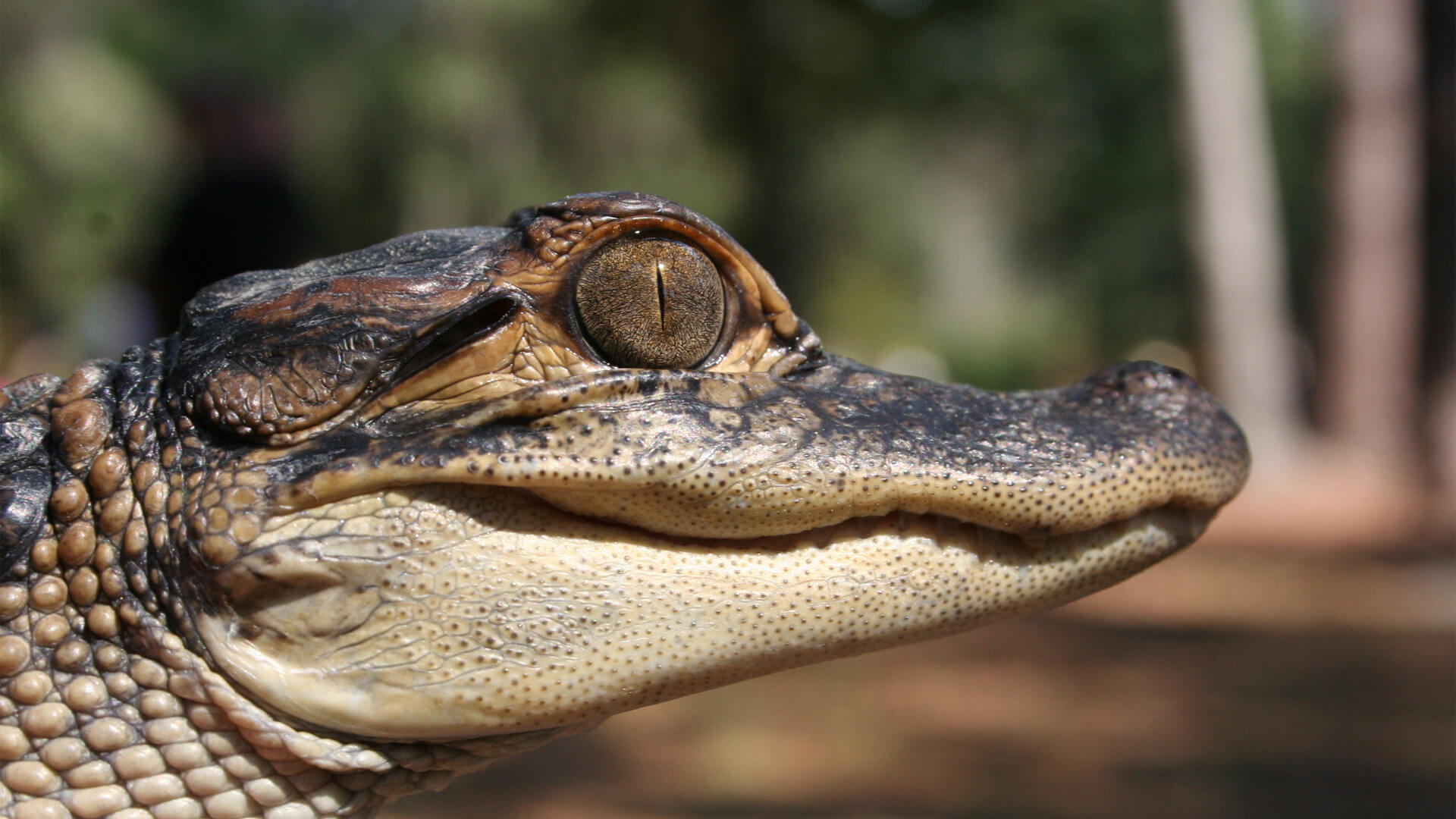
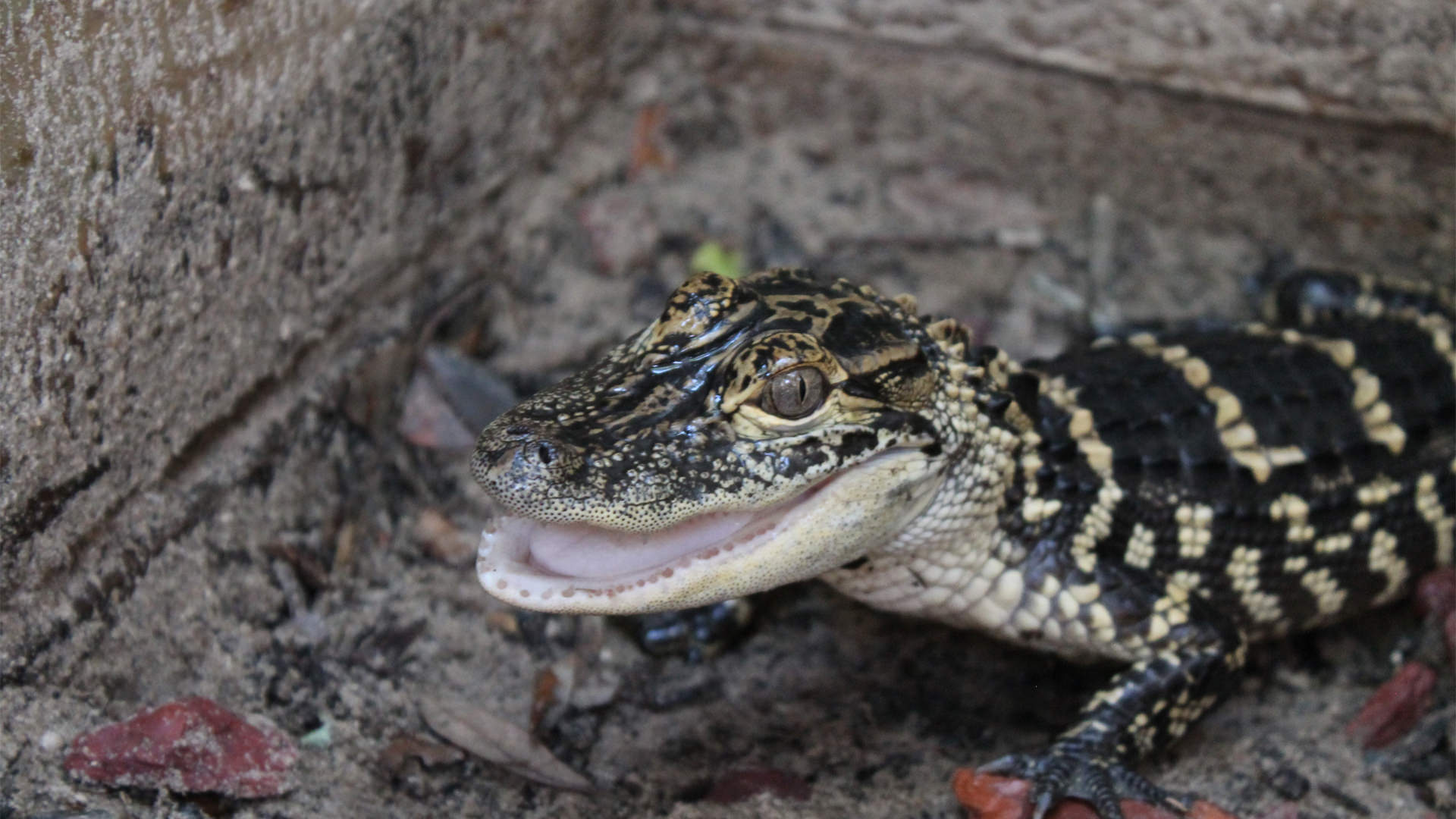
Alligators dig out “gator holes” for dens, which provide an important resource for the environment as they may be the only source of water during a drought. When alligators are born, they are only about eight inches long and susceptible to predators. The babies will stay with their mother for up to two years for protection, which is unusual maternal care for reptiles.
Alligator mississippiensis
There are only two species of alligator in the world: the American alligator and the Chinese alligator!
Even though they are ferocious, mother alligators are amazing moms! They stand guard over their nest of eggs, waiting to hear their young make peeping noises as they come out of their shells. Once out, the mother then carries her young in her mouth to the water.

Location: 3755 W. Seminole Blvd. Sanford, FL 32771
Phone: 407.323.4450