Rivers, lakes, marshes of northern Canada to northern Mexico
life expectancy
28–36 years
diet
Fish, birds, crustaceans, amphibians, small mammals, reptiles
Reproduction
1–3 eggs per clutch
predators
No natural predators
natural defenses
Large talons and curved beaks
About the Species
The bald eagle has a majestic and regal reputation. All bald eagles are protected under several lawful acts, and those in human care are considered property of the federal government.
Bald eagles are agile hunters, but they also assume the role of cunning thieves.
Bald eagles can use their keen eyesight and incredibly strong talons to spot and swipe fish from lakes and running streams. This takes a lot of effort, however, and bald eagles will not hesitate to let other predators do the hard work for them.
They commonly steal prey from smaller raptors such as osprey, a “fishy” behavior that once drove Benjamin Franklin to suggest the wild turkey as the national bird instead of the bald eagle.
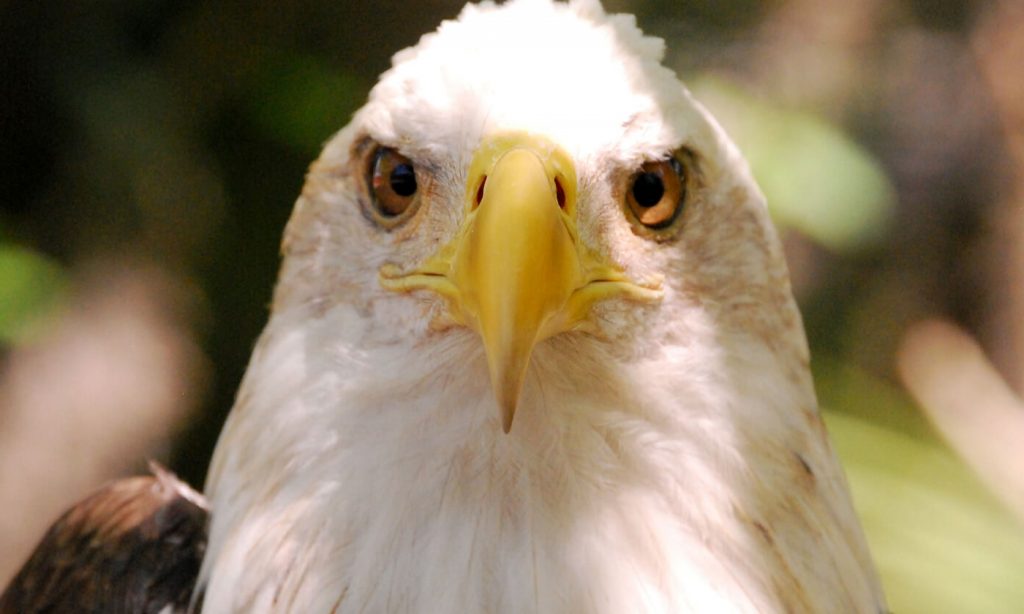
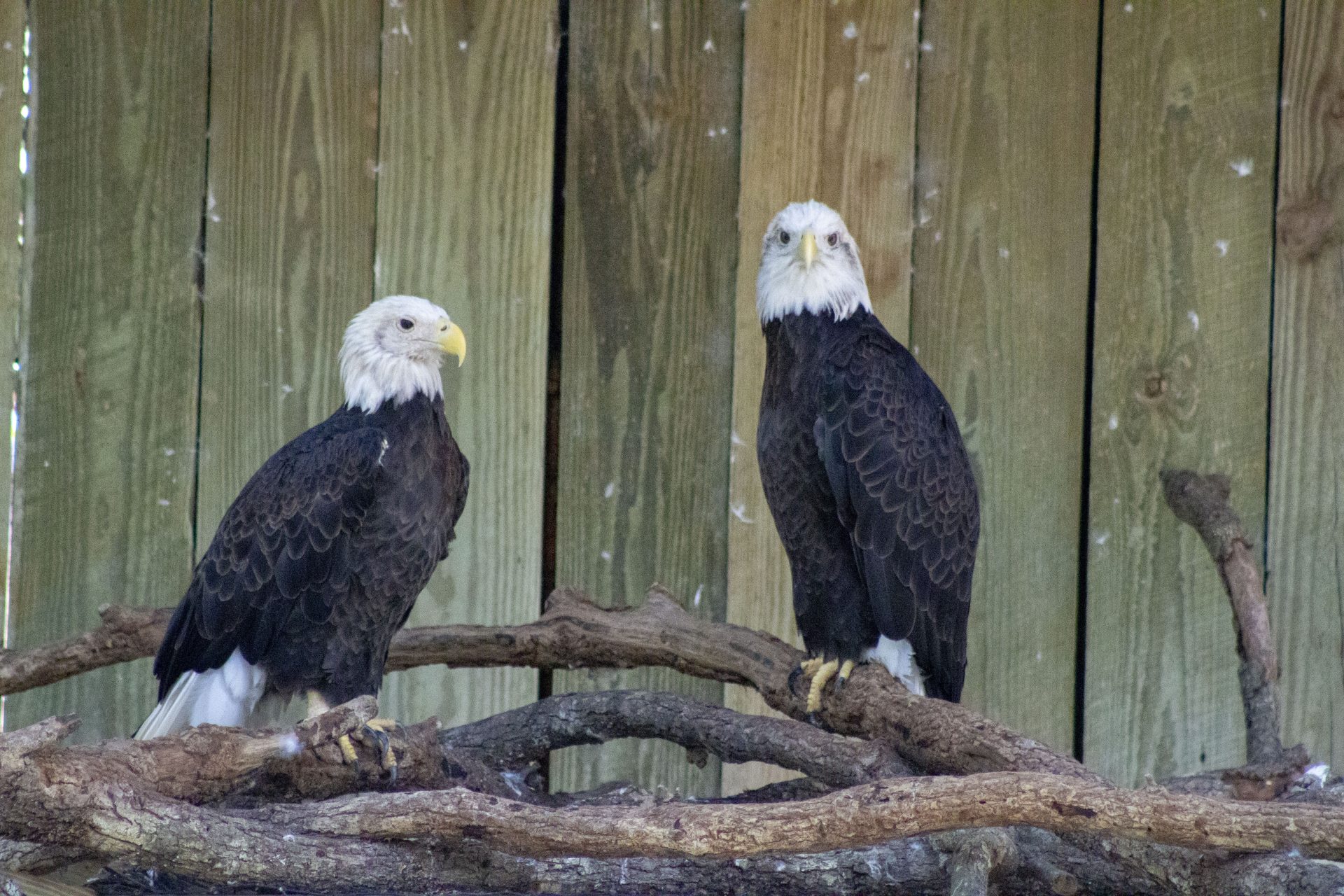
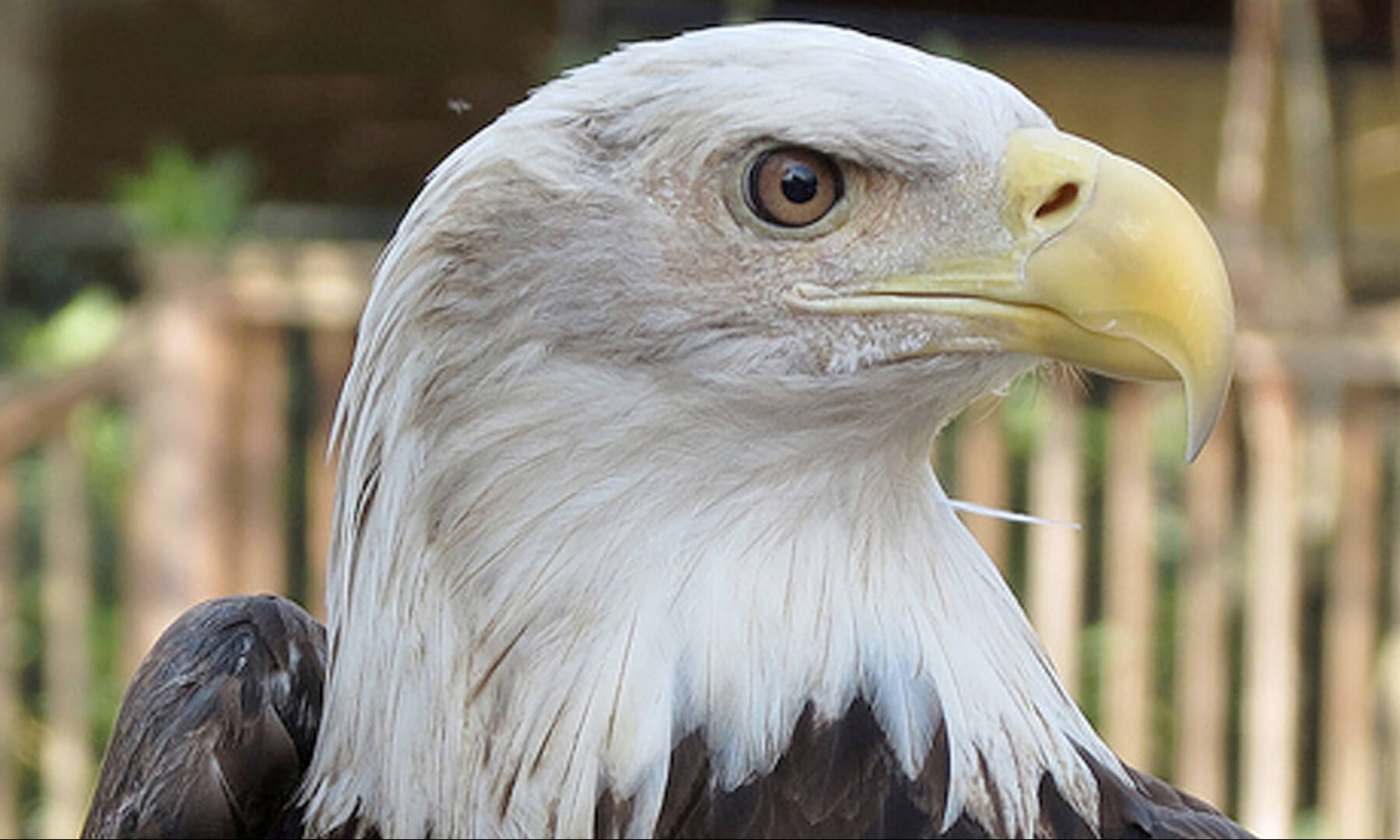
The bald eagle is not actually bald, but has a white head of feathers! This coloration develops with maturity (around 7 years of age).
Once endangered, they are now protected under the Endangered Species Act and have made an extraordinary comeback. They are now considered a common species, but nonetheless remain fiercely protected in the United States.
SCIENTIFIC NAME
Haliaeetus leucocephalus
Fun Fact
Bald eagle nests can reach up to 10 ft wide and 20 ft deep!