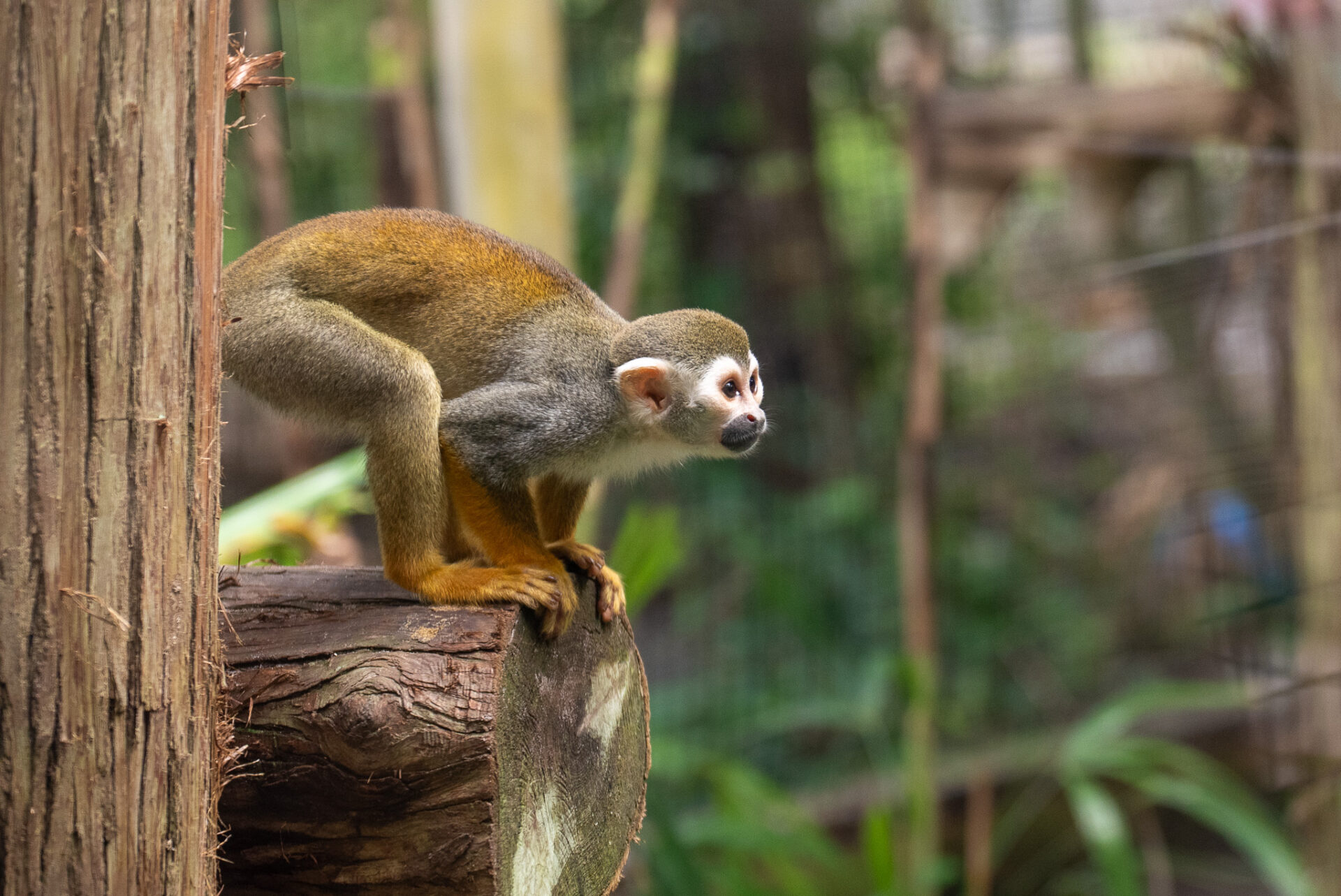
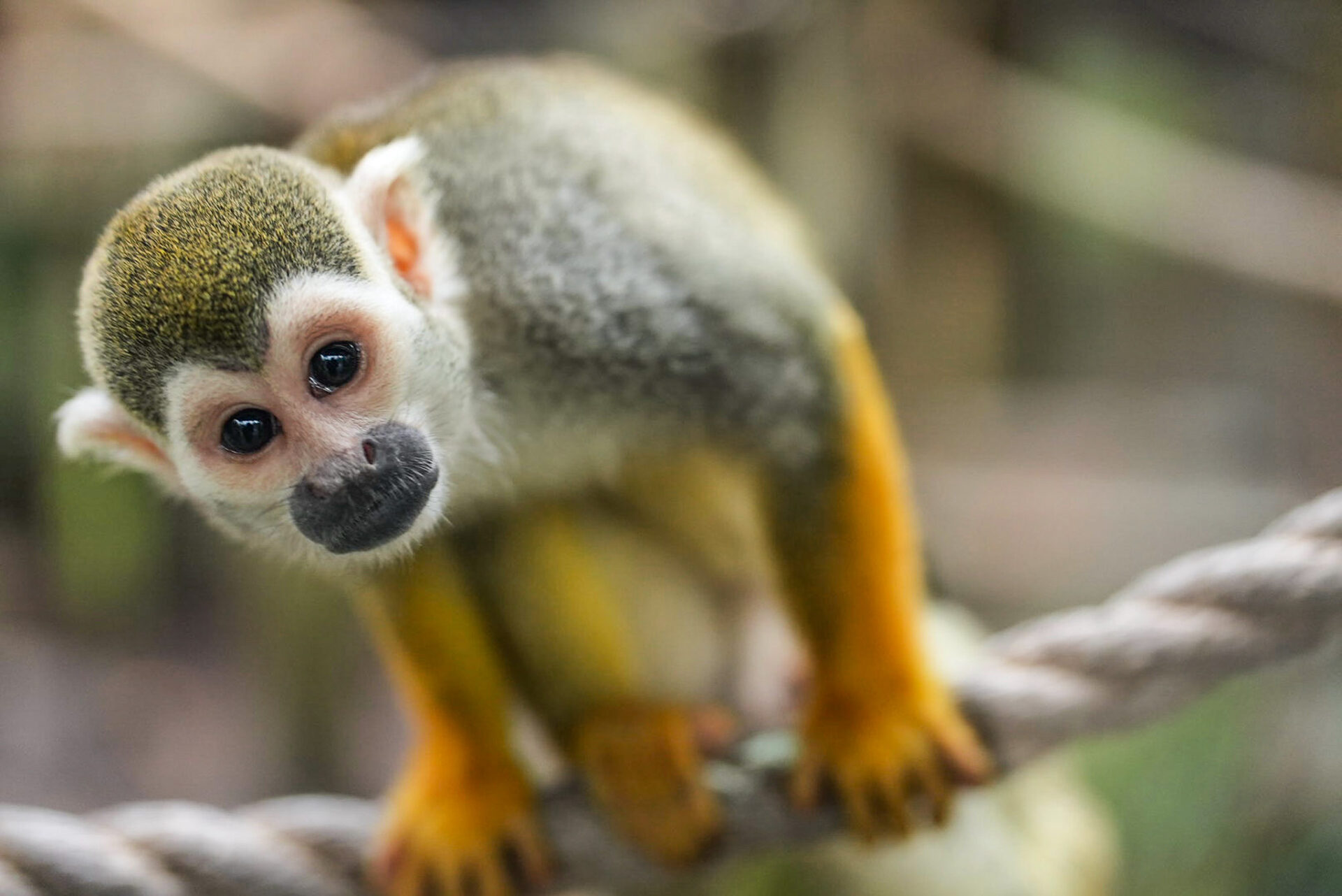
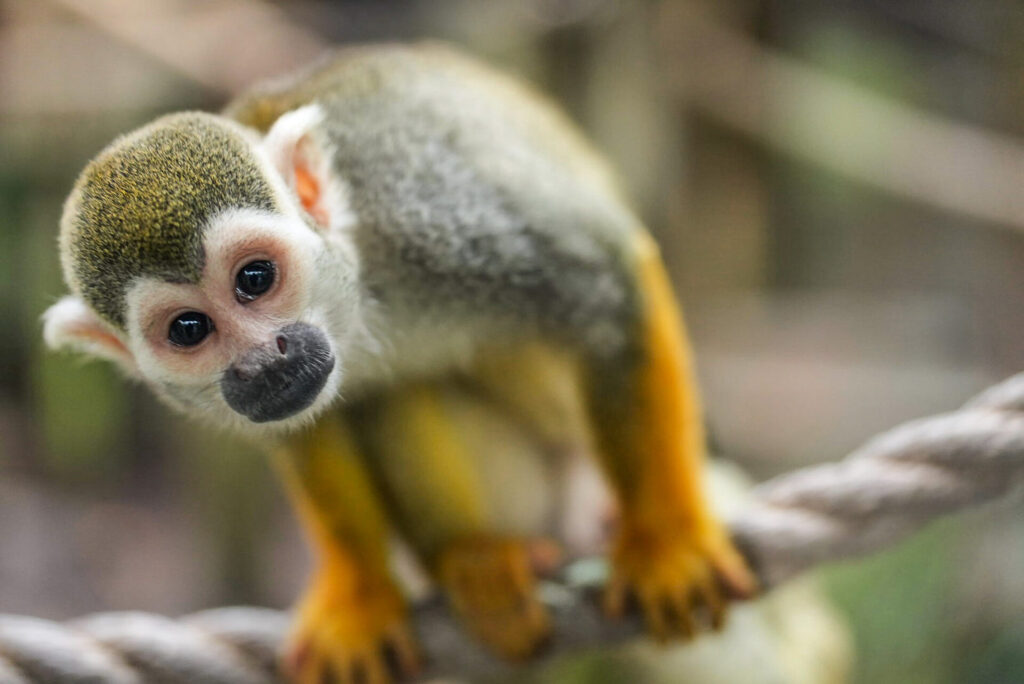
Guianan Squirrel Monkey

Content Image

TYPE: Mammal

STATUS: 
Least Concern but decreasing in numbers

QUICK STATS

Body size

Bodies are around 12 inches, with 16-inch tails

native habitat

Tropical lowland rainforests in a wide range of South American countries

life expectancy

Approximately 20 years

diet

Omnivorous, feeding on fruits, insects, and small vertebrates

Reproduction

145-day gestation, with births in the rainy season

predators

Raptors, snakes, different types of felids, and illegal pet trade

natural defenses

Speed, agility, and cunning intelligence

About the Species

CURIOUS CLIMBERS

Guianan squirrel monkeys are small treetop dwellers, using their strong and nimble hands and feet to explore and manipulate their environment. They are inquisitive and supremely intelligent!

These monkeys share a habitat with our spider monkeys, for a must-see stop on your day at the Zoo!
These small, yellow-tinted monkeys are renowned for their fascinating social structures and communication methods. Living in tight-knit groups of up to 300 individuals, these monkeys exhibit complex social behaviors, including cooperative grooming, vocalizations, and intricate facial expressions. They have a highly developed system of communication, utilizing a wide range of vocalizations and body language to convey information and maintain social cohesion within the troop. Despite their small size, Guianan squirrel monkeys play a vital role in their ecosystem as seed dispersers, helping to maintain the biodiversity of their tropical rainforest habitat. Their dynamic social interactions and remarkable communication skills make them a captivating species to observe in the wild. The troops consist of males and females, with the females taking a more dominant role.

There’s no doubt that these monkeys are cute and fun to watch, but think twice before you consider getting one as an exotic pet.

Many exotic pets can be very high maintenance, with specific needs that cannot be replicated in your home. Additionally, in order to get a baby monkey from the wild, illegal wildlife traffickers will kill entire troops just to obtain the helpless infants. Many wild animals can also carry diseases that can be transmitted to humans and other animals, and the lifetime cost of care for an exotic pet can be very expensive, with many owners abandoning the animals after they become too difficult to care for. It’s best to leave wild animal care to the experts.

Learn more at www.notapet.net

SCIENTIFIC NAME

Saimiri sciureus

Fun Fact

Squirrel monkeys can leap horizontally up to 6 feet!

Wildlife Insights

WORD FROM
THE EXPERTS
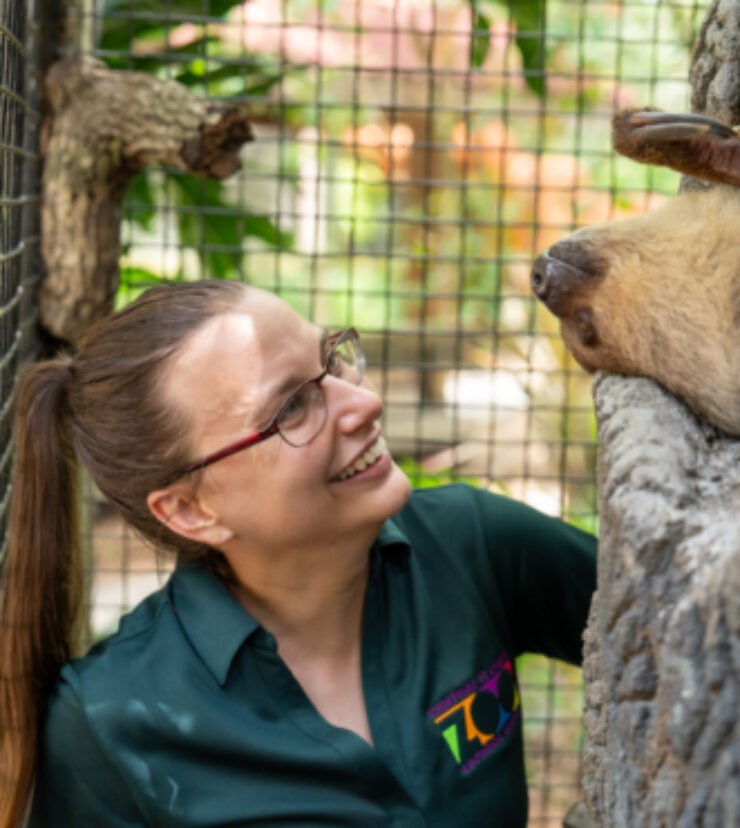
Squirrel monkeys will share habitats with other monkey species in the wild, cohabitating and even learning the alarm calls of other species to be aware of danger in the area!

Meghan, Keeper