Tropical forests and woodlands of Central and Western Africa
life expectancy
16 years on avg.
diet
Leaves, fruits, some insects
Reproduction
Give birth to a single young
predators
Bird of prey, leopard, chimpanzee
natural defenses
Varying alarm calls depending on location and type of predator
About the Species
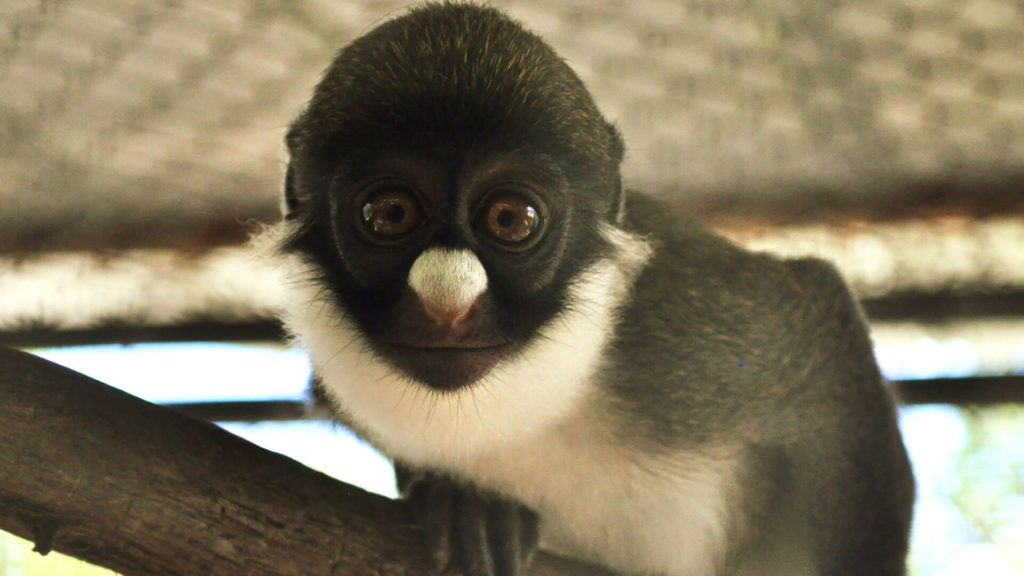
MEET OUR TROOP! Three lesser spot-nosed guenons call the Central Florida Zoo home.
Guenons have several ways in which they communicate with each other.
Guenons use a variety of methods to communicate with each other. The spot-nosed guenon alarm call sounds like a cat purring. The male of the group will use the purring sound to distract the predator while the rest of the troop uses the distraction to seek safety elsewhere. Body language is also important to guenons.
They open their mouths showing their teeth, close their eyelids, as well as move their head or tail to get their message across to others. Guenons are known for their facial adornments such as mustaches, beards, and throat ruff. The lesser spot-nosed guenon is brown/gray with a white beard, and a white mark on their nose.
SCIENTIFIC NAME
Cercopithecus petaurista
Fun Fact
Lesser spot-nosed guenons have cheek pouches which are used to carry food while foraging.
Wildlife Insights
WORD FROM THE EXPERTS
You wouldn't be able to tell at first glance under all that fur, but spot-nosed guenons have blue skin.