Larger animals may eat them, but soon learn better
natural defenses
Poison
About the Species
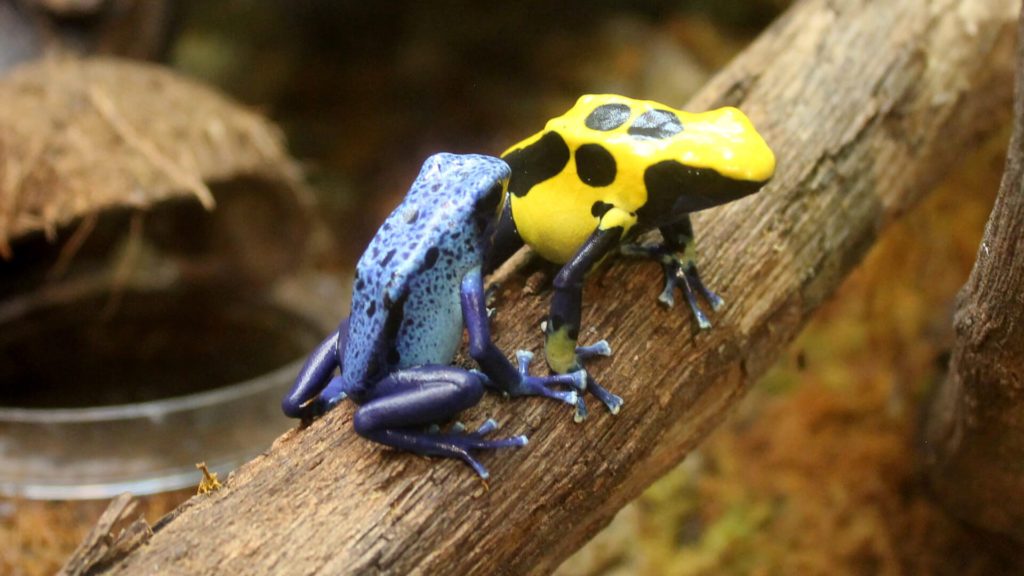
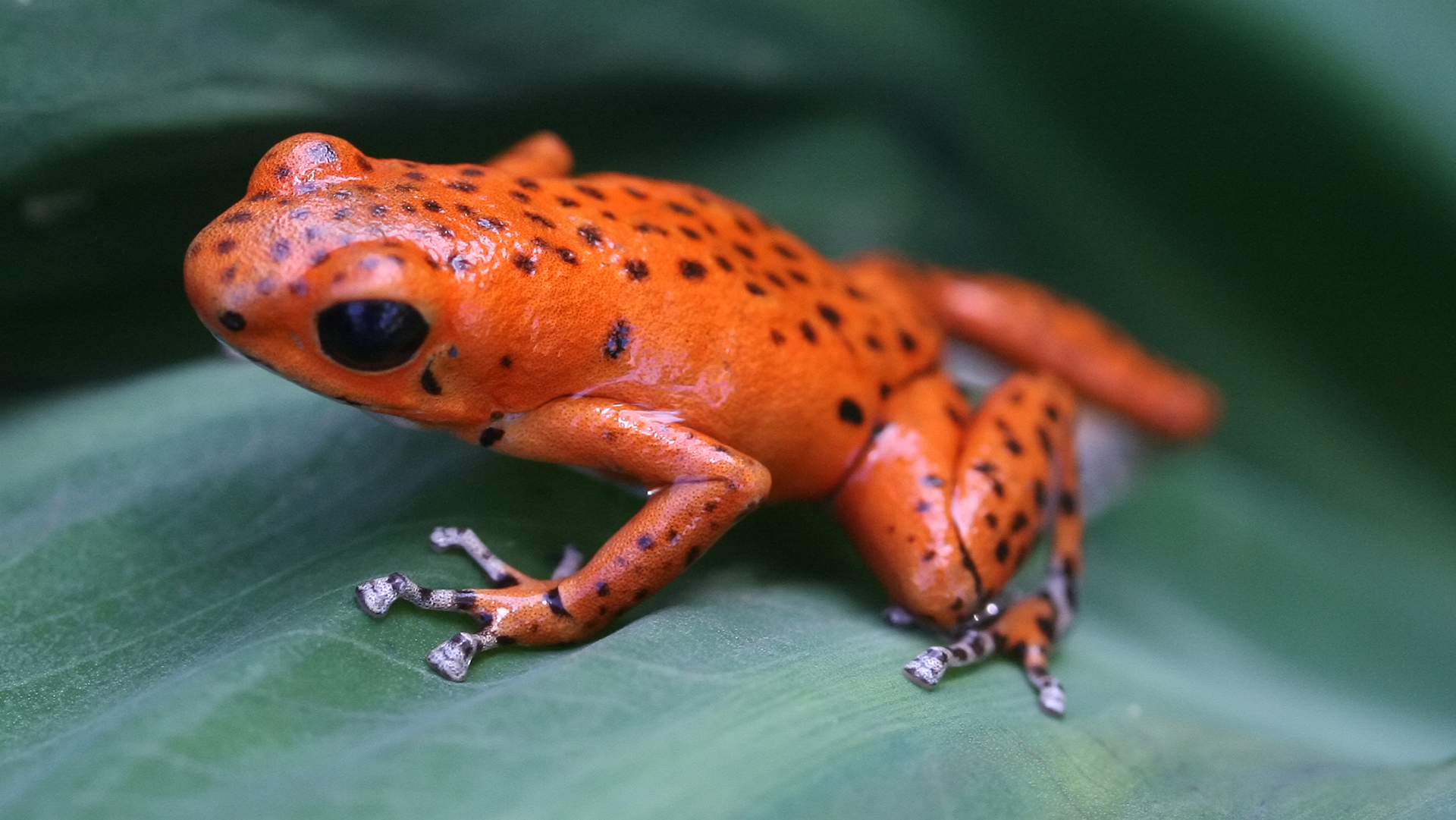
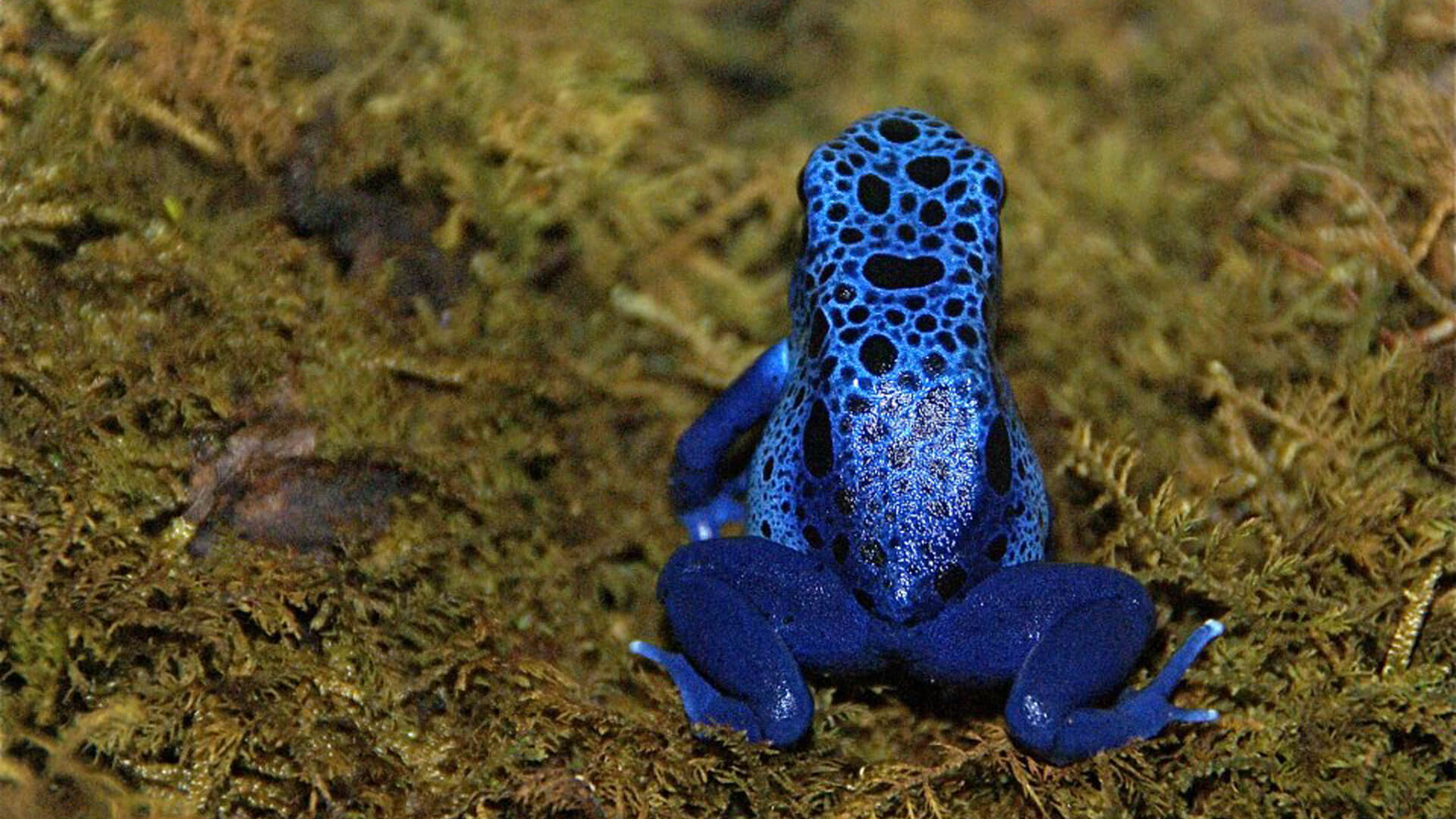
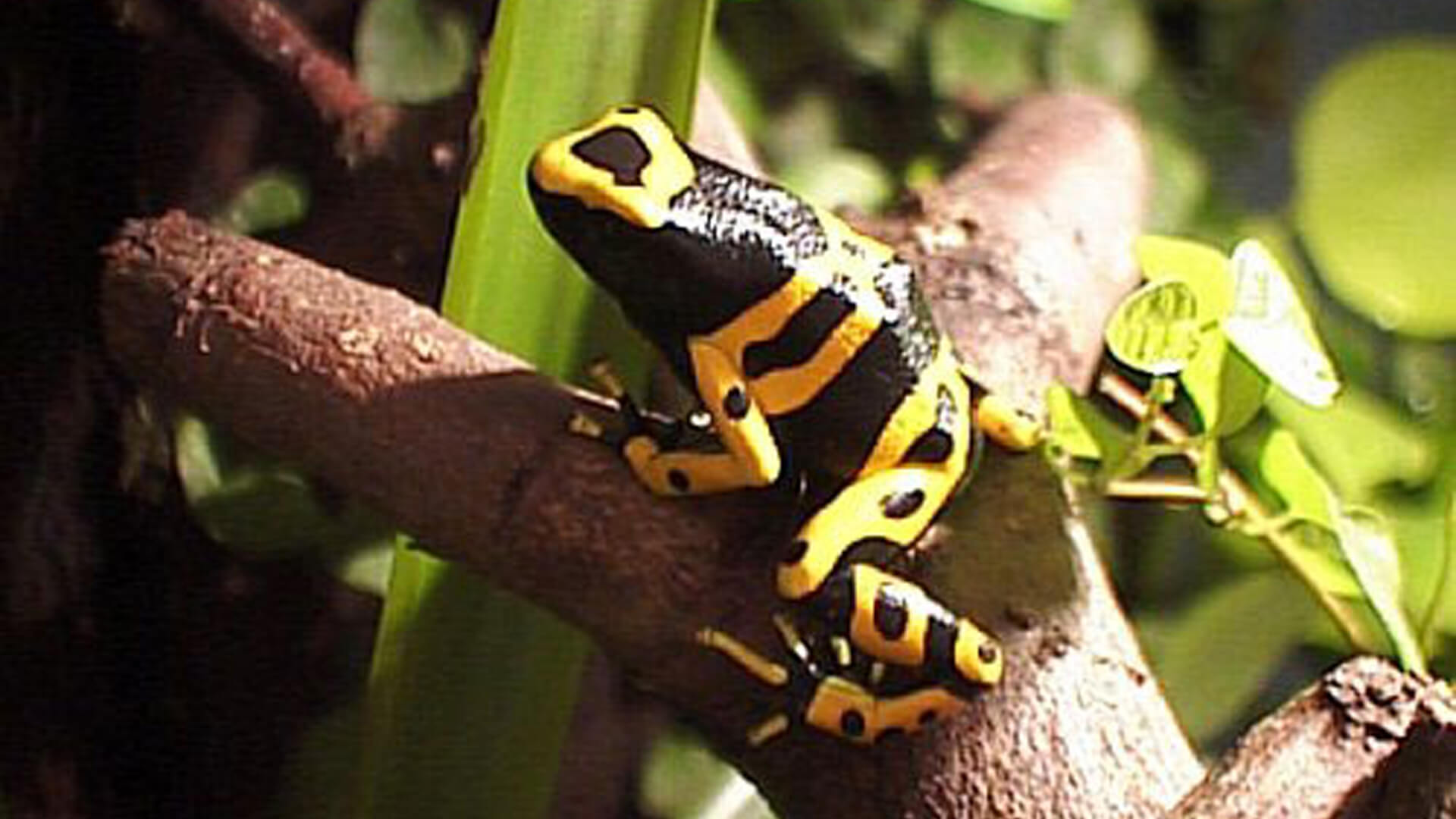
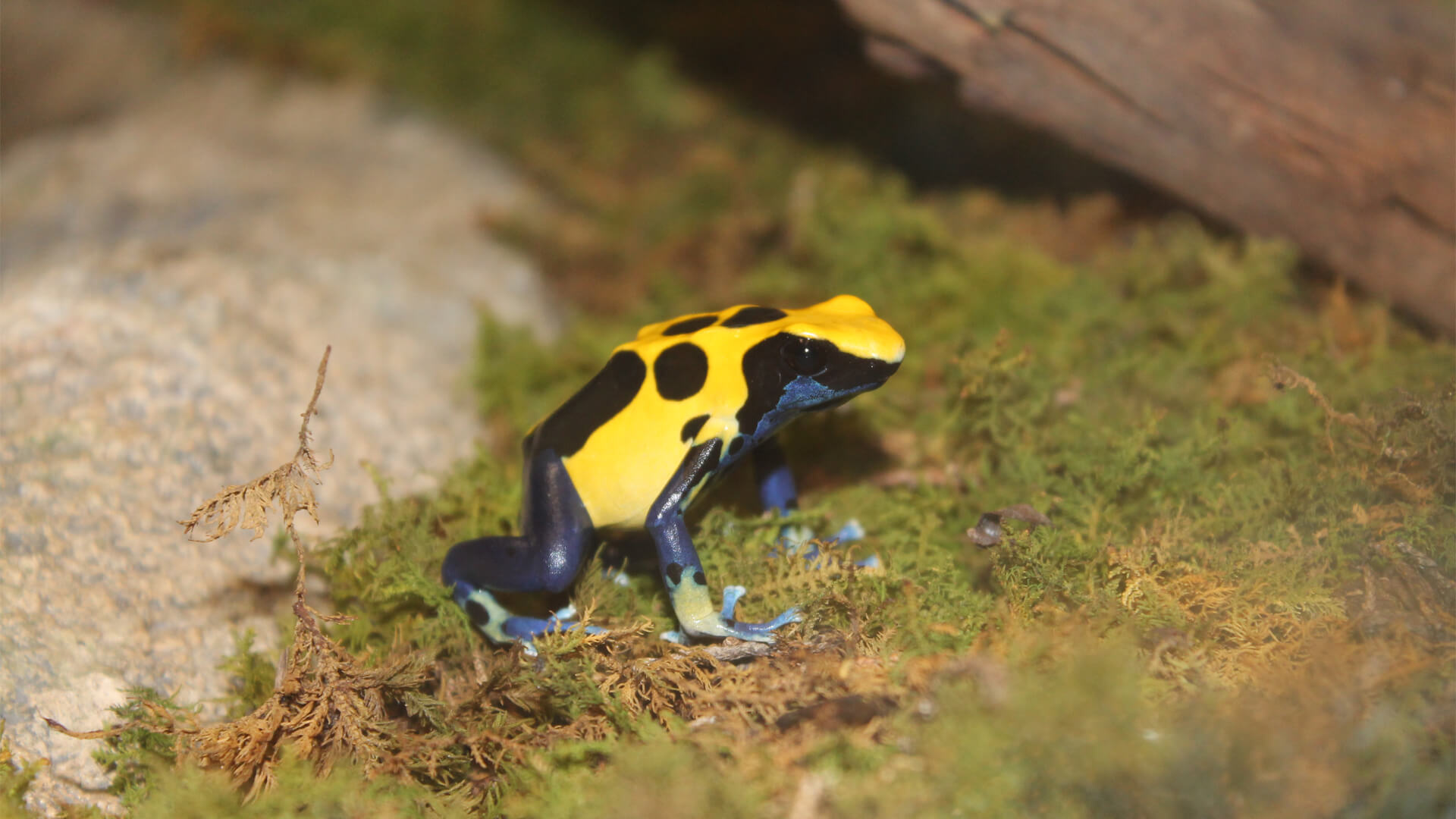
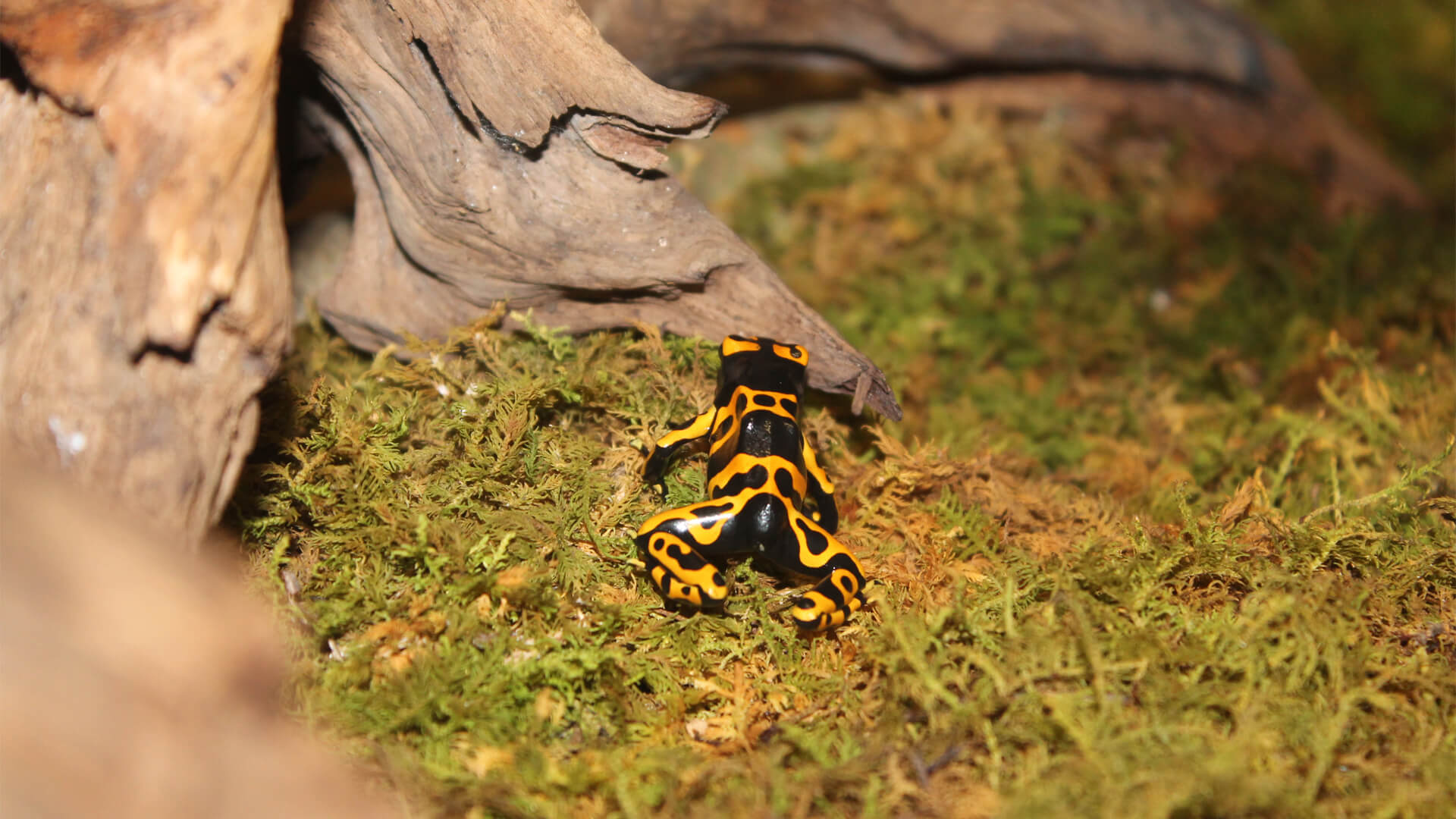
Most animals hide with camouflage, but the poison dart frog does the opposite! Their bright colors are easily seen by predators, and serve to warn of the poisonous skin of the frog. This type of warning is called aposematic coloration.
The “dart” in poison dart frog comes from South American natives coating their weapons in the secretions of the frogs.
Poison dart frogs come in a variety of colors, including red, yellow, green, and blue. They gain their toxicity because of what they eat! They eat a variety of ants, termites, and other insect species. These insects eat plants that have toxins, and the toxins are transferred from plant, to insect, to frog.
Many species of frogs are nocturnal, in order to hide better. The poison dart frog is the opposite! They are active in the day, when they can be seen the most. Their bright colors warn predators to not eat them.
The poison dart frogs at the Central Florida Zoo are in several different habitats in the Herpetarium. No worries though! The snakes don’t bother the frogs and the frogs don’t bother them.
SCIENTIFIC NAME
Dendrobates tinctorius, Dendrobates leucomelas, and Dendrobates auratus
Quick Fact
Poison from poison dart frogs has been used in medical research. A powerful painkiller was developed based on the poison of the phantasmal poison frog, and secretions are also being used in the development of muscle relaxants and heart stimulants.