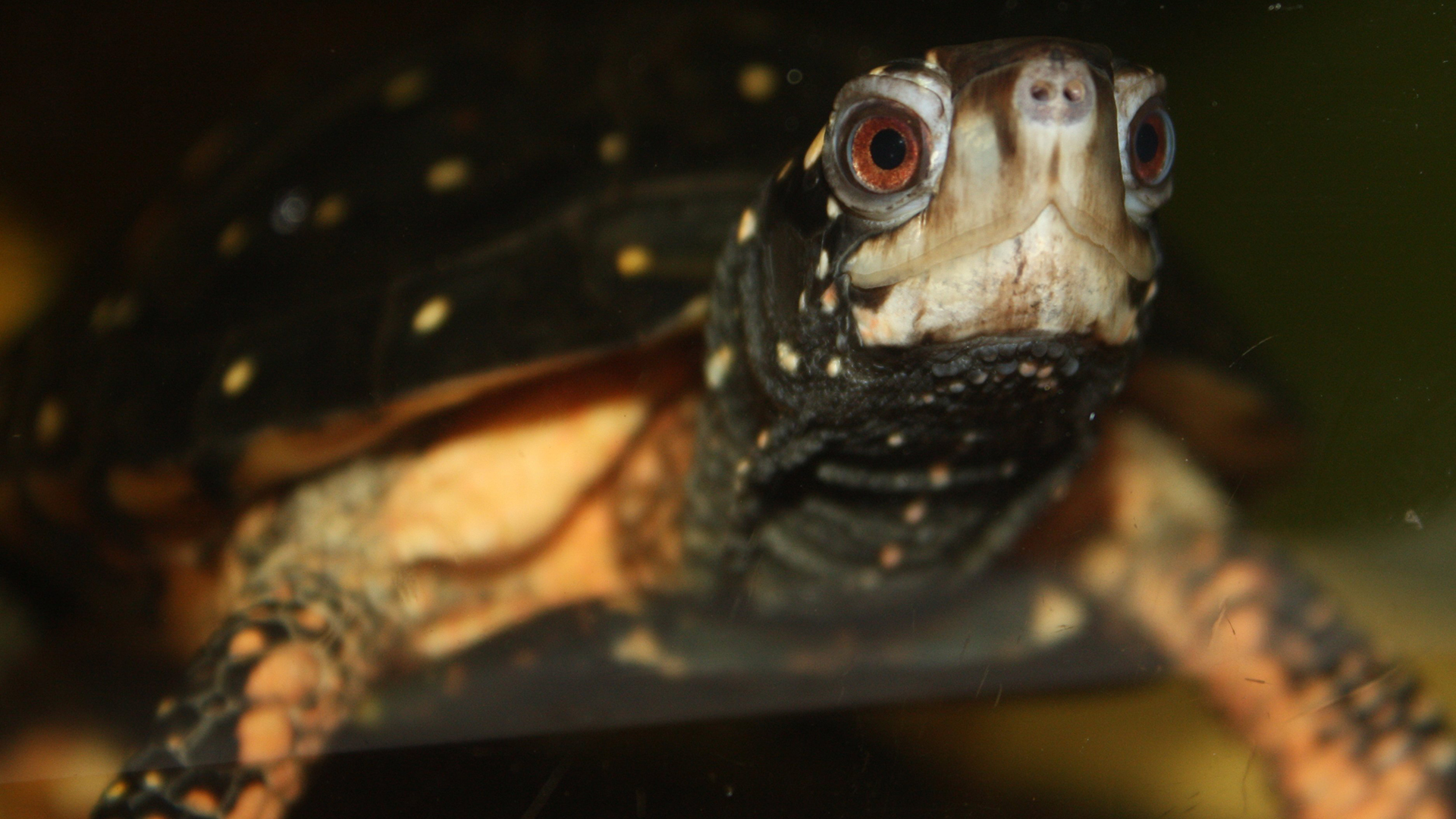
Spotted Turtle

Content Image
spotted turtle in water

TYPE: Reptile

STATUS: 
Endangered

QUICK STATS

Body size

Up to 5 inches in length

native habitat

Marsh, swamp, bogs, shallow lakes eastern North America

life expectancy

30 years or more

diet

Worms, slugs, snails, crustaceans, insects, frogs

Reproduction

2–7 eggs per clutch

predators

Raccoons and muskrats

natural defenses

Swimming and burrowing

About the Species

SEE SPOT SWIM
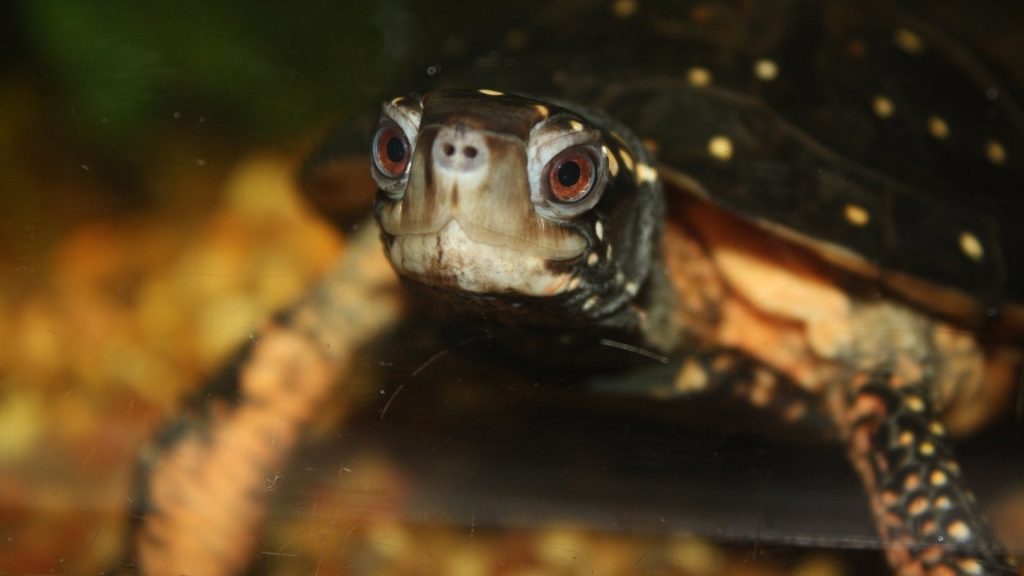
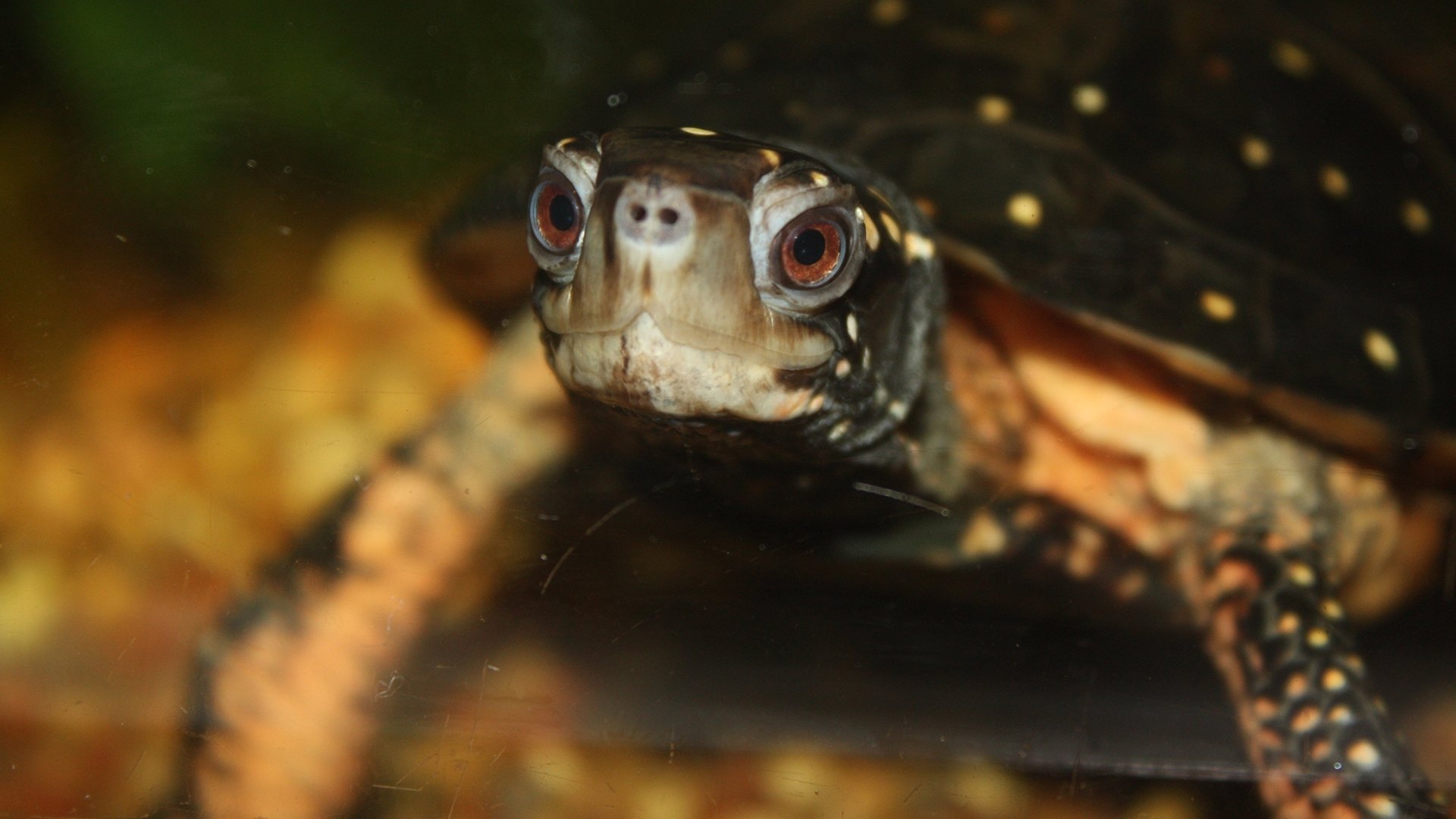
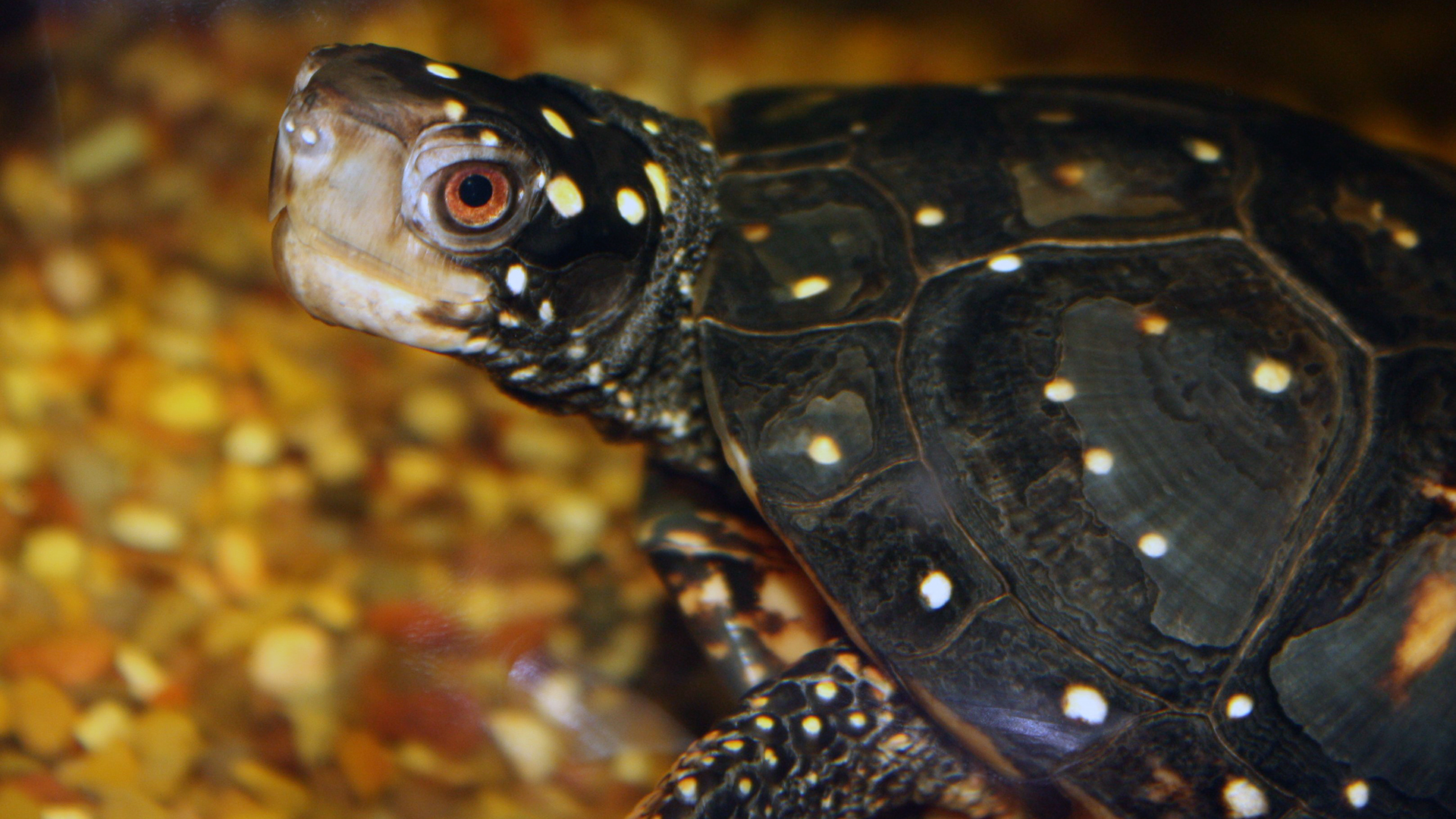
The spotted turtle is a small turtle, aptly named for the yellowish spots on its dark shell. This turtle is native to eastern North America, but populations are declining and therefore this species is on IUCN’s Red List of Threatened Species.

This turtle is semi-aquatic, spending much of its time in and around bodies of freshwater.

The spotted turtle is most commonly seen in the spring, basking in the sun near a body of water. They are dormant in the winter, burrowing in the mud to hibernate. In the spring, when they emerge, the mating season begins. The males will chase the females through the water in order to mate. After mating, females leave the water in search for a suitable nest site, and lay clutches of 2-7 eggs in well-drained, sandy soil.

There are many threats to the spotted turtles survival, which is why they are listed as endangered on IUCN’s Red List. Spotted turtles are small, and the juveniles and eggs are especially predated upon by many predators. The spotted turtle has also been over collected for the pet trade. Spotted turtles are susceptible to habitat changes, as wetlands are converted for housing or agricultural land.

Additionally, gravid (egg bearing) females are often hit by cars as they leave the pond searching for a nest site. The fragmented populations of spotted turtles across eastern North America require further protection in order to ensure their survival.


SCIENTIFIC NAME

Clemmys guttata

Fun Fact

Spotted turtles bury down in the mud of shallow water during extreme temperatures, whether in the hot summer months or cold winter months.

Wildlife Insights

WORD FROM
THE EXPERTS

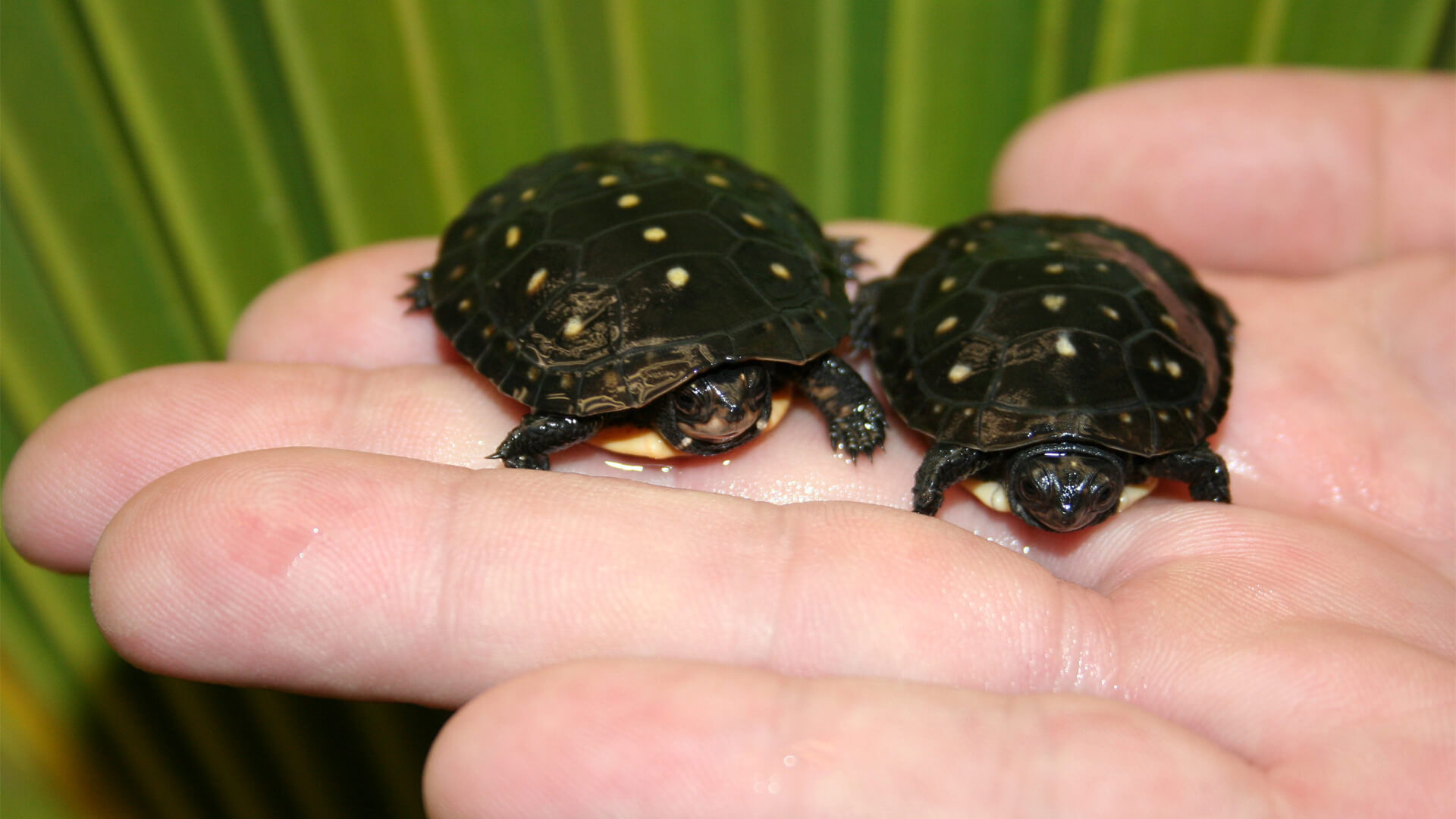
How many spots does a spotted turtle have? Hatchlings tend to only have one spot per scute on their shell. However, the number of spots increases with age, meaning some adults have over 100 spots!

Kaeli, Keeper
Wildlife Insights

WORD FROM
THE EXPERTS

At the Central Florida Zoo & Botanical Gardens, conservation and education are at the very heart of our mission. We are thrilled that despite their horrible start in life, we are able to provide these monkeys with a safe life with excellent care. They will also make a difference for their species and many others by helping educate the public about the importance of ending wildlife trafficking and the illegal pet trade.

Richard E. Glover, Jr., CEO