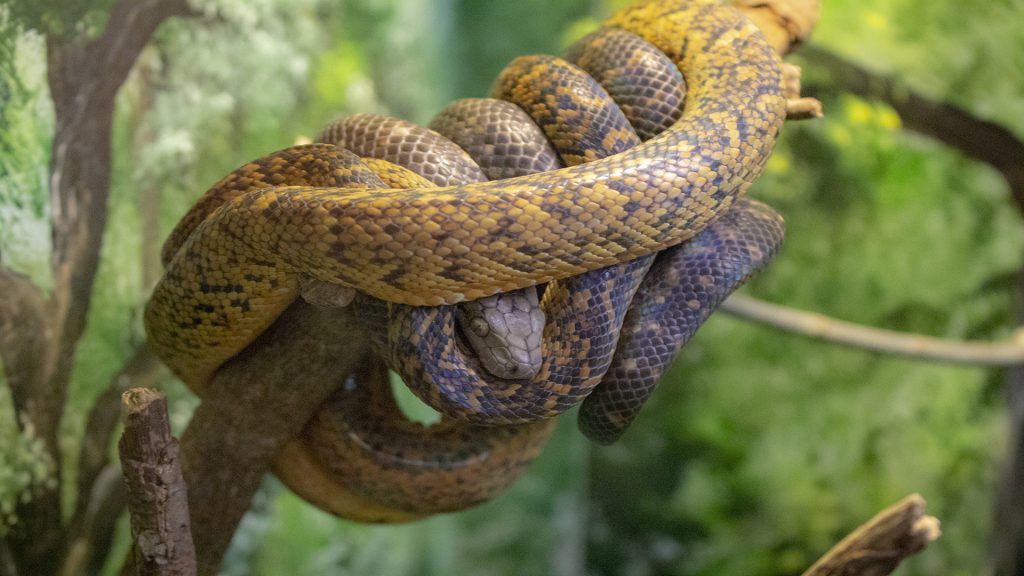
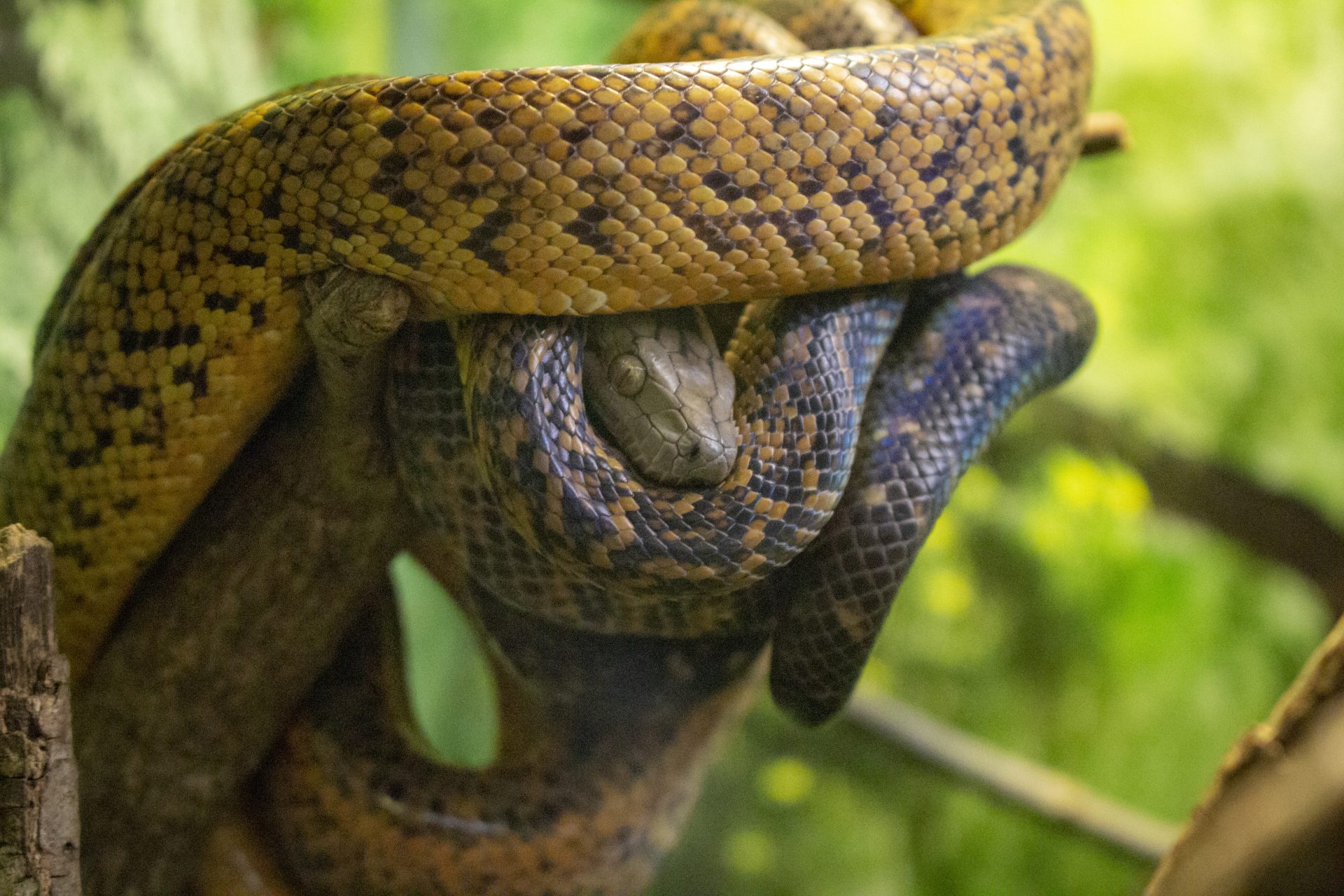
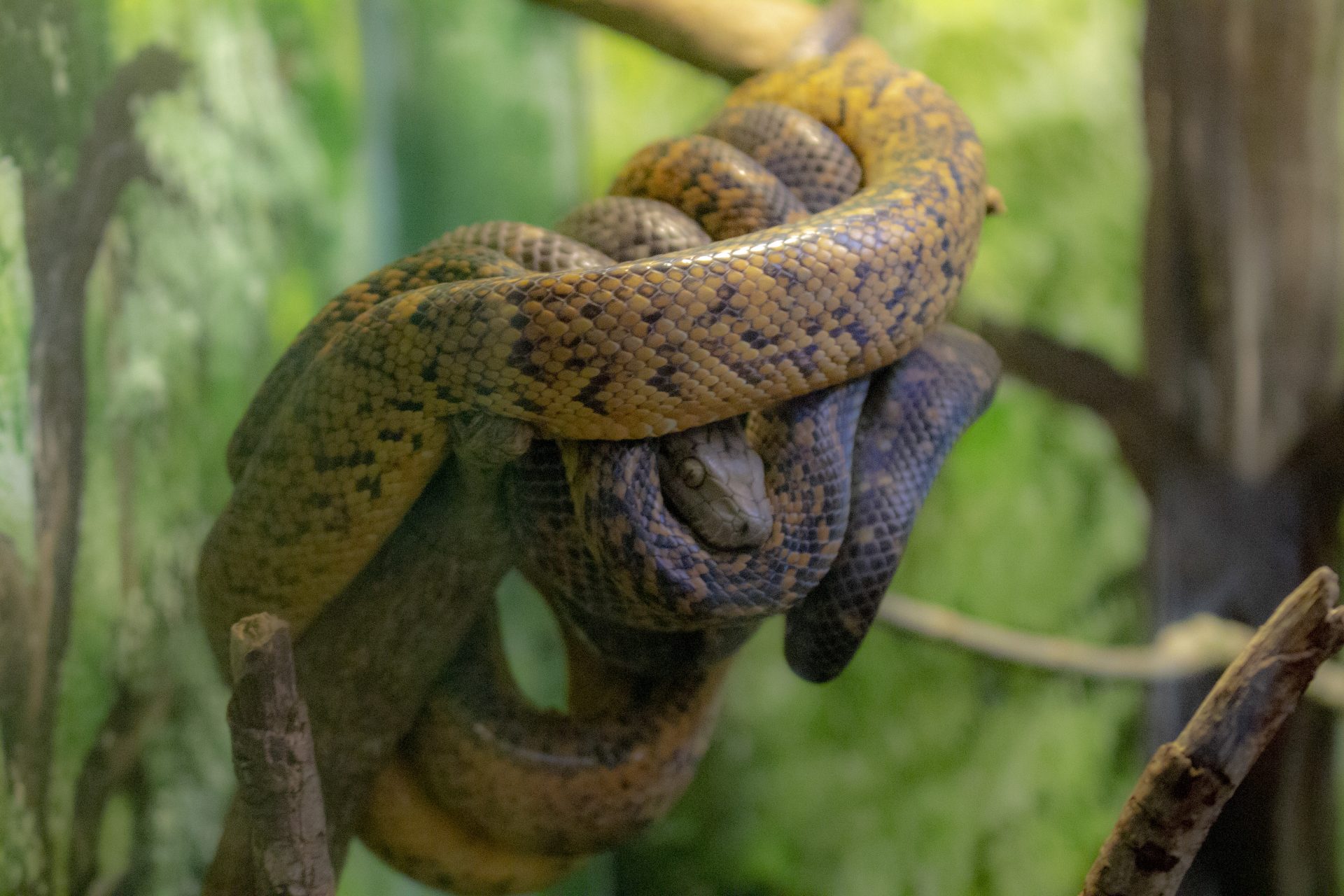
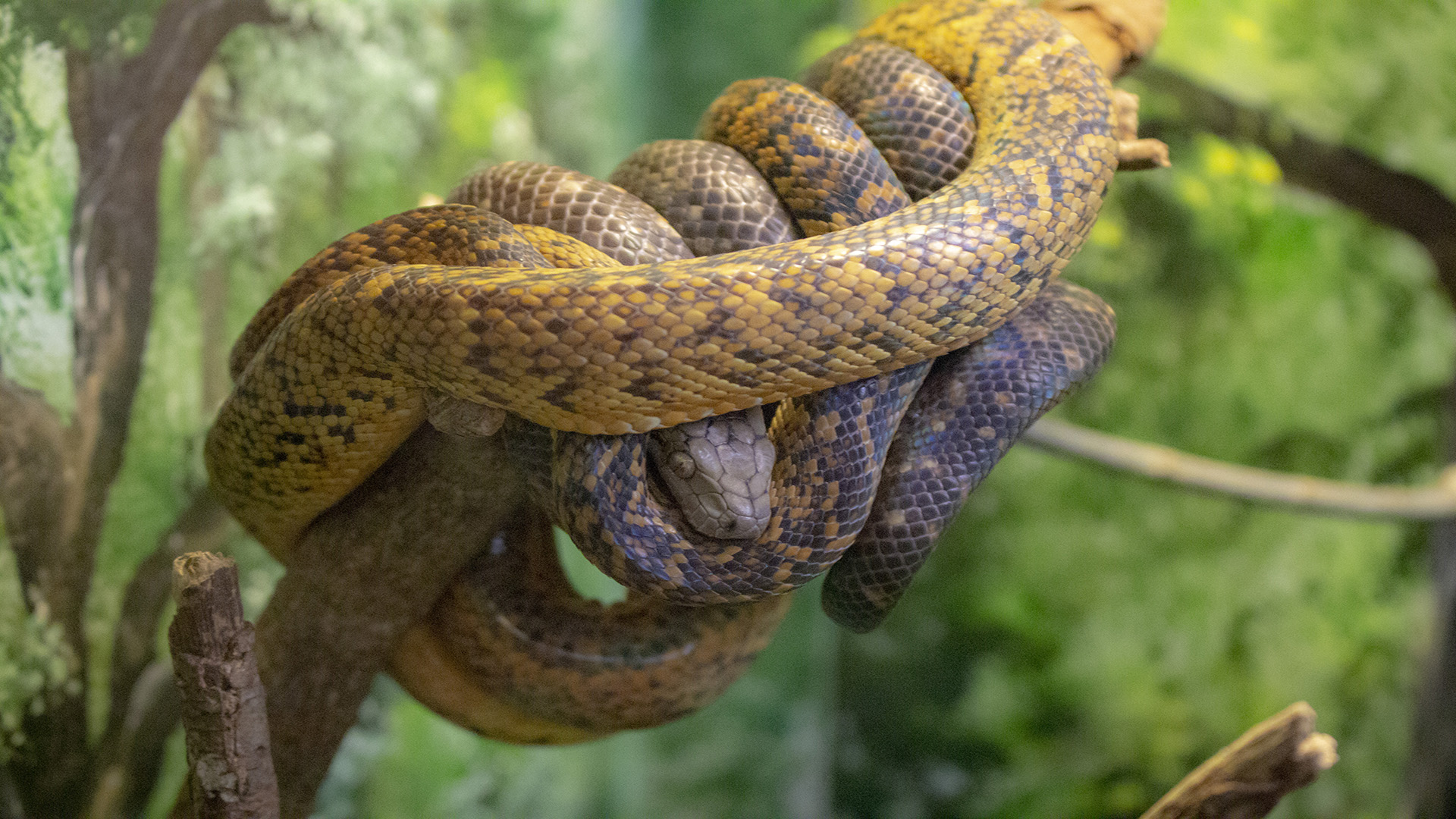
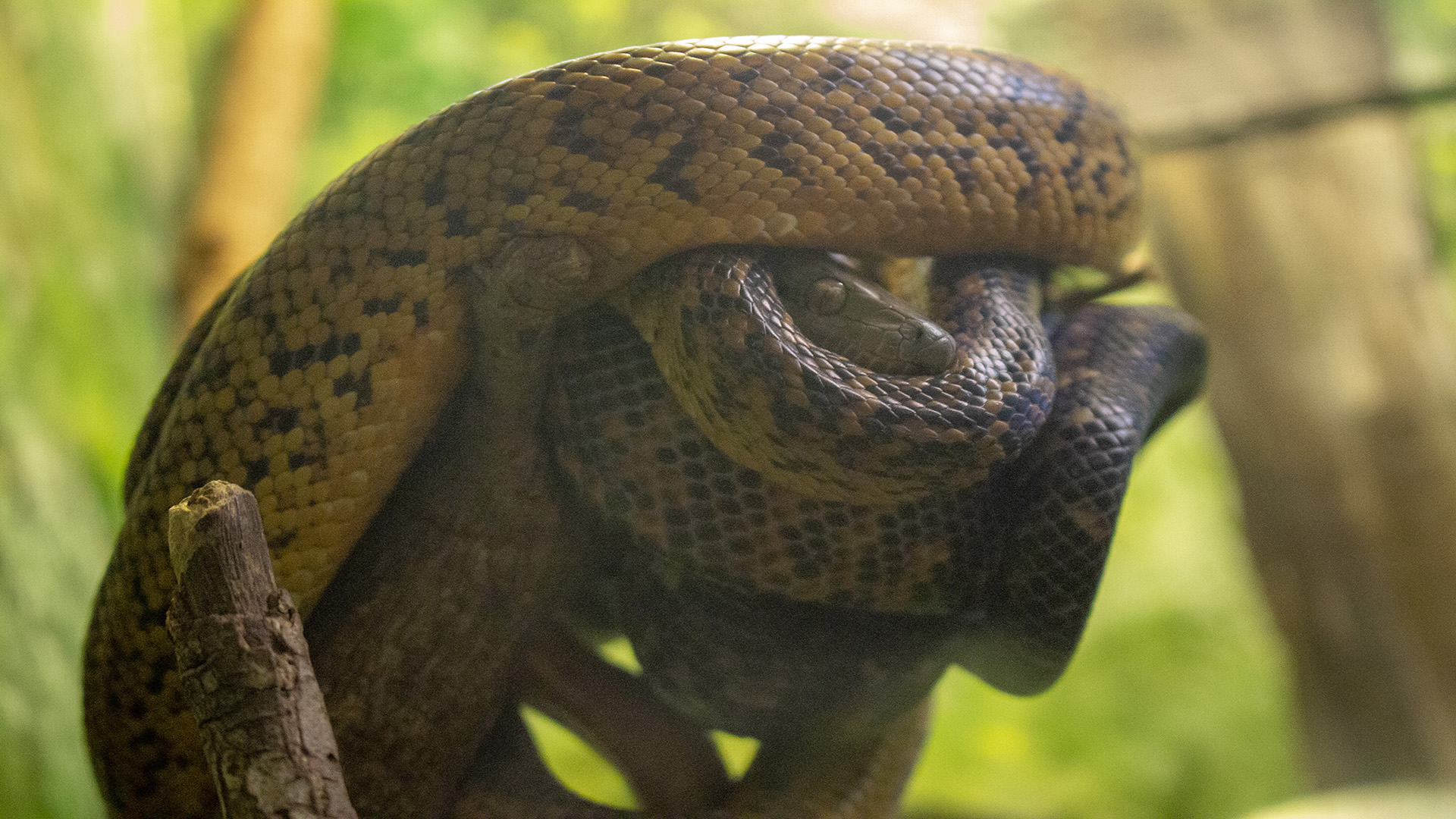
JAMAICA’S LARGEST TERRESTRIAL PREDATOR This arboreal reptile is likely to be found in the trees but is well hidden due to its color variation across their scales. As an ambush predator, these boas will remain motionless until their prey is within reach. They’ll strike swiftly with their fang-like teeth and coil prey with its muscular body.
Jamaican boas hunt primarily at night.
During the day, they may be found hiding among dense foliage, trees, or rocky burrows. Sometimes they will be seen in the early morning basking on rocks to raise their body temperature.
SCIENTIFIC NAME
Chilabothrus subflavus
Fun Fact
These snakes are endemic to Jamaica but that includes Goat Island on the southwest coast of the mainland.