Mesquite, grassland, and scrubland environments of Mexico
life expectancy
Up to 6 years
diet
Amphibians, reptiles, insects, and small mammals
Reproduction
Around 4 live young at a time
predators
Birds, lizards, and larger snakes
natural defenses
Venom
About the Species
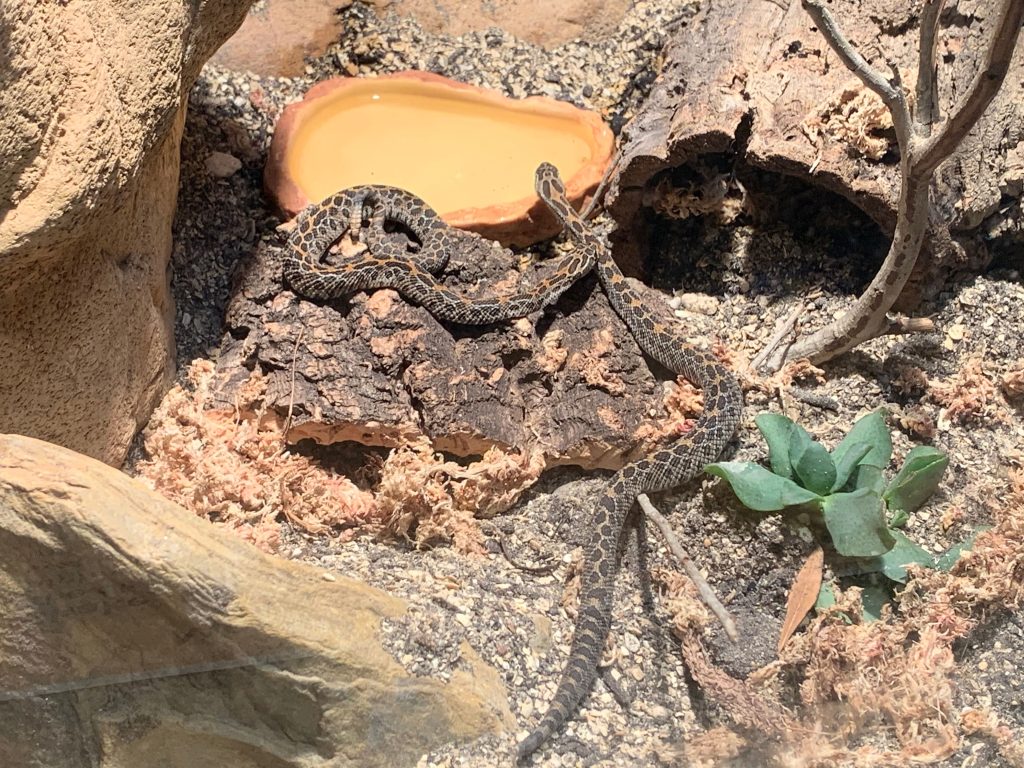
SHAKE, RATTLE, AND HISS The Mexican lance-headed rattlesnake or lance-headed rattlesnake is a venomous pit viper species found in central Mexico. No subspecies is currently recognized.
The distinctive buzz of a rattlesnake is a highly effective predator-avoidance system. The rattle comes from a series of interlocking keratin rings that create a hissing sound when vibrated. Another ring is added to the rattle each time the snake sheds its skin.
Most snakes give a warning before they bite, although they may strike quickly if they are startled. When out walking in heavy brush or rocky areas, watch where you step or put your hands.
SCIENTIFIC NAME
Crotalus polystictus
Fun Fact
This species is part of the AZA’s Species Survival Plan (SSP).