Sloths at the Central Florida Zoo

Sloths in the News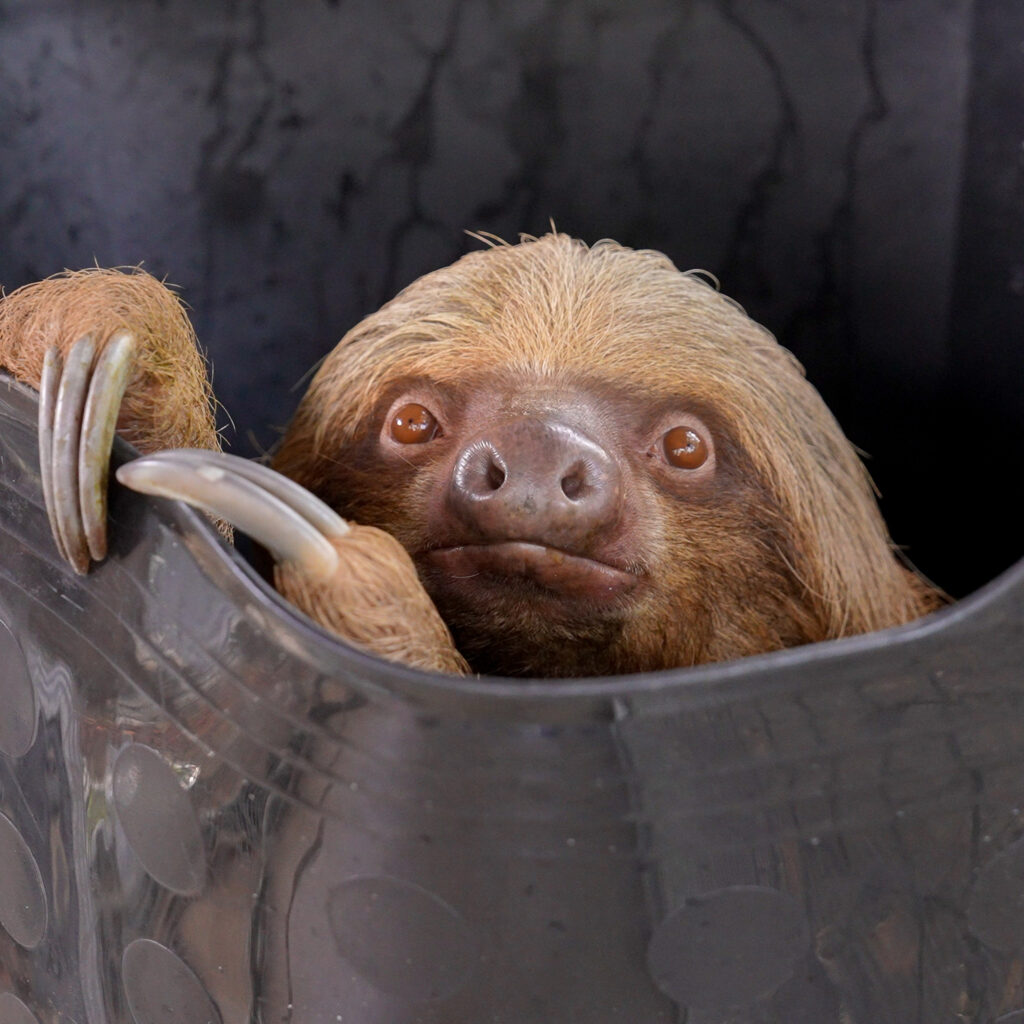
8/14/2026
Our eight sloths have been doing well behind the scenes, with steady diets, routine medical checkups (including blood work,) and regular interaction with our small team of sloth keepers.
One thing is for certain: they love all of the enrichment purchased by our local supporters! All of the items purchased from our Amazon Wish List have been put to good use, from new hanging buckets and hammocks to homemade hanging feeders. The sloths (and the Zoo) are incredibly grateful.
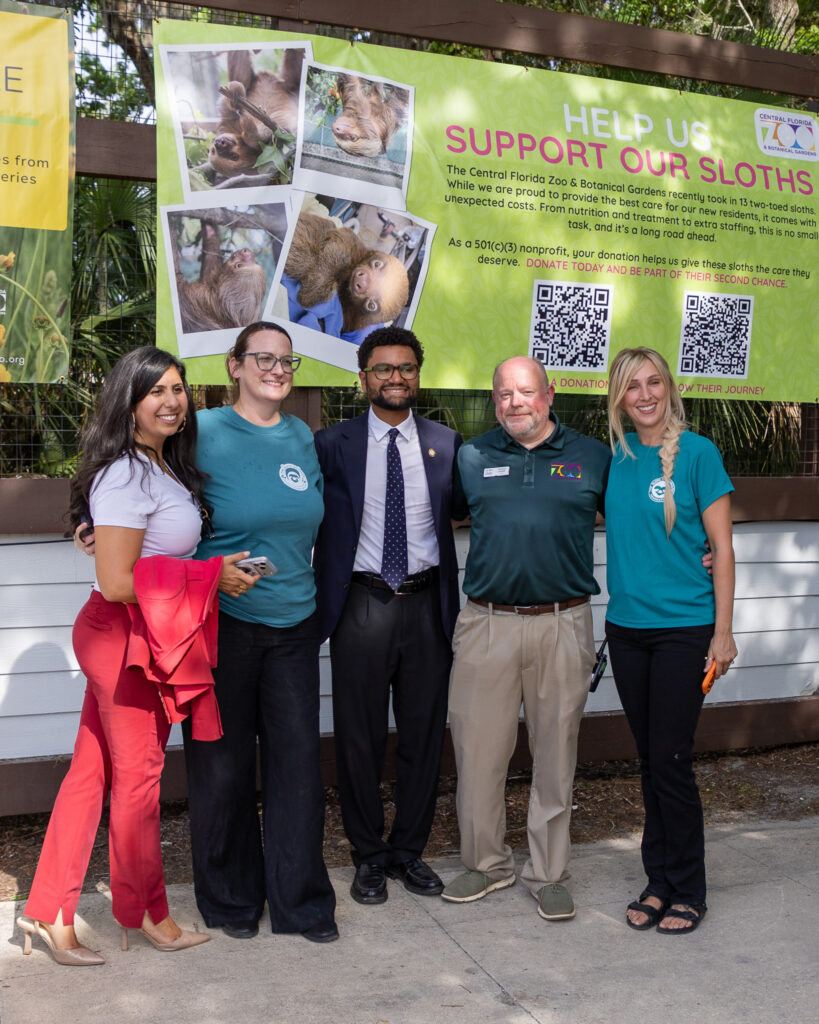
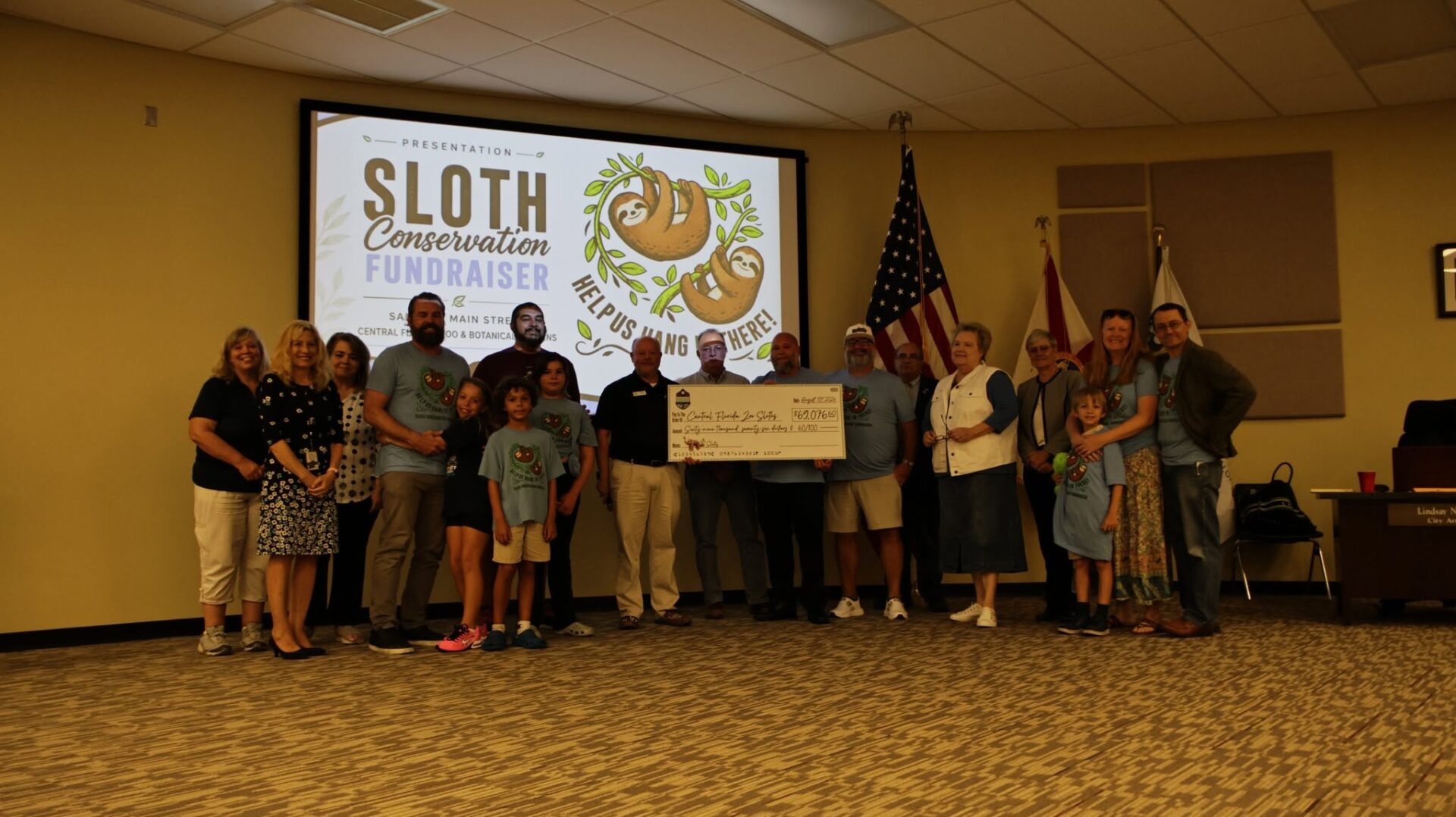 Speaking of grateful, our friends at Sanford Main Street also recently made a donation to the Zoo from the proceeds of their Sloth tee-shirt fundraiser that many locals are familiar with.
This tremendous donation of $69,076.60 to the Zoo is proof of the community’s support, and a reminder of what incredible things can happen when people take action to support animals in need.
Thank you, Sanford Main Street!
Speaking of grateful, our friends at Sanford Main Street also recently made a donation to the Zoo from the proceeds of their Sloth tee-shirt fundraiser that many locals are familiar with.
This tremendous donation of $69,076.60 to the Zoo is proof of the community’s support, and a reminder of what incredible things can happen when people take action to support animals in need.
Thank you, Sanford Main Street! Sloths in the News
7/17/2026
The Association of Zoos and Aquariums (AZA) recently featured the Central Florida Zoo & Botanical Gardens, recognizing the incredible dedication and expertise of the Zoo’s animal care team in caring for the sloths.
The story showcases the hard work and expertise of the Zoo’s animal care team, offering an inside look at the specialized care, veterinary support and collaboration required to help these remarkable animals. From rehabilitation efforts to daily husbandry practices, the article demonstrates the commitment that support the sloths on their journey.
Click here to read the full feature to learn more about the Zoo’s ongoing sloth rehabilitation efforts. 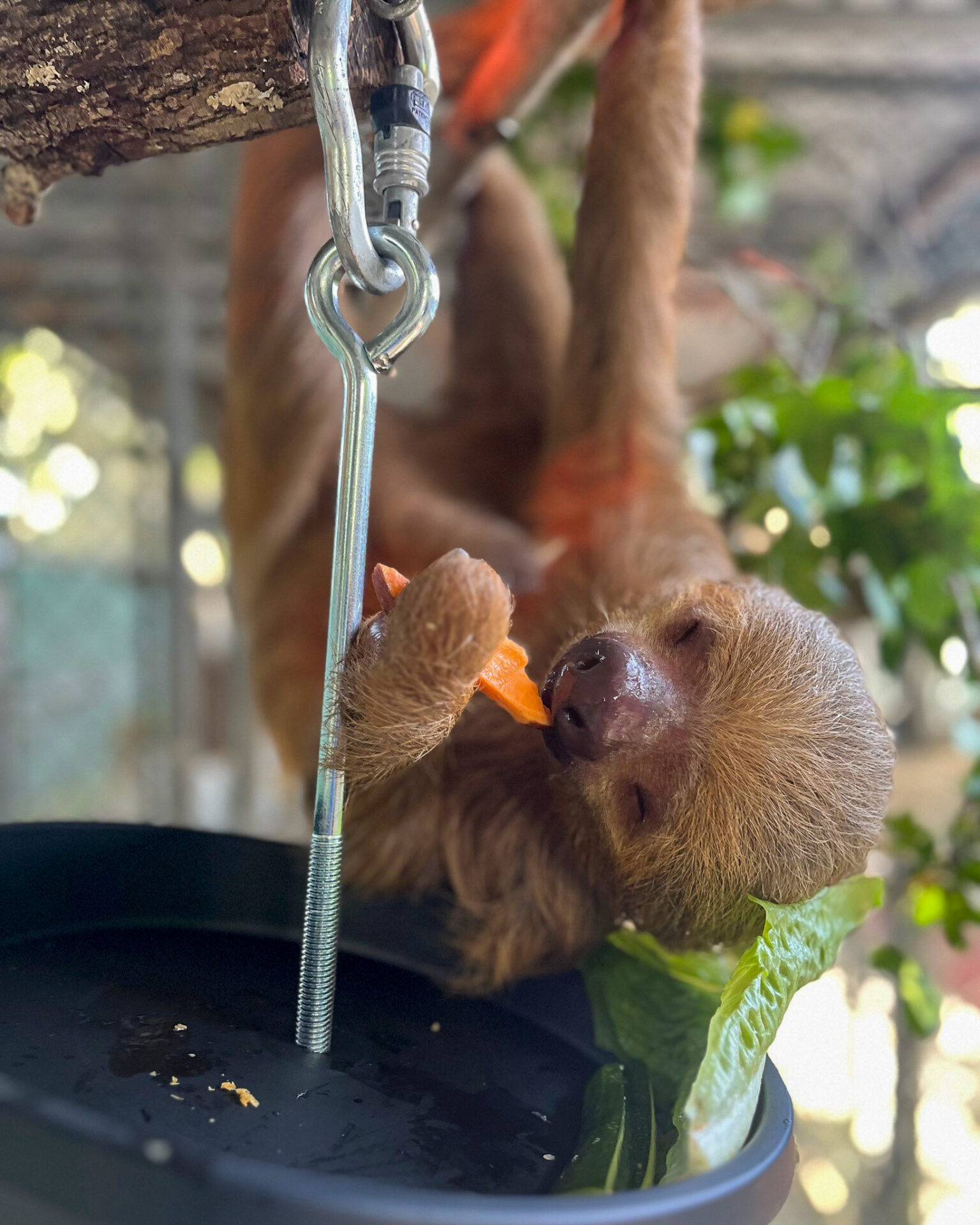
Sloth Care Update
 7/4/2026
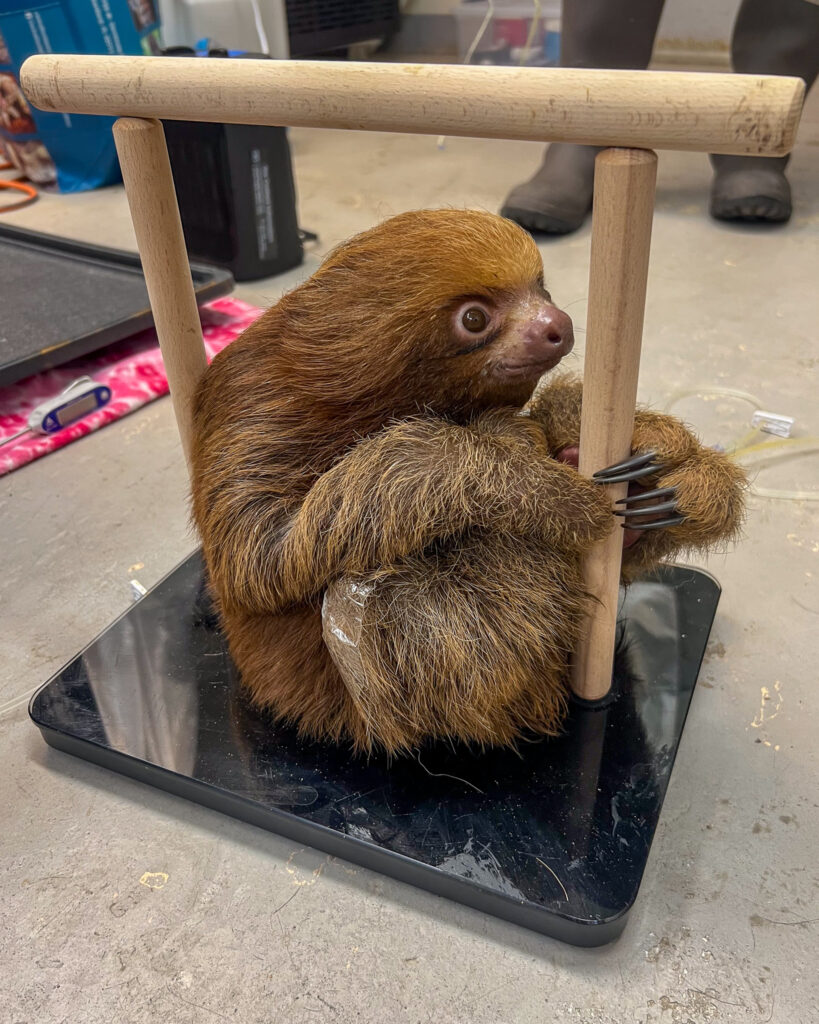
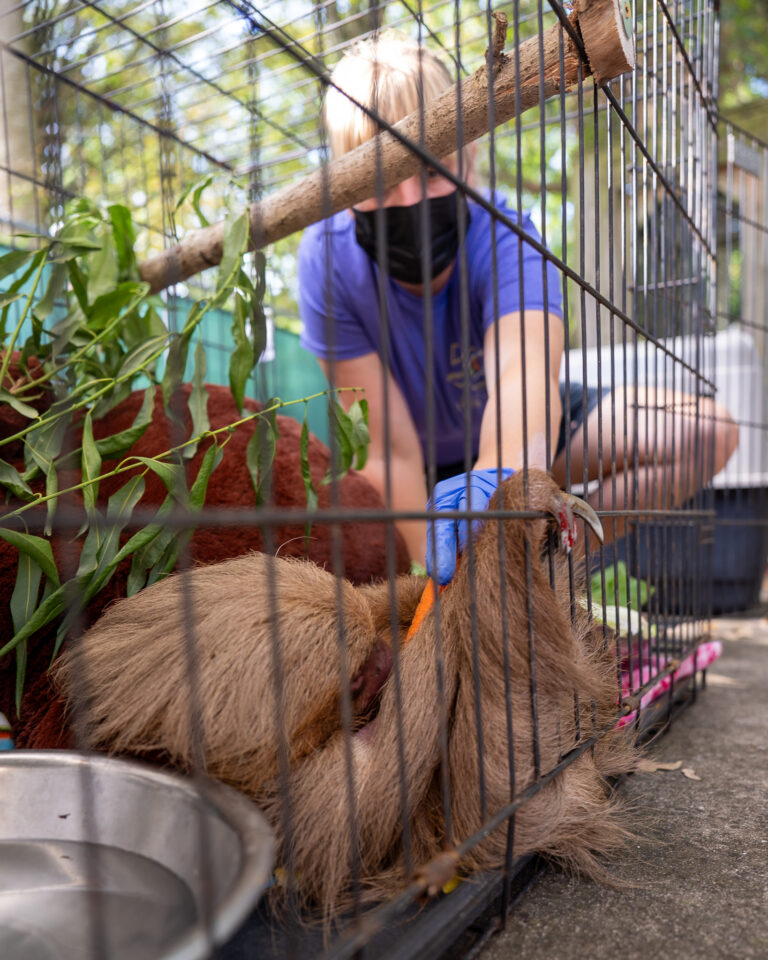
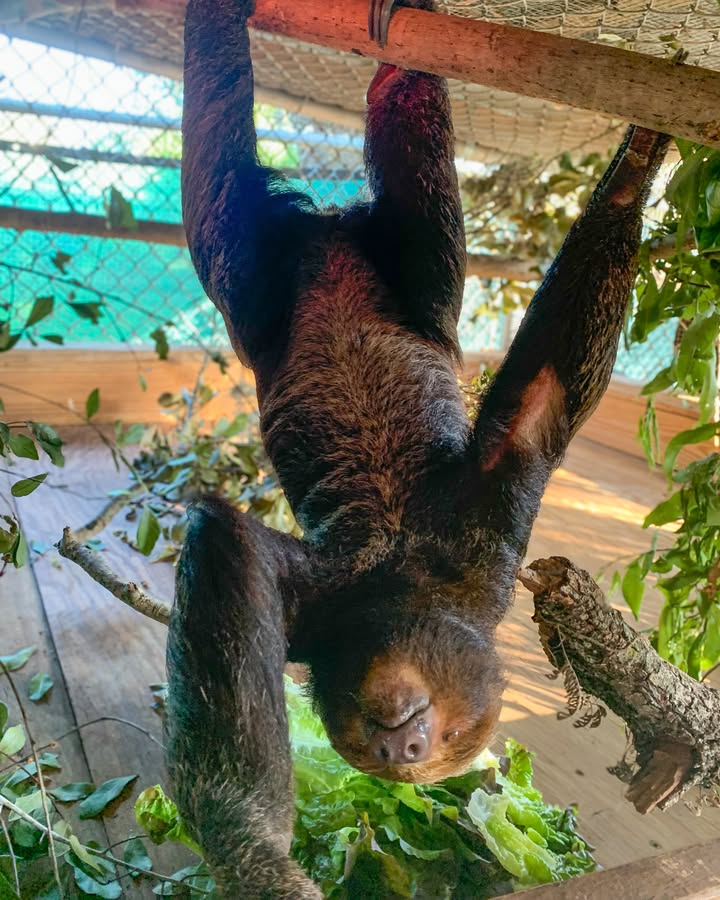
In our sloth care unit, our Keepers have been working on helpful behaviors and human desensitization with the sloths. This is so they can help participate in their own medical evaluations without causing undue stress on the animals.
Here, you can see Chewie above a platform and Phantom both training to hang from their back legs and do a long stretch toward the ground for an X-ray position. By doing this, the animals wouldn’t need to be sedated or restrained for these types of checkups.
Also pictured – Dolce snacking from a hanging feeder. (Hardware supplied by a purchased donation from our Amazon wishlist)
Introducing: Dolce & Pearl 🦥🦥
7/2/2026
So far, we’ve mentioned six of the sloths in our care behind the scenes. Last but not least, here’s Dolce and Pearl!
Dolce is a curious male Hoffman’s sloth, always very interested in what his keepers are up to. (He’s quite the attentive supervisor!) Named by Behavioral Husbandry Coordinator, Kayce, after the musical term to play a section of music ‘gentle,’ ’soft,’ or ’sweetly,’ Dolce’s curious nature matches just that.
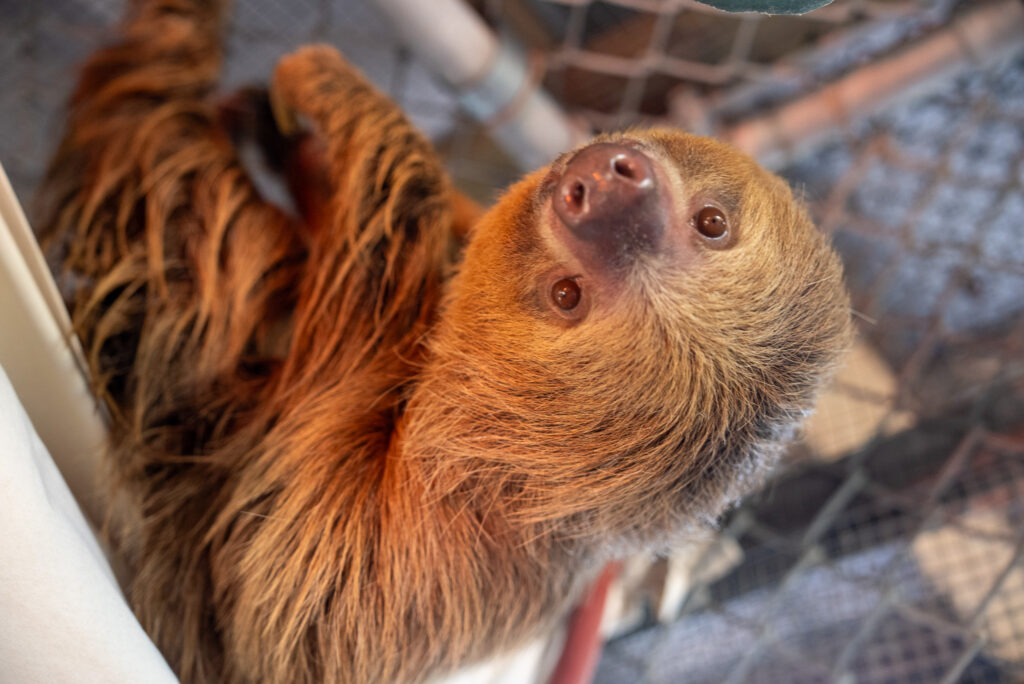
Pearl is a female two-toed sloth with a different sort of outlook. She’s got a lot of reddish tint in her hair, so our keepers say she’s a redhead! In the morning, she is always ready for breakfast, and will follow our keepers around, as if to point out that they are placingthe food in ’the wrong place.’ Our keepers tend to get the feeling that if given the chance, she’d shout at the kids to get off her lawn.
As of now, the eight sloths are stable and we continue to monitor them closely. They are cared for by a select team in an isolated area behind the scenes. 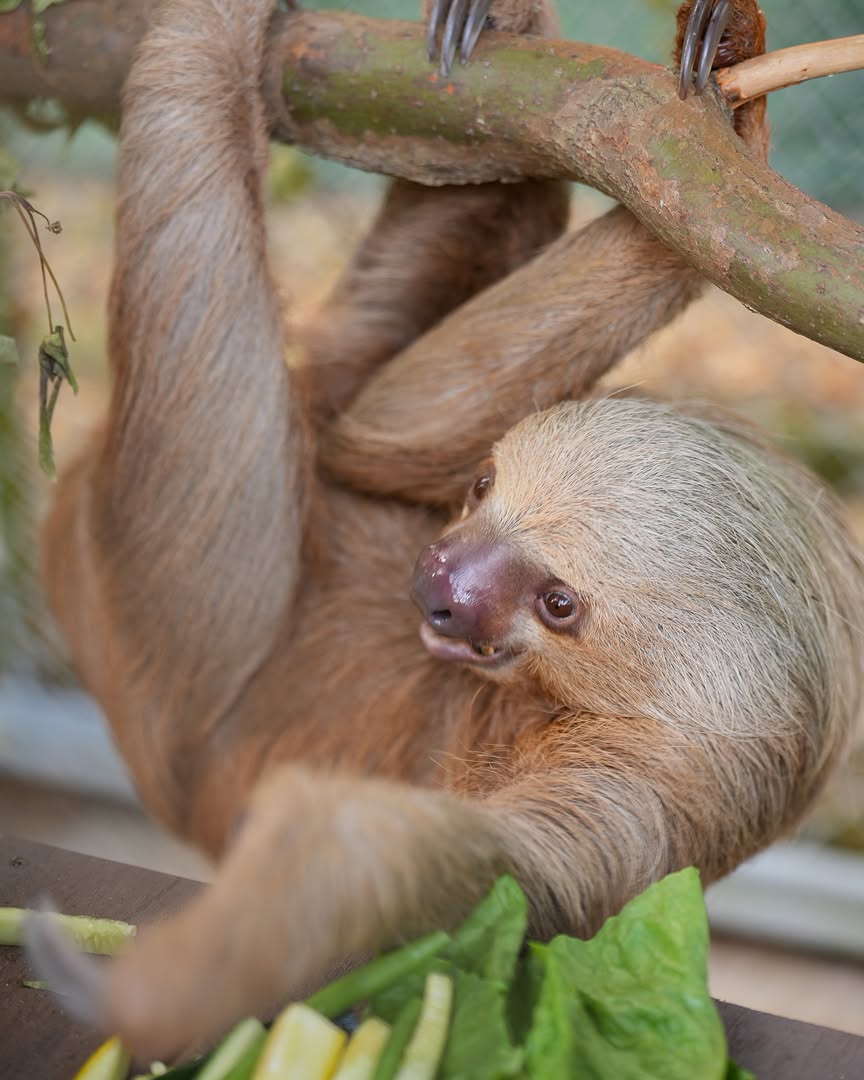
Introducing: Leeloo 🦥
6/22/2026
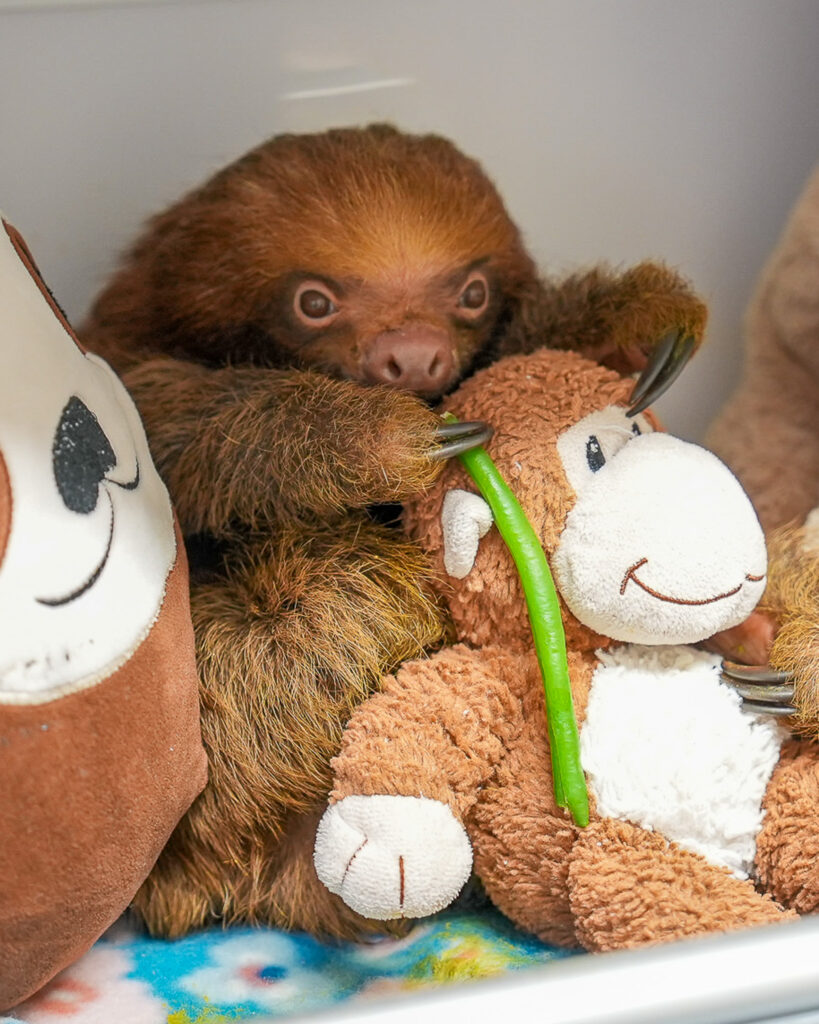
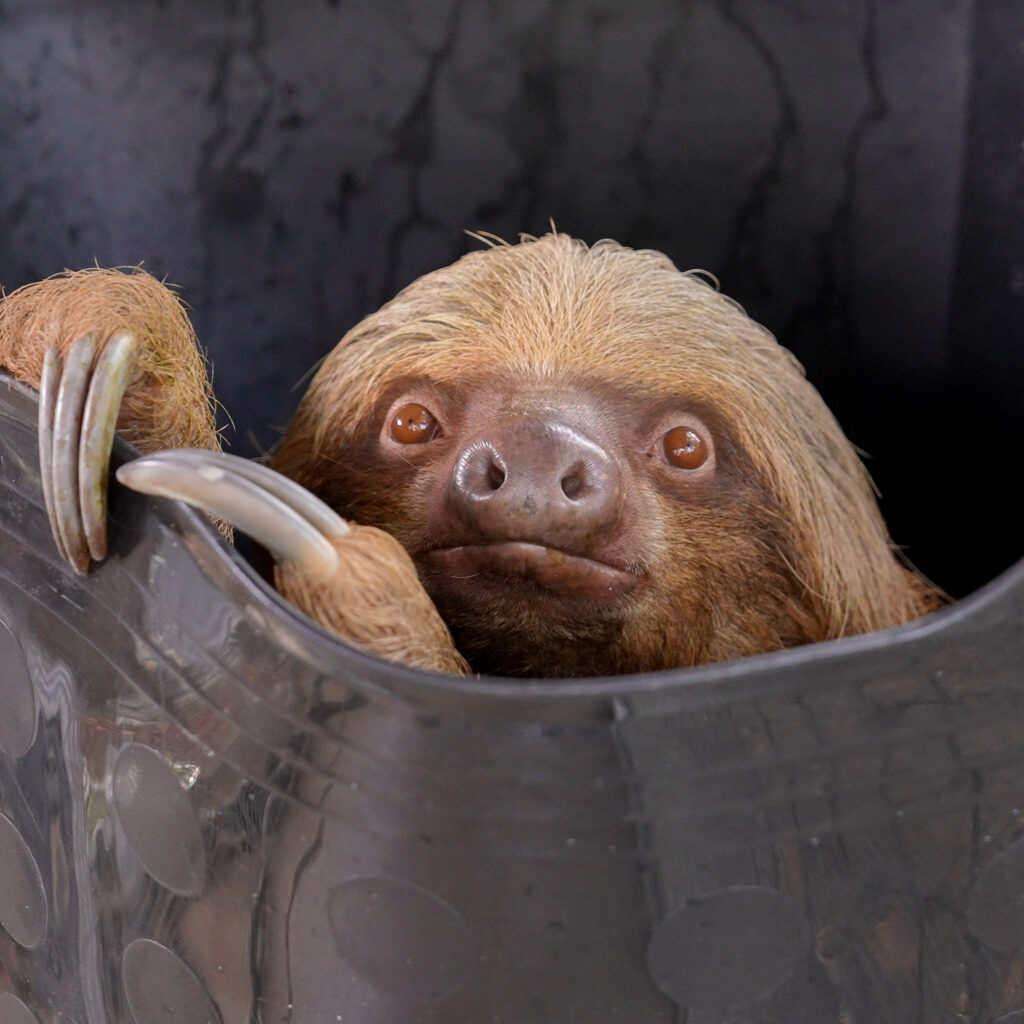
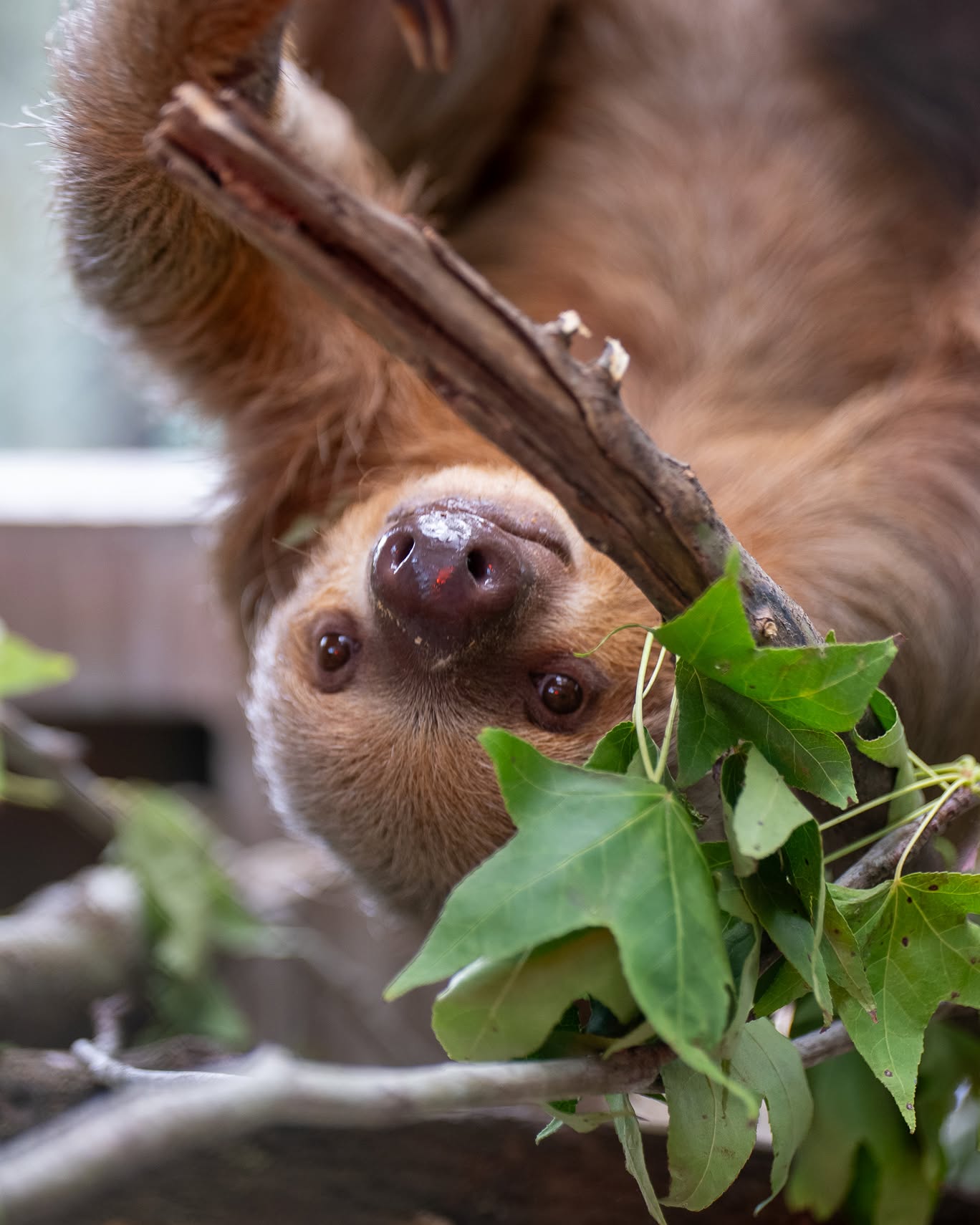
Meet Leeloo! Named after the iconic character from the film The Fifth Element, this female Linnaeus’s two-toed sloth is the smallest and possibly youngest sloth in our care. Her signature toes are actually so small that some of the pieces of produce in her diet are longer than her claws.
For the first few weeks, Leeloo was very shy, but she has really started to come out of her shell. She now comes out of her hanging cubby to take food from her keepers and loves exploring her habitat. Most days, she can be found relaxing in her hanging bucket.
Sloth Update – Willow’s Passing
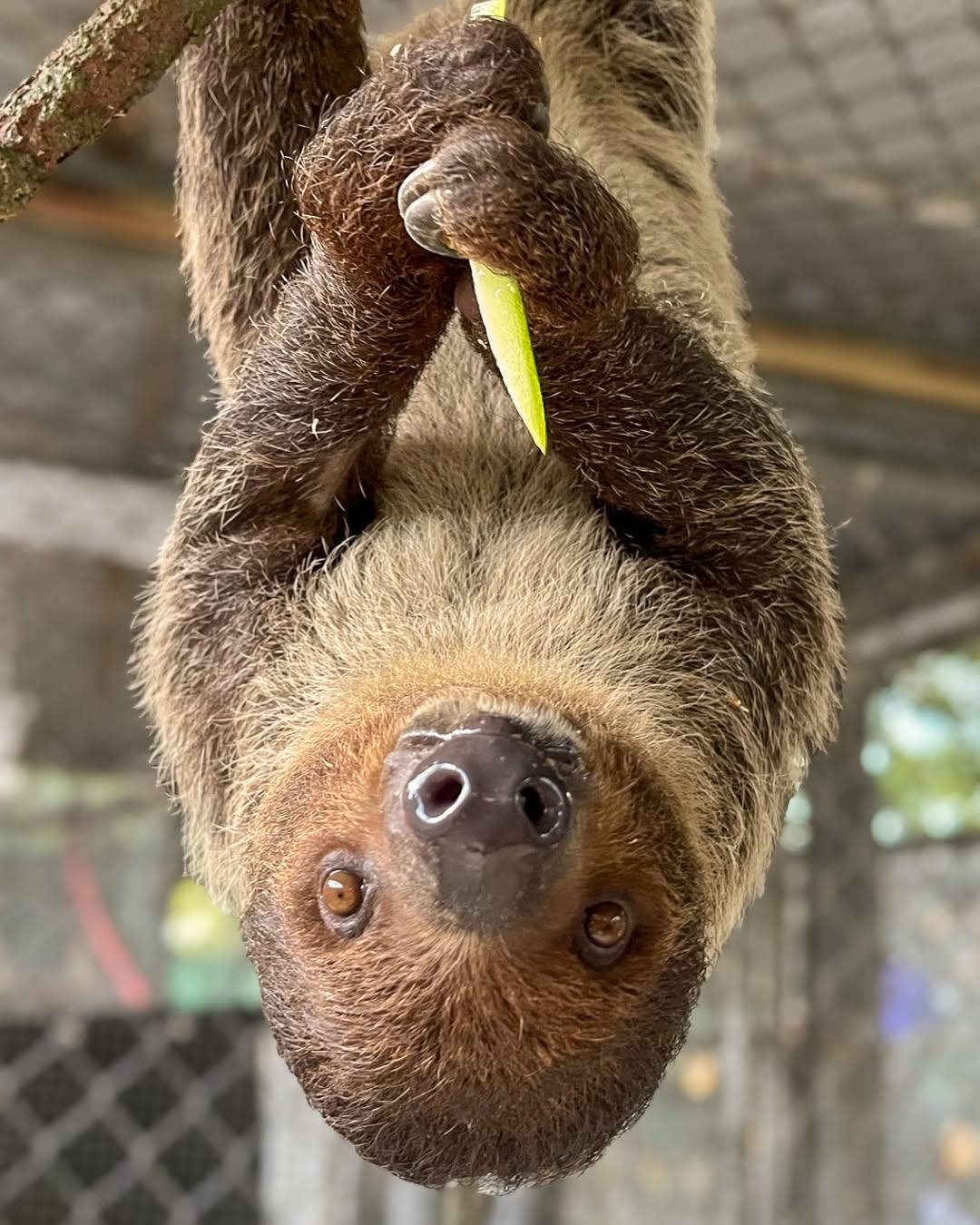 6/16/2026
It’s with a heavy heart that we share the passing of Willow, a female sloth cared for behind-the-scenes at the Zoo. Despite daily care and regular medical treatments from our Animal Care, Nutrition, and Veterinary Teams, Willow’s condition continued to steadily decline over the past few weeks. With consultation from other experts through the Association of Zoos and Aquariums (AZA), a thorough quality of life assessment was conducted for Willow, and the difficult decision was made for humane euthanization.
Willow was one of a group of sloths who joined us on April 24. Upon arrival, several of them were in critical condition and others were underweight with digestive issues. In her decline, Willow showed similar digestive symptoms to those sloths who arrived in need of critical treatment.
Our team remains focused on providing ongoing support and necessary treatments for the surviving sloths in our care; Chewy, Dolce, Phantom, Blackberry, Hazel, Leeloo, Mojo Jojo, and Pearl.
We’d like to thank the community for your ongoing support.
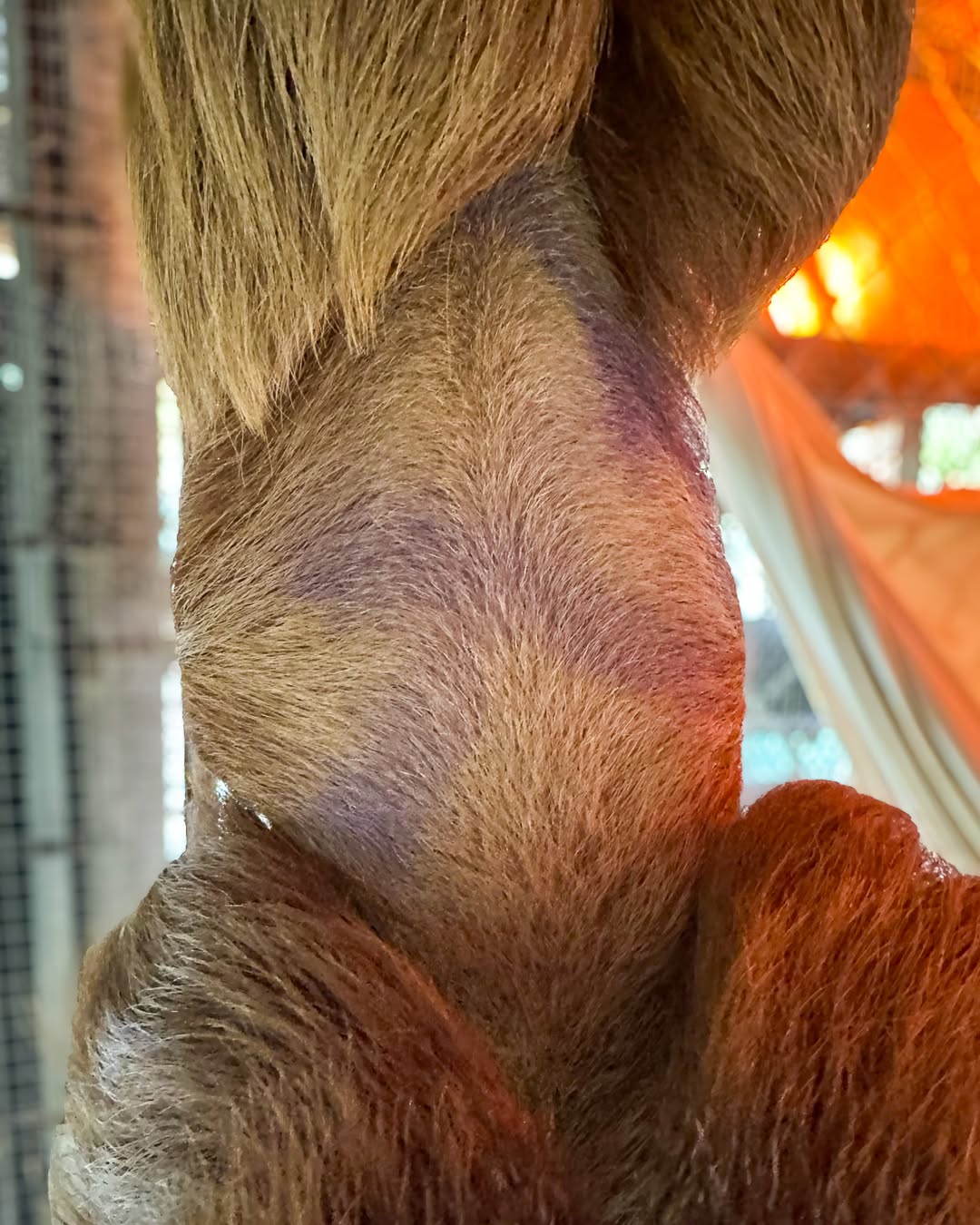
Phantom’s Markings
6/12/2026 🦥 We’ve seen lots of questions about the markings found on Phantom‘s belly that we mentioned last week. Here’s a closer look at those marks, which were present when we first accepted the sloths into our care. We believe the markings were placed on Phantom’s abdomen before they were transported into the United States. Wildlife traffickers will often use spray paint to mark animals for identification before transporting and selling them for a profit. These markings will slowly fade as Phantom naturally loses hair, but could potentially be visible on the sloth’s body for years.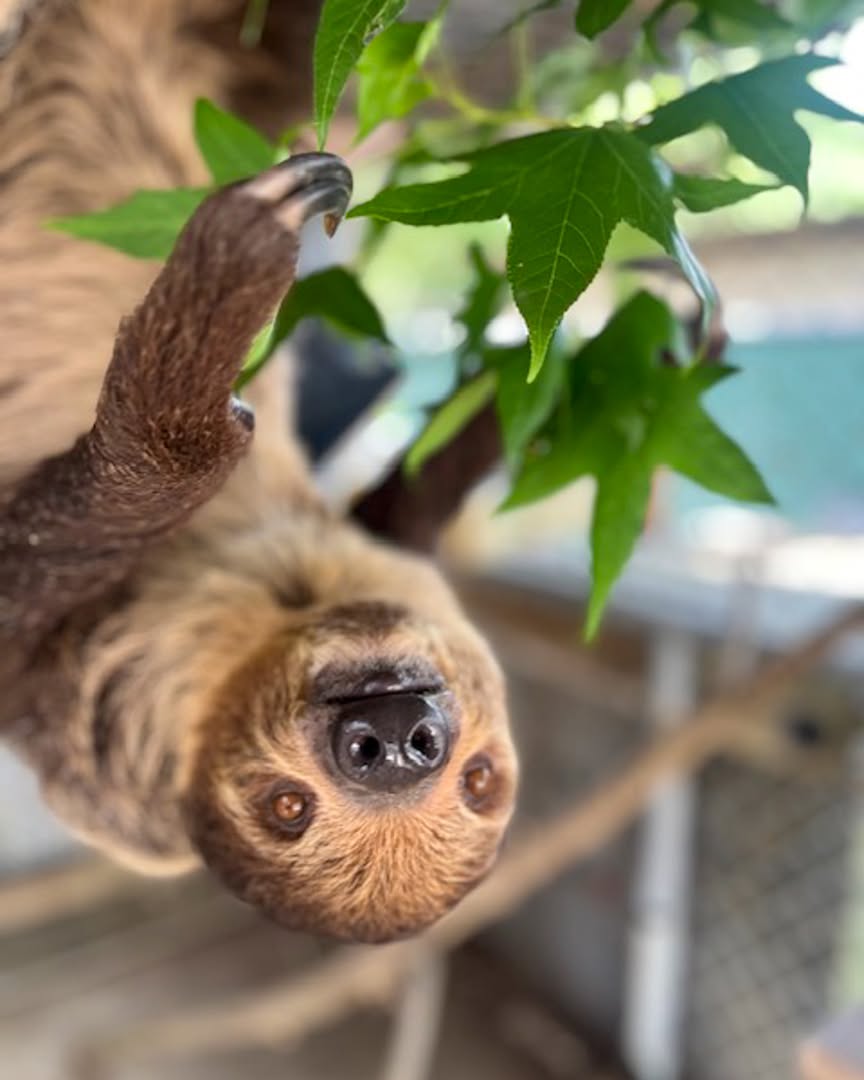
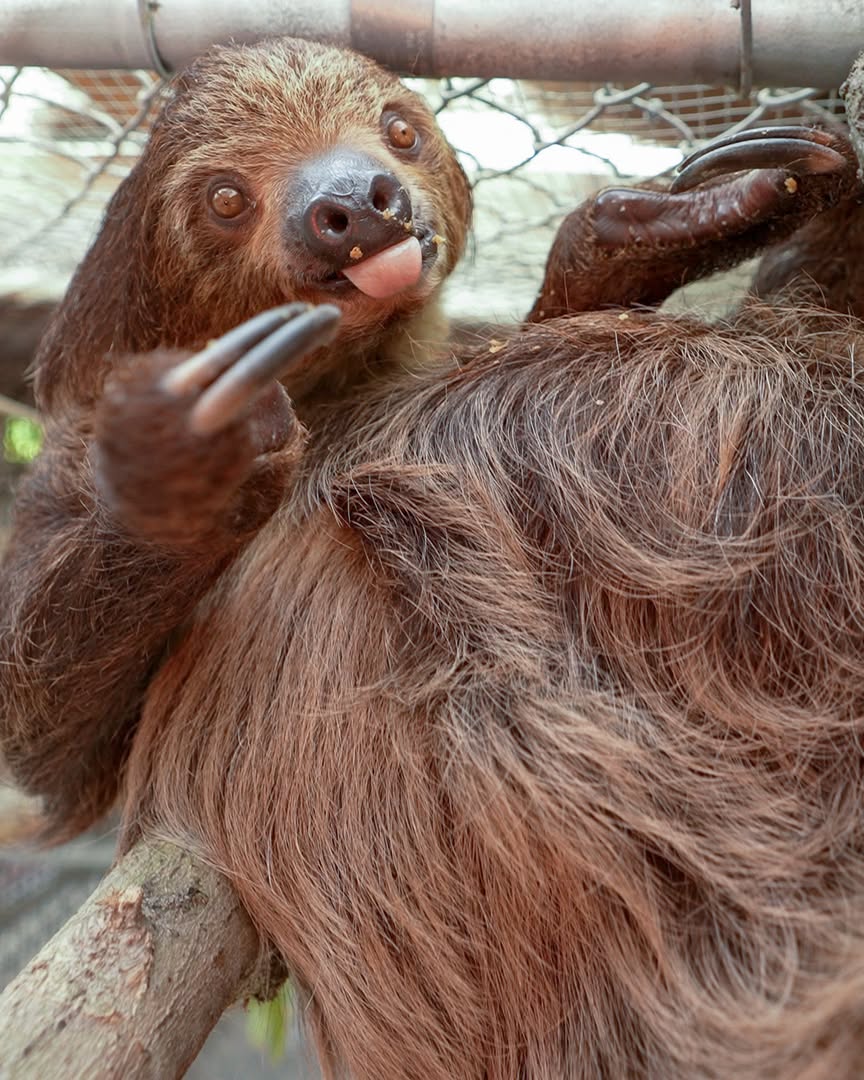
Sloth Introduction – Blackberry & Hazel
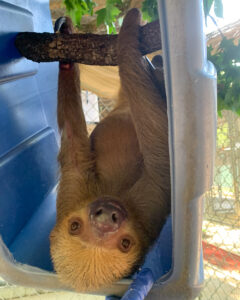
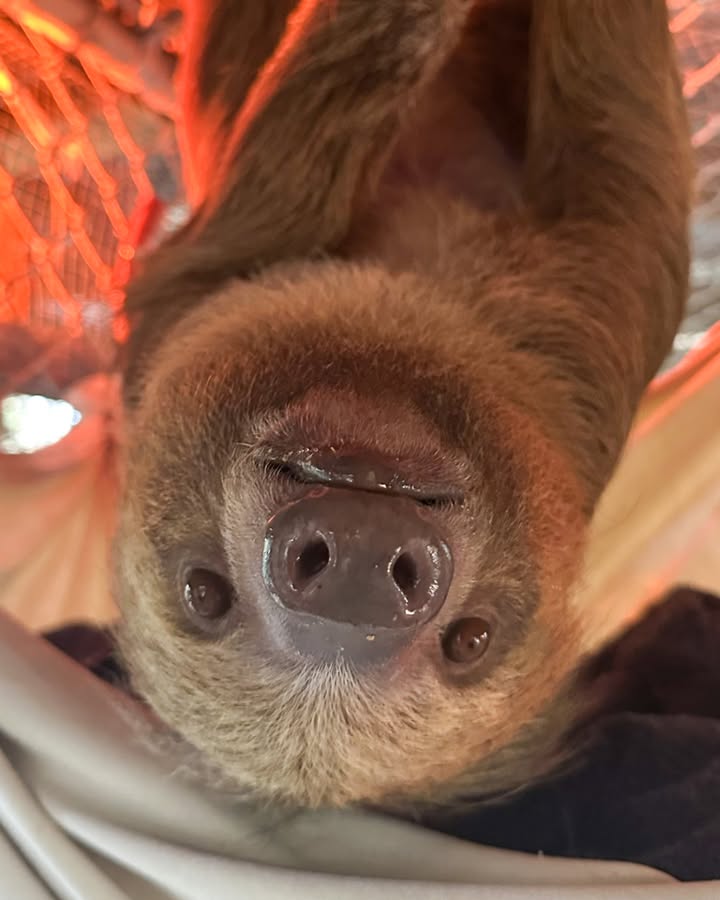
6/9/2026 Blackberry and Hazel were named after two rabbits in search of a new home in the 1972 novel Watership Down by Richard Adams. Blackberry and Hazel are two of our larger female sloths. These two live together in a shared space and spend most of their days relaxing! Blackberry has darker fur, while Hazel is the lighter of the two. Where blackberry is very eager to meet her keepers at the door for breakfast, Hazel is usually found curled up in a hammock, snoozing. Hazel has even been known to fall asleep with food in her mouth, seen here. Their favorite foods are yellow squash, cucumber, sweet potatoes, and the Mazuri sloth gel diet.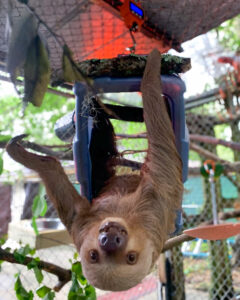
Sloth Introduction – Phantom
6/2/2026
We’d like to introduce you to Phantom, another of our sloths!

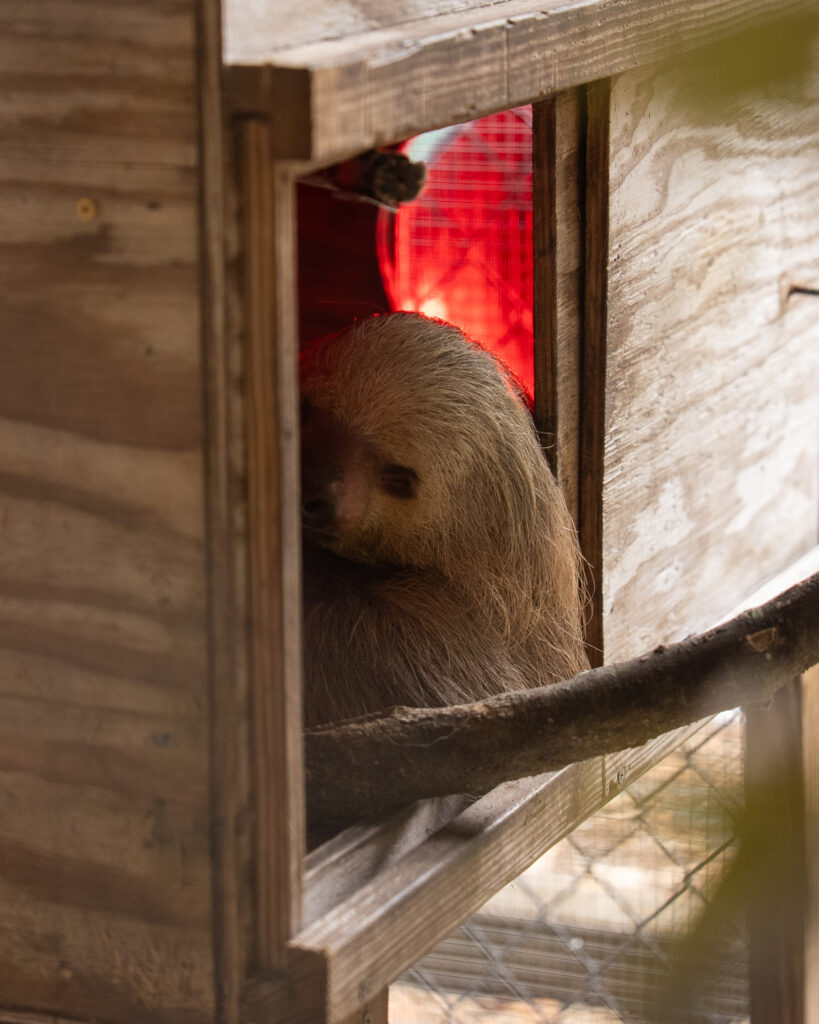
Phantom was named due to the markings found on their belly, and how much they tend to hide in the shadows (also known as the hammock,) just like The Phantom of the Opera! Phantom shares a habitat with their roommate, Chewie and prefers to spend most of their days lounging in their hammock.
While Phantom is a little shy at first, once the food comes around,
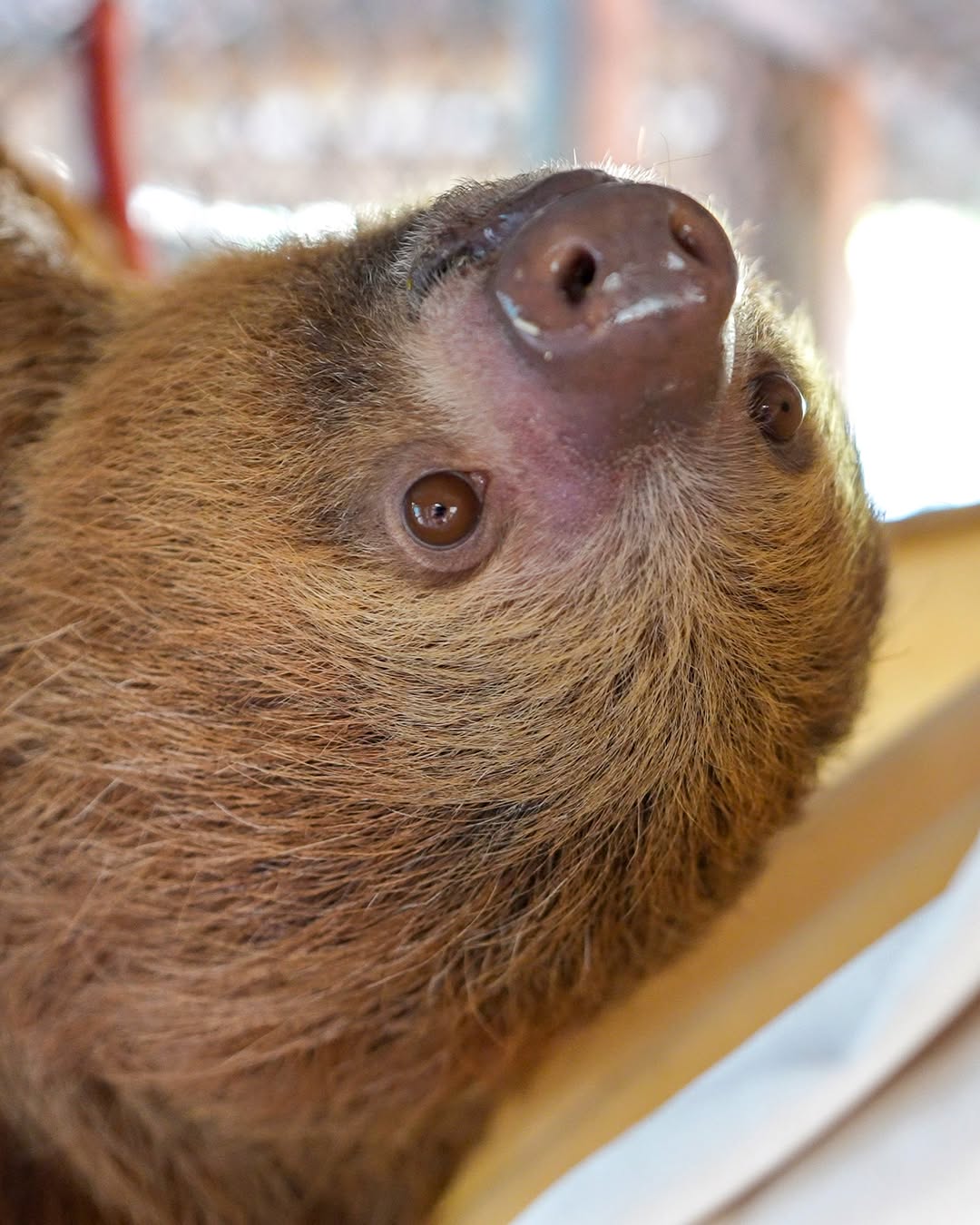
they’re very eager to eat! Favorite foods include yellow squash, zucchini, sweet potatoes, cucumbers, and Mazuri sloth diet.
We’re excited to announce that after a solid weekend, Phantom joins Dolce and Chewie as being considered clear of ICU care – meaning they haven’t required consistent medical intervention for about a week. Still, we’re still keeping a close watch on all of them.
Thank you for continuing to support our teams and for cheering these sloths on every step of the way.

Sloth Highlight – Chewie 🦥
5/26/2026
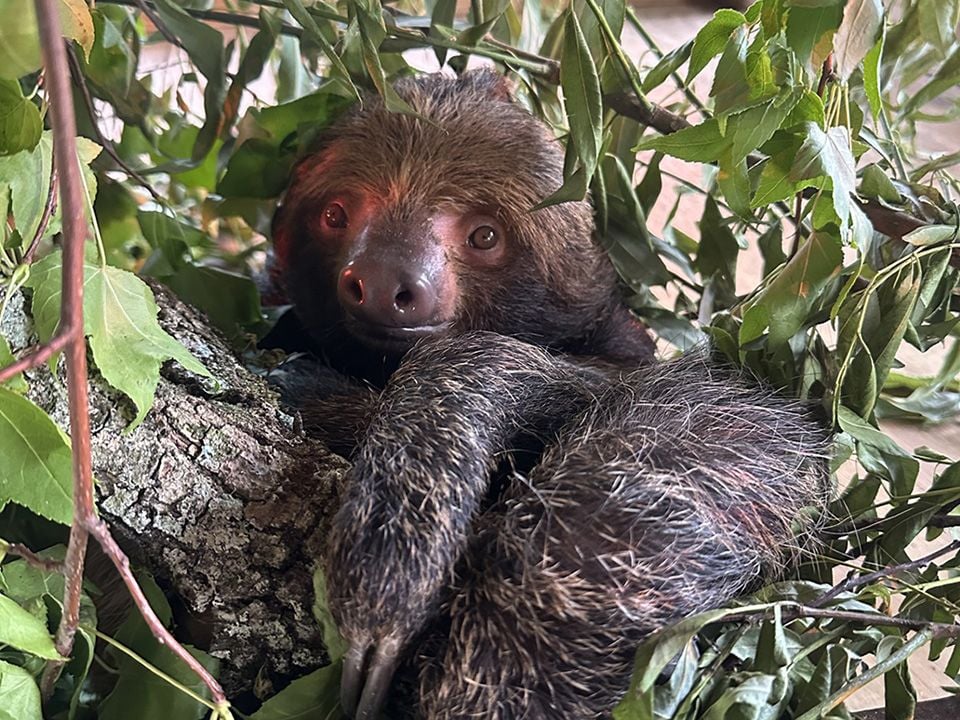
He may not speak Shyriiwook, but Chewie definitely gives Wookiee energy. Swing Keeper Kenndall Henderson named him after her first glimpse of him moving through the branches and the name stuck right away. A number of us think he really looks like Chewbacca!
Chewie is a Linnaeus’s two-toed sloth (Choloepus didactylus) and the largest male sloth in our care. This species is native to the rainforests of South America and spends most of its life high in the trees, moving slowly and purposefully through the canopy.
Here at the Zoo, Chewie has settled into a clear routine and is very motivated by food. He is usually waiting for his keepers when breakfast arrives in the morning. His favorites include yellow squash, zucchini, cucumber, and his Mazuri Sloth Diet, with sweetgum as his top choice when fresh browse is offered.
When he is not eating, Chewie is doing what sloths do best. He is often seen resting on a branch or curled up in a quiet pile of browse, fast asleep.Introducing: The Sloths of Central Florida Zoo
5/22/26
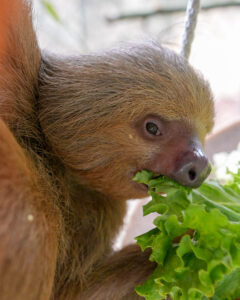
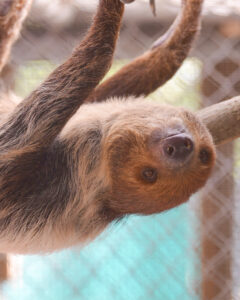
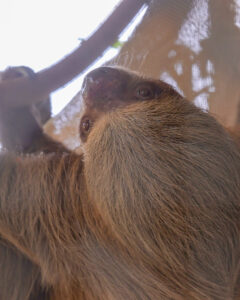
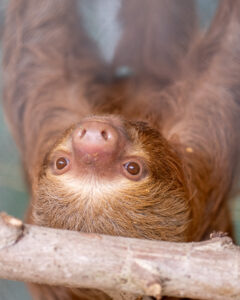
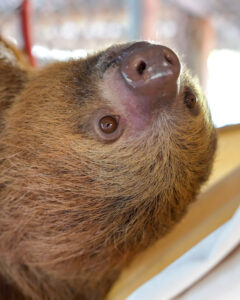
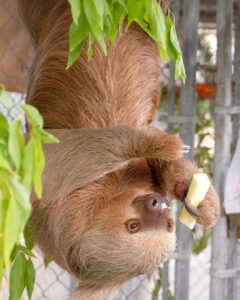
Sloth Intro: Dolce and Chewie
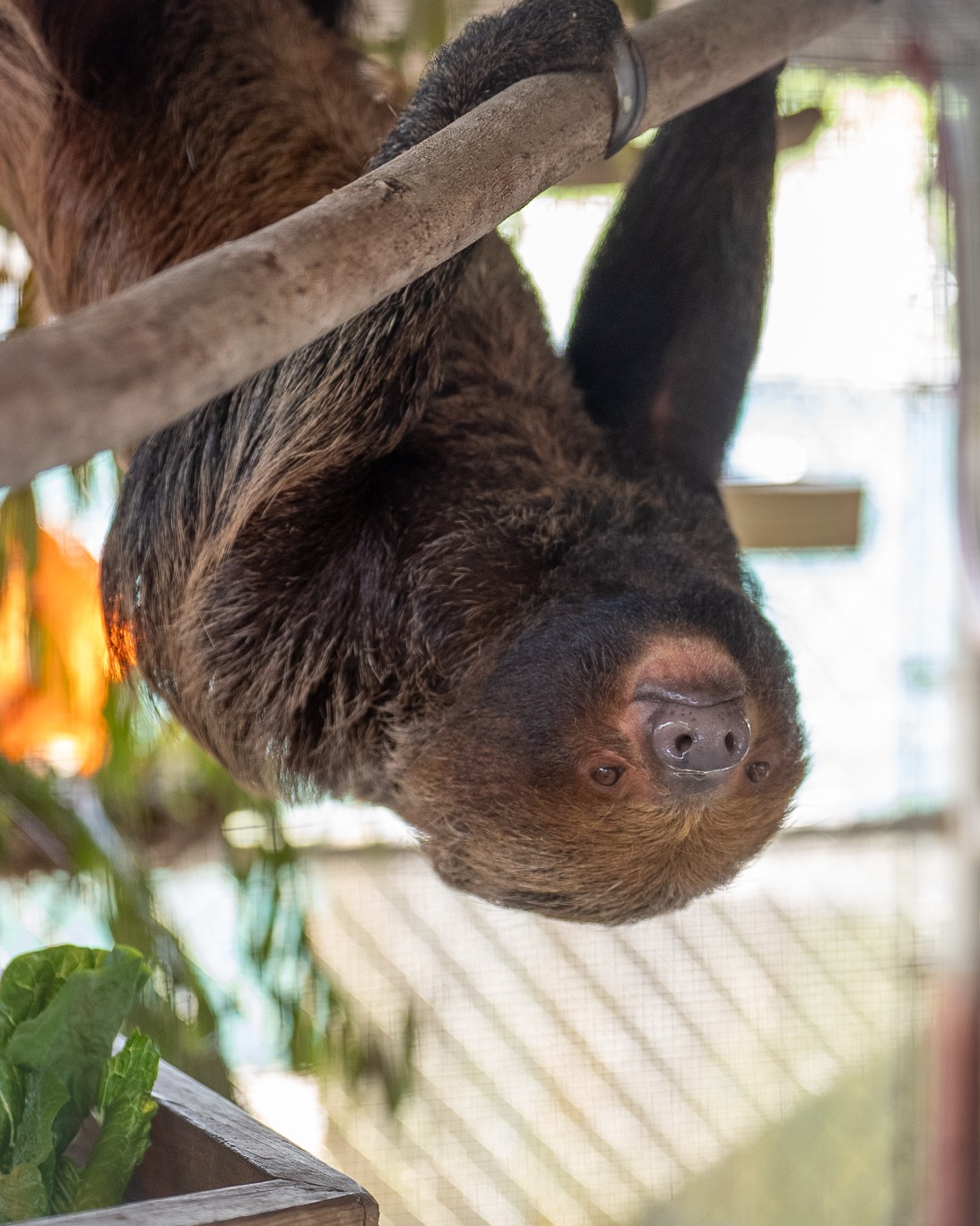
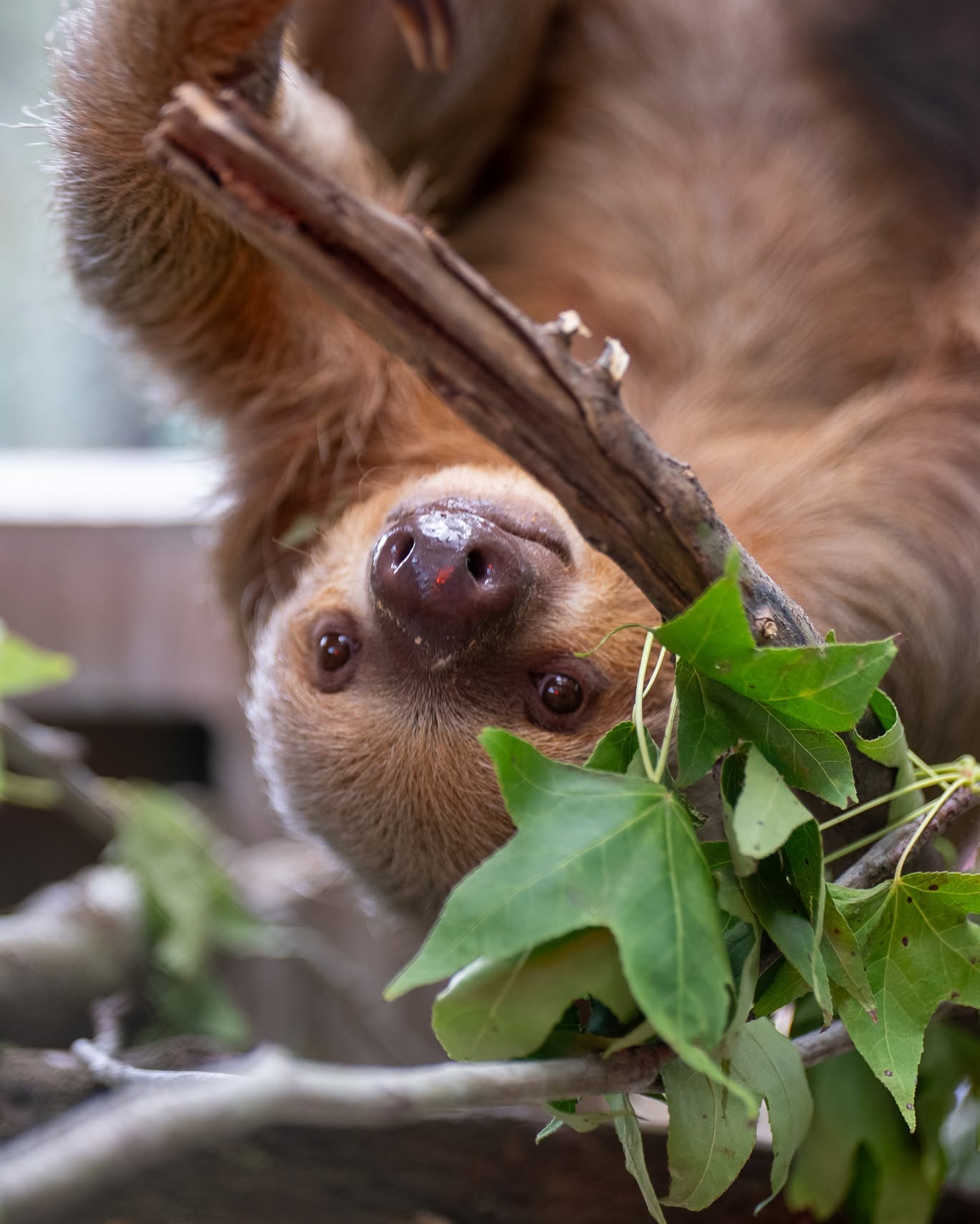
5/18/2026
Meet Dolce and Chewie 💚
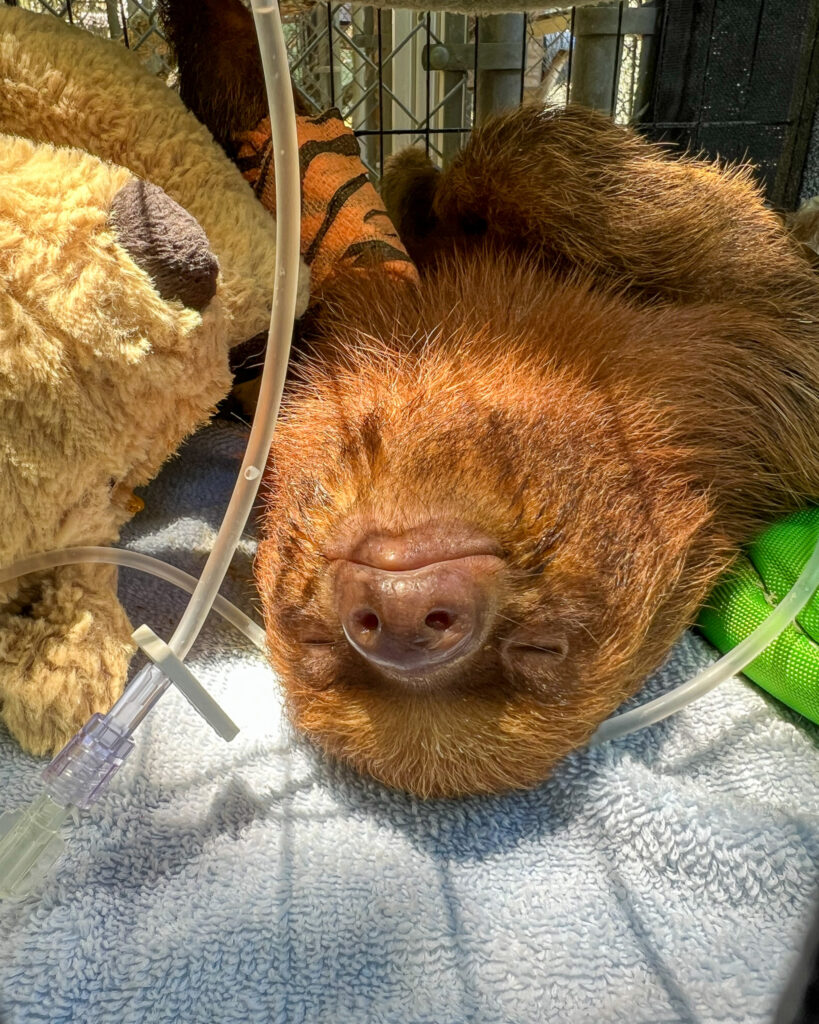
These two fighters have been cleared from the ICU and are now stable in quarantine. While their situation can still change at any moment, they are doing better and continuing to fight every day. We couldn’t resist introducing these adorable faces to you all. 🦥 Sloth Update: Mr. Ginger
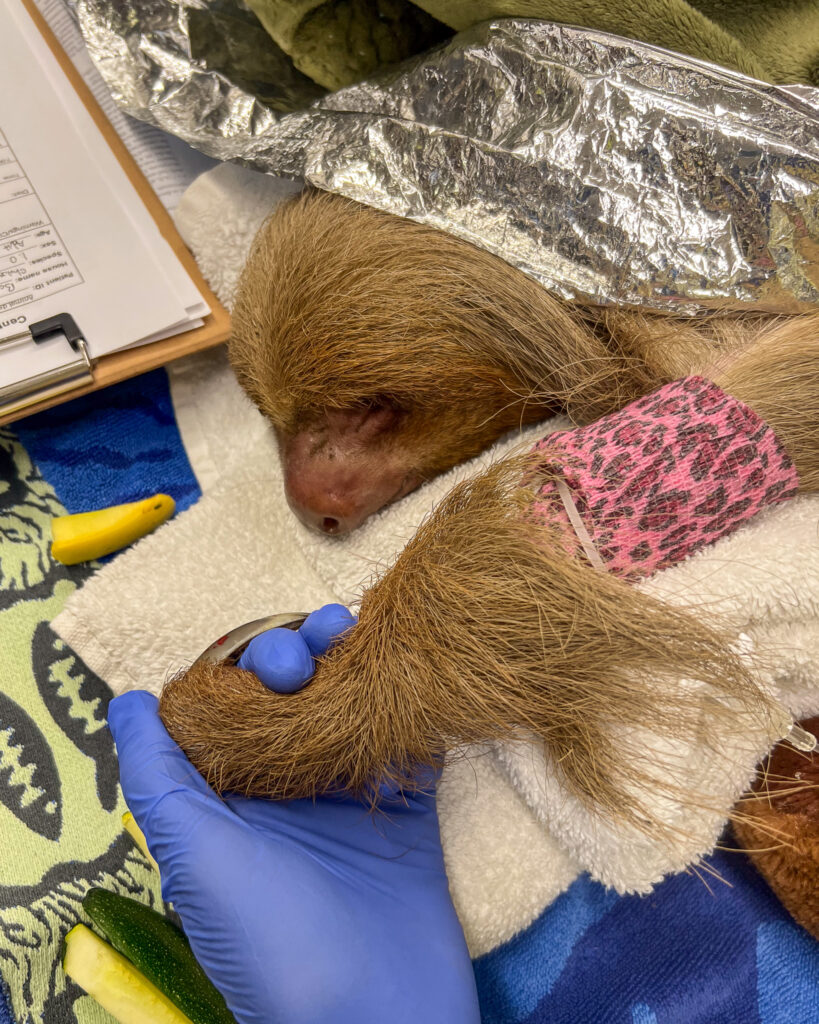
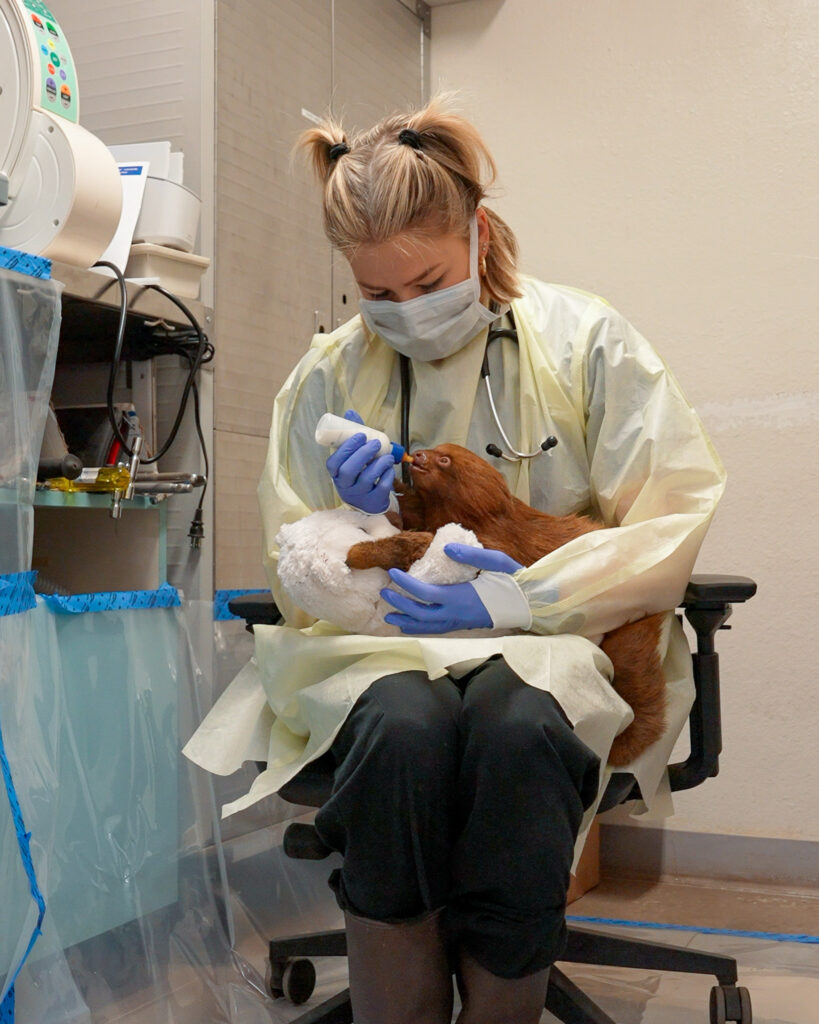
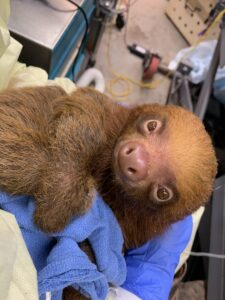
5/15/26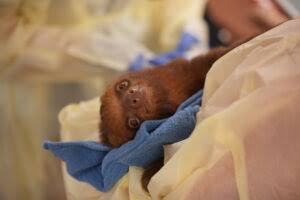 Mr. Ginger was the youngest sloth brought into our care, estimated to be only 4-6 months old. He arrived in an extremely fragile condition, and our veterinary team provided intensive care. He was hand-fed every few hours and spent much of his time in an incubator to help regulate his body temperature. He was a fighter, and he held on despite the odds. Though our staff made every effort to give him the best possible chance at survival, his condition did not improve, and our team made the difficult decision to humanely euthanize him.
We are deeply saddened by this loss. We know those who are following this story are too.
We remain committed to caring for the rest of the sloths and hope for brighter days ahead.
Mr. Ginger was the youngest sloth brought into our care, estimated to be only 4-6 months old. He arrived in an extremely fragile condition, and our veterinary team provided intensive care. He was hand-fed every few hours and spent much of his time in an incubator to help regulate his body temperature. He was a fighter, and he held on despite the odds. Though our staff made every effort to give him the best possible chance at survival, his condition did not improve, and our team made the difficult decision to humanely euthanize him.
We are deeply saddened by this loss. We know those who are following this story are too.
We remain committed to caring for the rest of the sloths and hope for brighter days ahead.