

For more than four decades, Big Guy the spider monkey was a familiar and beloved face at the Central Florida Zoo & Botanical Gardens. As the venerable leader of the Zoo’s spider monkey troop, he welcomed generations of guests, formed special bonds with his care team and played an important role in the future of his species.
Big Guy passed away peacefully from old age on August 17, 2026. He was approximately 45 years old—an extraordinary lifespan for a spider monkey, whose typical life expectancy in human care is 20 to 25 years. While his age made him remarkable, Big Guy’s legacy extends far beyond the number of years he lived.
A member of the Central Florida Zoo family for more than 40 years, Big Guy was an important contributor to the Association of Zoos and Aquariums’ (AZA) spider monkey Species Survival Plan (SSP). He fathered 23 offspring and was the grandfather of 22 and great-grandfather of 13. He was also a step-grandfather to four confiscated spider monkeys who joined the Zoo’s troop.
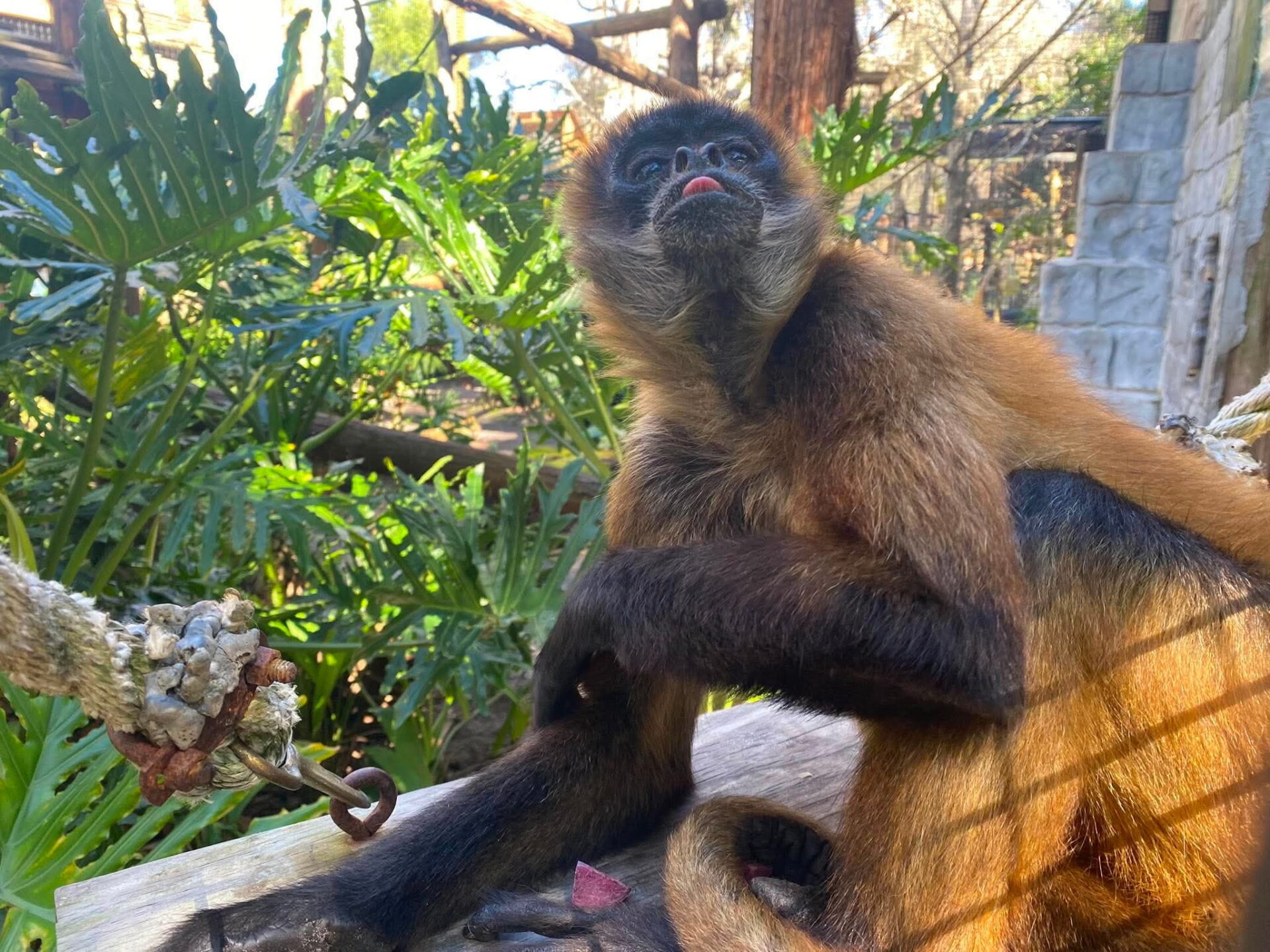
Big Guy’s role went beyond genetics. He helped teach younger members of the troop how to be spider monkeys, providing an important example for animals who had experienced difficult beginnings before arriving at the Zoo.
“Big Guy left a lasting impact on his species, our team, our guests, our volunteers and this Zoo,” said Richard Glover, CEO. “As a prolific sire, he helped ensure the long-term viability of the AZA’s spider monkey SSP population. But his influence went beyond his offspring. He was a leader within his troop and an incredible ambassador for his species.”
For the Zoo’s Animal Care team, Big Guy was much more than an important member of a conservation program. He was a protector, a personality, a teacher and, for those who cared for him, a trusted companion.
Erin Bussom, General Curator, had the honor of being Big Guy’s keeper for more than 15 years. During that time, she watched him grow older while he watched her grow into her career as a keeper.
“When I started working with him here at the Zoo, our spider monkeys were in an old-school round corn crib habitat at the entrance to the Zoo,” Bussom recalled. “Big Guy lived with his ‘sisters’ and his daughter at that time.”
Bussom quickly learned that Big Guy saw his keepers differently than some of the other monkeys in the troop.
“The females often saw the primate keepers as a means for food or a way to show dominance; Big Guy saw us as an extension of his troop,” she said.
That relationship gave Bussom a front-row seat to some of the most meaningful changes in Big Guy’s life—and in the lives of the animals around him.
She was part of the team that helped build the Zoo’s new spider monkey habitat and remembers watching Big Guy and the troop experience their expanded environment for the first time.
“Getting to be a part of building the new spider monkey exhibit and then being able to watch those animals explore substrates, space and ropes for the first time since being at the Zoo was an amazing experience,” she said.
As Big Guy grew older, his role within the troop evolved. He became a teacher for younger monkeys, including confiscated animals who arrived at the Zoo without the opportunity to learn the social behaviors that come naturally within a troop.
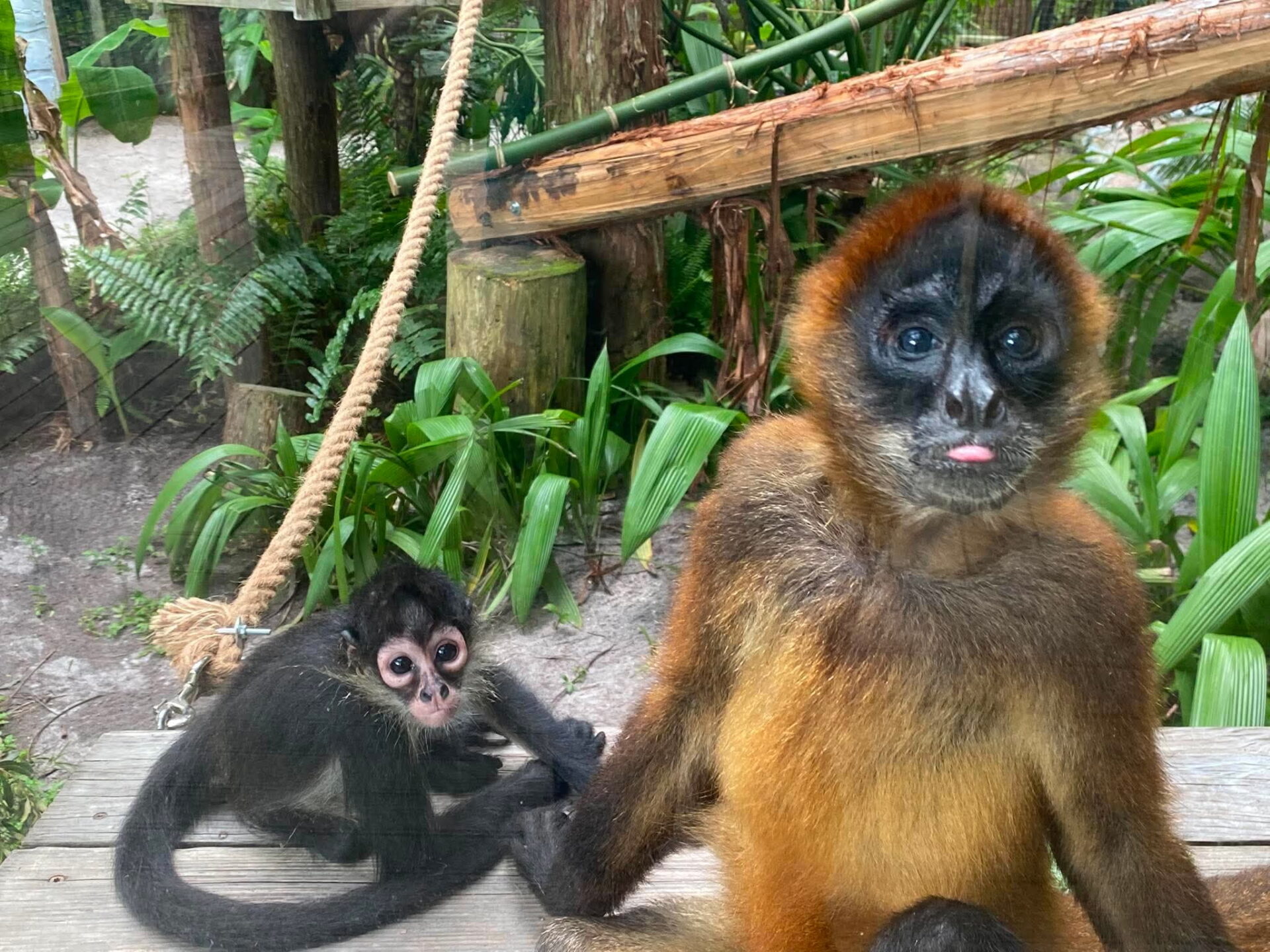
In his later years, Bussom watched Big Guy teach those younger animals how to find their place.
“He taught our juvenile confiscations how to be part of a troop, that the floor was in fact not lava, and that grapes are the best treat ever,” she said.
For Bussom, those moments brought her years with Big Guy full circle.
“He watched me grow, taught me patience and persistence as a keeper,” she said. “He will forever be my reason for doing what I do here.”
Over the decades, Big Guy became part of the lives of generations of Central Floridians. Guests remember him from countless visits to the Zoo, including the beloved “Tongue Out Tuesdays,” while staff and volunteers have their own stories of the unique animal who seemed to know exactly how to get their attention.
For Glover, one of his most meaningful memories of Big Guy came during an especially difficult time for the Zoo.
Before Hurricane Ian, Big Guy had little interest in Glover. But when the Zoo closed for 28 days following the storm, with only a skeleton staff on site and no guests visiting, something changed. With time and quiet, Big Guy decided Glover could become part of his circle—but their friendship came with rules.
“Being friends with Big Guy meant doing things his way,” Glover said. “He did not like when I wore a baseball cap, so he always made it clear that I needed to take it off. Then he expected me to pat my head and rub my belly if he did. I tried to only do that when nobody was around, but I have no doubt a few people got a good laugh watching me mimic him.”
Those quiet interactions became some of Glover’s favorite memories of an animal who had spent so much of his life bringing joy to others.
“Big Guy brought joy to millions of people over his decades at our Zoo,” Glover said. “I’ll miss those stolen moments when nobody else was around and all the times he made me smile.”
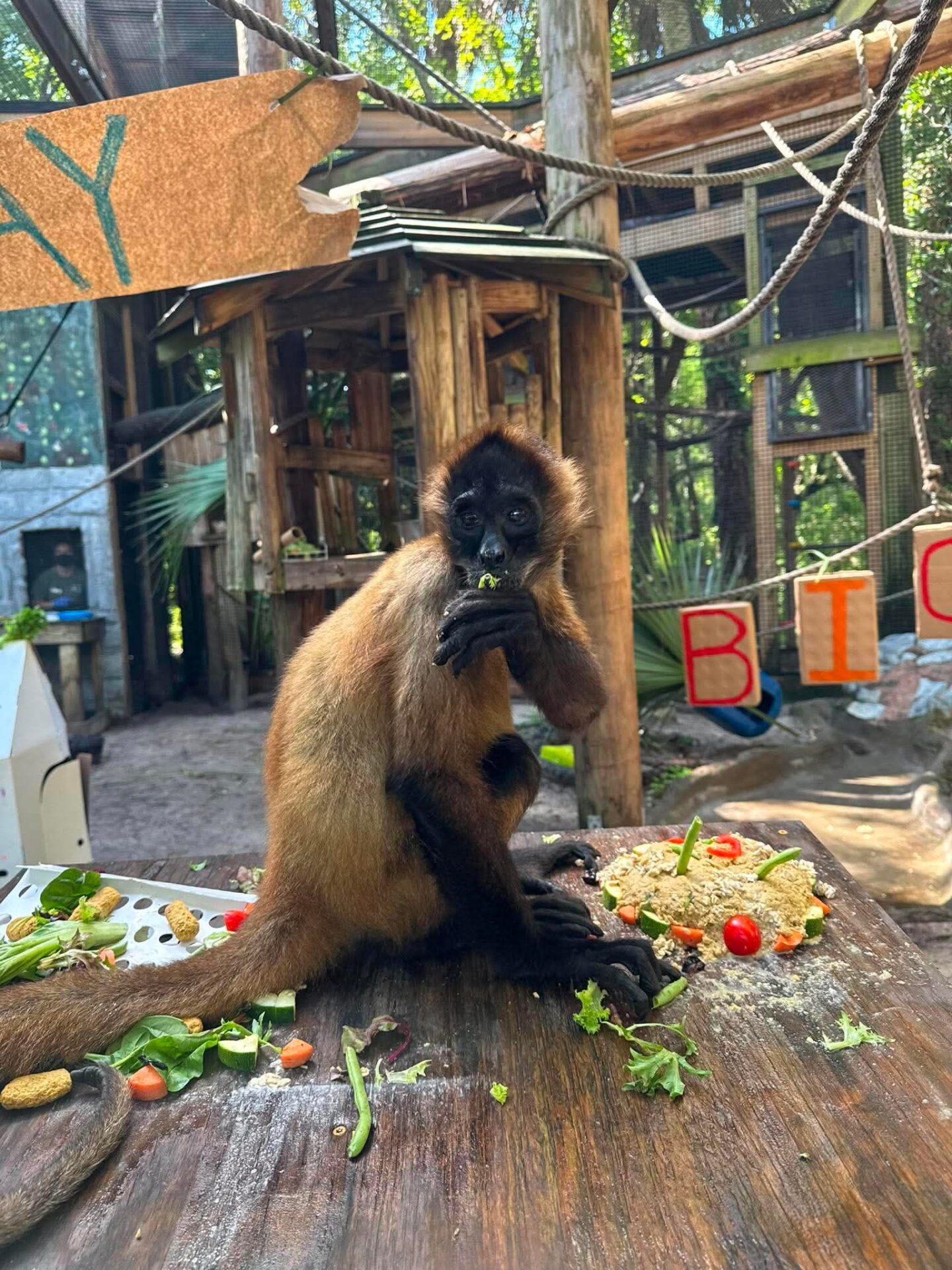
Big Guy’s passing is being felt throughout the Zoo community, particularly by the Animal Care and Veterinary teams who cared for him throughout his long life.
Caring for an animal through every stage of life, from arrival and acclimation to illness and eventually end of life, is one of the great responsibilities of working in an AZA-accredited institution. Big Guy’s remarkable longevity was a testament to the dedication of the teams who cared for him over the years.
“It is our great privilege to care for these animals,” Bussom said. “Big Guy lived such a long life thanks to the amazing care he received from our team over many years. He will be deeply missed.”
For more than 40 years, Big Guy was part of the Central Florida Zoo. For the people who knew him best, he was part of something much bigger: a troop, a team and a lifetime of memories that will not soon be forgotten. Although Big Guy is no longer greeting guests, watching over his troop or teaching younger monkeys his legacy lives on.